


Updated April 27, 2026
TL;DR: Finding B2B sales leads in 2026 requires verified data, a disciplined deliverability system, and AI that handles research and initial replies so your reps focus on closing. Bad data and poor inbox placement kill campaigns before the first reply arrives. Instantly.ai's B2B lead finder gives you 450M+ verified contacts, unlimited sending accounts, and built-in warmup on a flat monthly fee. The 15 methods below are ranked by how well they feed a clean, scalable pipeline without compounding software costs or deliverability risk.
Most sales teams chasing B2B sales leads obsess over email templates while the real problem sits upstream: bad data, broken deliverability, and a fragmented stack no SDR actually uses. According to Instantly's 2026 benchmark report, the overall average reply rate sits at 3.43%, but top-performing campaigns consistently exceed 10%. The gap between average and elite has nothing to do with clever subject lines. It comes down to data quality, sender reputation, and systematic outreach. This guide covers 15 proven methods to fill your pipeline and the systems to automate them.
What is B2B lead Generation?
B2B lead generation is the process of identifying companies and decision-makers who match your ideal customer profile (ICP), capturing their contact details, and moving them through a structured qualification process until they are ready for a sales conversation. Unlike B2C, where a single person decides quickly, B2B buying committees now average 13 decision-makers per deal, which means your targeting, personalization, and follow-up cadence must account for multiple stakeholders and a longer evaluation window.
A prospect who downloads your pricing comparison, visits your ROI calculator, or engages with a specific blog post is showing active buying intent. Capturing and acting on those signals before a competitor does is the core competitive advantage in modern B2B outbound.
B2B vs. B2C lead generation tactics
B2B and B2C require fundamentally different approaches because the structure of the buying process, the decision-making criteria, and the timeline all diverge sharply. B2B deals involve multiple stakeholders across departments, procurement, finance, operations, and executive leadership, each with distinct priorities and veto power. This complexity demands in-depth product knowledge, trust-building over weeks or months, and consultative selling that addresses ROI, integration risk, and long-term business impact. B2C, by contrast, is largely transactional: a single buyer evaluates based on emotion, convenience, and immediate value, often completing the purchase within minutes or days of first discovering the product.
Metric | B2B | B2C |
|---|---|---|
Sales cycle | 1-3 months for SMB, 6-12+ for enterprise | Minutes to days |
Stakeholders | Multiple decision-makers | Usually one |
Decision driver | Logic, ROI, business impact | Emotion, convenience |
Transaction value | Large contracts, annual subscriptions | Low-value, one-time |
These differences shape every element of your lead generation strategy. In B2B, you need longer email sequences that account for the extended evaluation cycle, multi-touch cadences that reach multiple stakeholders within the same account, and data enrichment that identifies the full buying committee rather than just a single contact. Your content must address logic-driven objections with ROI calculators, case studies, and security documentation. B2C marketers, by contrast, optimize for speed, emotional triggers, and frictionless conversion paths that close within a single session.
The practical implication for your team is this: B2B campaigns need longer sequences, multi-touch cadences, and data that reflects the full buying committee, not just the primary contact.
What are the different Types of B2B Leads?
Knowing which stage a lead occupies determines which team owns it and what action comes next. These definitions are critical for building reporting that holds up under CFO scrutiny.
- MQL (Marketing Qualified Lead): A prospect who has shown interest through content, ad clicks, or form fills but is not yet ready for a sales call. MQLs typically convert to SQLs within 30 to 90 days, though complex enterprise deals can stretch that window to six months or more.
- SQL (Sales Qualified Lead): A lead that sales has reviewed and confirmed fits the ICP, has buying authority or influence, and has expressed intent to evaluate. This is where your SDR hands off to an AE.
- PQL (Product Qualified Lead): A lead who has used your product, often through a trial or freemium tier, and has demonstrated intent to upgrade. PQLs have the highest conversion rates because product usage is the strongest intent signal available.
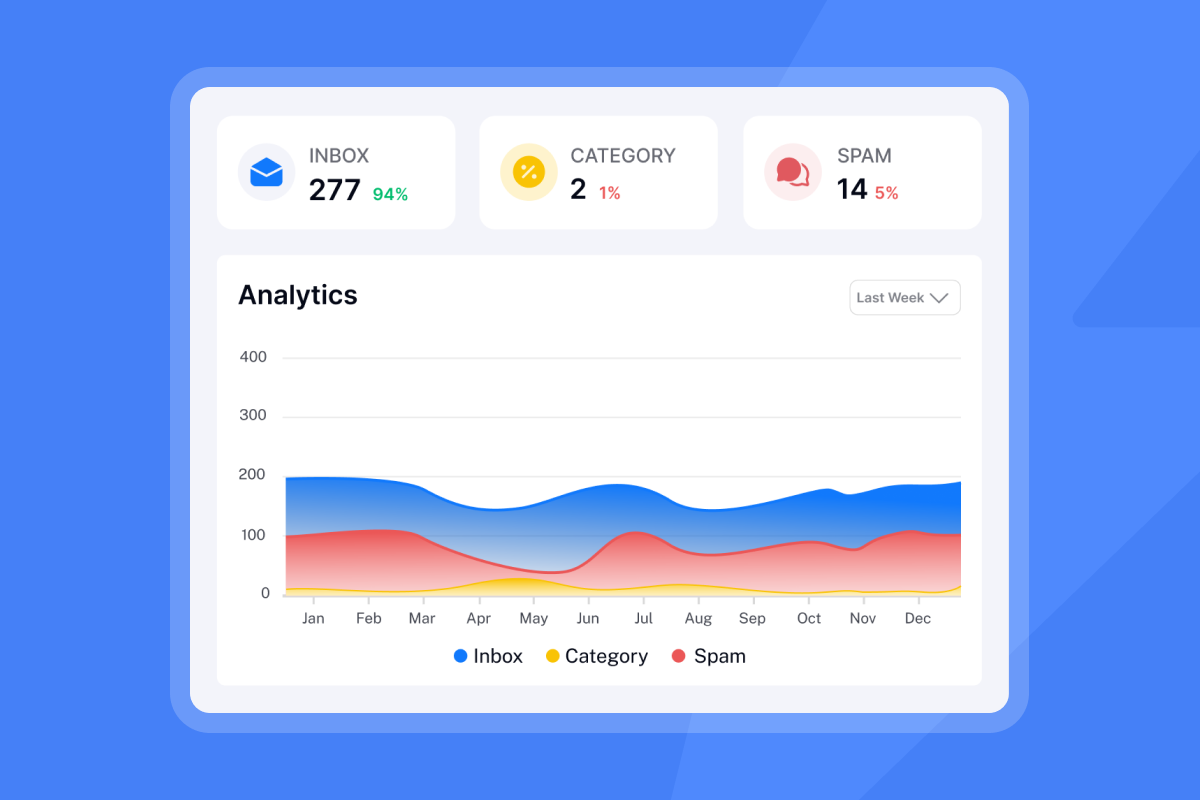
Tracking these stages in a unified system keeps your pipeline reporting clean and gives you the audit trail your dashboards need to accurately reflect pipeline coverage.
15 actionable B2B lead discovery methods (2026)
Each method below maps to a specific stage of the pipeline. Some fill the top of the funnel fast, others capture high-intent leads at the bottom. A healthy outbound program uses a mix of all of them.
1. AI for verified B2B contacts
The foundation of any outbound program is a clean, verified contact list. Building one manually wastes rep time and introduces bounce risk. The better approach is a purpose-built database with waterfall enrichment and LLM-assisted filtering.
Instantly's SuperSearch gives you access to a database of 450M+ contacts with 160M+ verified contacts, backed by a deliverability network of 4.2M+ sending accounts, and LLM-assisted enrichment that surfaces companies matching custom criteria standard filters miss. This tightens your ICP and keeps bounce rates at or below the 2% threshold that protects your sender reputation.
Key filters that tighten your ICP:
- Job title and seniority: Target VPs, Directors, or C-suite by exact role.
- Company size: Filter by employee count ranges (100-500 is typical for lower mid-market).
- Tech stack: Identify prospects using specific CRM, sales tools, or martech platforms.
- Industry and location: Narrow by vertical, geography, or timezone.
- Intent signals: LLM-assisted enrichment surfaces companies matching custom criteria that standard filters miss.
"The enormous database of 450 million data points streamlines my lead generation process, allowing me to simply input keywords and obtain compatible results. This feature is instrumental in efficiently identifying my ideal customer profiles." - shavez k. on G2
"The Supersearch tool is great for finding B2B leads quickly." - Rizwan K. on G2
2. Cold and warm outreach
Cold email remains one of the most scalable, cost-predictable channels in B2B sales, as the step-by-step B2B lead generation guide from Instantly's channel breaks down in detail. The framework that works in 2026 has six stages:
- Intent: Identify the trigger or intent signal that makes this prospect relevant right now.
- Personalization: Add one proof point showing you read their site, recent post, or job change.
- Value-first copy: Keep emails between 50 and 125 words, as Boomerang’s analysis of 40 million emails found this range produced the highest response rates,
- Structured follow-ups: 58% of replies come from step one, but the remaining 42% come from follow-ups, so do not stop at one touch.
- A/Z testing: Run at least two subject line and copy variants per campaign to learn what resonates.
- Optimization loop: Review reply rates weekly. If replies drop below 3%, audit your data hygiene and sequence before touching copy.
Our cold email copywriting framework walks through the exact structure used to generate 400+ replies monthly. You can also access 600 pre-built cold email templates inside the Instantly Help Center to give your team a proven starting point. For a broader strategy overview, our cold email resource guide covers deliverability, copywriting, and sequencing in detail.
For scaling campaigns with secondary sending domains, cap sends at 30 emails per inbox per day. Going above that threshold without SISR infrastructure accelerates domain aging and increases spam complaint risk.
3. Optimize your outreach with a unified inbox
Managing replies across dozens of sending accounts without a centralized inbox leads to missed conversations and lost pipeline. Instantly’s Unibox centralizes every reply from every account into one interface. Pair it with the AI Reply Agent to read incoming emails, reply to leads, handle objections, send follow-ups, share calendar links, and update CRM status.
"I use Instantly for the AI reply agent and finding leads. It saves a lot of time by automatically replying to all of my campaigns on autopilot mode." - lucky b. on G2
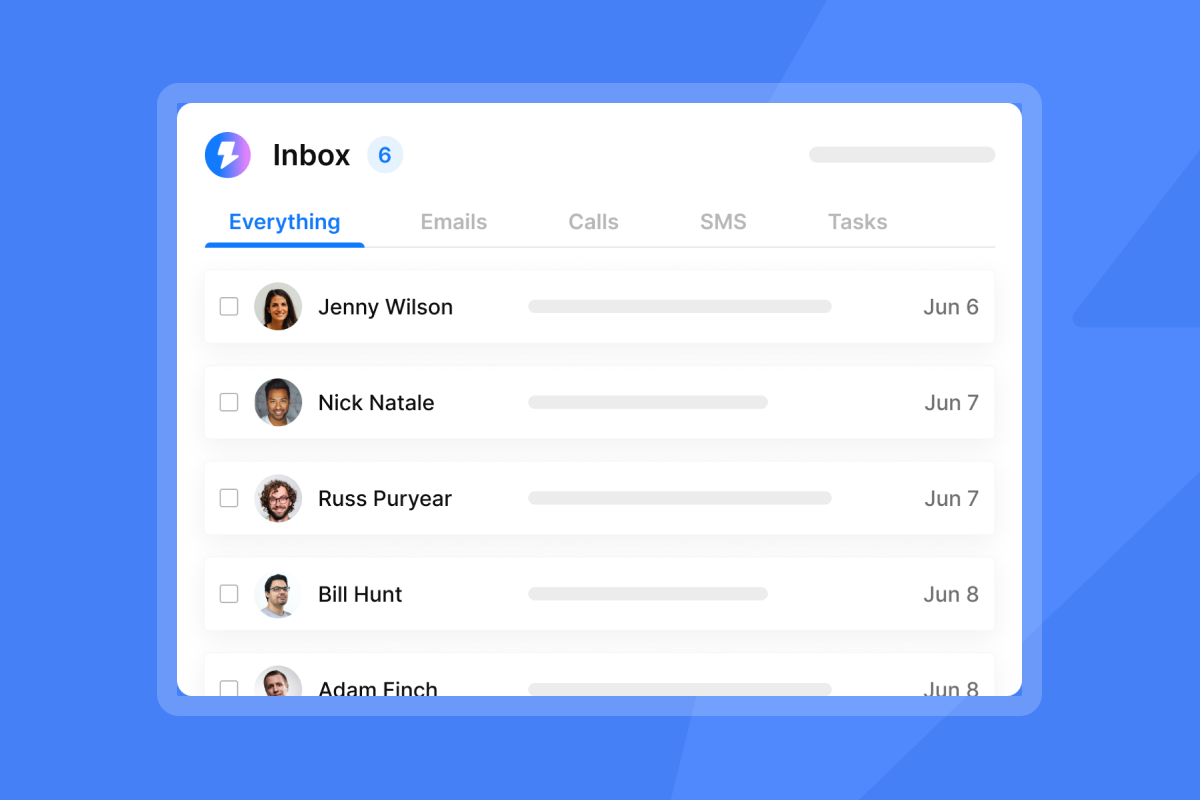
The AI Reply Agent handles lead responses in under five minutes, either in autopilot mode or with a human-in-the-loop approval step via Slack, so no reply goes cold overnight.
4. Website optimization for lead capture
Your website is already generating intent signals. The problem is most teams cannot see who is visiting. Instantly Website Visitors identifies US-based traffic hitting your pricing and demo pages and pushes those records directly into your CRM, with Slack notifications and email enrichment for every identified visitor. The Basic tier runs at $97/month and the LightSpeed tier at $397/month.
Set up Slack notifications to alert your SDR team the moment a high-intent visitor hits your site, then trigger an email sequence within 24 hours while your brand is still top of mind. The enriched visitor data enables you to personalize your first touchpoint based on the specific pages they viewed, the content they engaged with, and the problems they are actively researching. Pair this with a clear value proposition above the fold, demo request forms with four to six fields, and social proof blocks near the conversion point to reduce friction.
5. Design pages to convert B2B leads
Landing page performance directly affects your cost per lead. A page converting at 5% costs half as much per lead as one converting at 2.5%, assuming the same ad spend. Focus on three elements:
- Specific headline: Match the intent of the traffic source exactly.
- Single call to action: Not "learn more" but "book a 20-minute demo."
- Fast load times: A two-second delay meaningfully reduces conversions on mobile.

Test button copy, headline phrasing, and form length using A/Z testing before scaling paid spend against any new page. The subject line testing governance framework covers how to structure these tests so your data holds up at scale.
6. Attract B2B leads with expert content
Content that teaches a system and names trade-offs builds trust faster than any promotional asset. Playbooks, data-backed benchmarks, and detailed how-to guides attract search traffic from buyers who are actively researching solutions. Our email deliverability guide for sequences is a practical example: it answers a specific question buyers have before they purchase and positions our deliverability infrastructure as the solution.
The key is specificity. A guide titled "How to improve reply rates" reaches everyone and converts few. A guide titled "How to keep cold email bounces below 1% for a 10-rep SDR team" reaches exactly the buyer who is ready to act.
7. Drive B2B leads with targeted search ads
Paid search captures buyers who are already searching for a solution. The cost-per-meeting math is what matters here, not cost per click. Focus your budget on high-intent keywords (comparisons, alternatives, and specific feature searches) rather than broad category terms. Retarget visitors who reached your pricing page but did not convert.
Cap daily budgets at a level your team can respond to immediately. Best practice sets five minutes as the absolute maximum response window, and every minute beyond that reduces your odds of a meaningful conversation with an inbound lead, according to Revenue.io.
8. How to find B2B leads on social media
Social media lead generation in B2B works best as a listening channel and a credibility builder, not a volume channel. Monitor mentions of competitor products, industry frustrations, and job change announcements in your target ICP. Those signals tell you when a prospect is actively in-market.
Organic engagement through comments, shares of relevant research, and direct responses to public questions builds brand recognition with buyers who are not yet ready to engage with a cold email. According to multi-channel outreach statistics, campaigns using three or more channels (email, LinkedIn, phone) earned a 287% higher purchase rate compared to single-channel strategies, which makes social visibility a meaningful complement to your email program.
9. Generate B2B leads via gated content
ROI calculators, industry benchmark reports, and tested templates convert well as gated assets because they deliver immediate, measurable value in exchange for contact information. The prospect self-selects by downloading the asset, giving you a warm lead with a clear interest signal.
Keep the form short (name, work email, company size) and deliver the asset immediately. A follow-up email that references a specific stat or finding from the asset you delivered performs better than a generic nurture drip, because it shows you understand what the prospect was looking for when they converted.
10. Find targeted B2B leads on LinkedIn
LinkedIn is the most accurate job-title and company-size database available for B2B targeting. You can identify decision-makers by role, seniority, industry, and company headcount without paying for a separate data provider.
The risk for sales teams is reps using unsafe browser extensions or unofficial automation tools that scrape profiles in violation of LinkedIn's terms of service. Account suspensions and legal exposure are real consequences. The safe approach is:
- Manual connection requests with personalized notes
- Direct messages to second-degree connections with shared context
- Engagement on prospects' posts before sending an outreach message
- Connection requests capped under 20 per day from any one account to avoid triggering LinkedIn's automated limits
The "New Rules of Cold Email (2026)"guide covers how to coordinate LinkedIn touchpoints safely within a broader multi-channel sequence.
11. Implement Sales Navigator for leads
LinkedIn Sales Navigator gives you advanced filters (tech stack, headcount growth, recent activity), saved search alerts when new profiles match your ICP, and CRM integration for exporting enriched contact records. Build your list inside Navigator, export to a CSV, verify emails through a tool like Instantly SuperSearch, and load the cleaned list into your outreach sequence.
The critical step most teams skip is verification after export. LinkedIn provides job titles and company names but not always accurate work emails. Running those contacts through waterfall enrichment before adding them to a campaign keeps your bounce rate under the 1% threshold that protects your sender reputation.
12. Host webinars for new sales leads
Webinars generate high-intent leads because attendance requires active registration and time investment. Partnering with a non-competing company that serves the same ICP lets both parties share audiences without competing for the same deals. A focused webinar covering a specific operational problem with a live demo of how your product solves it consistently generates qualified pipeline for both hosts.
Follow up within 24 hours of the webinar with a recording link, a one-page summary of the key takeaways, and a direct CTA. Segment your follow-up list using available engagement signals. These include watch time, Q&A participation, poll responses, and CTA clicks, to prioritize outreach to the most active attendees. The AI and cold email masterclass from Josh Whitfield covers how to use automation to follow up with event registrants at scale without sacrificing personalization.
13. Find B2B leads via online listings
Review platforms like G2 and Capterra attract buyers who are actively comparing products, making them some of the highest-intent traffic in B2B. Claiming and actively managing your profile on these platforms captures bottom-of-funnel leads who are close to a purchase decision.
Ensure your profile has complete feature listings, recent case studies, and a current screenshot library. Profiles with outdated information and no recent reviews introduce friction during the buyer's evaluation process, creating enough hesitation to lose deals to competitors who maintain more current, complete presences.
14. Manage online reviews for B2B leads
Strong review profiles play a meaningful role in enterprise evaluations. When a Head of Sales is comparing tools, the pattern of reviews on G2 and Trustpilot often determines which tool gets the live demo. Instantly holds a 4.8/5 on G2 from nearly 4,000 reviews, a profile that provides meaningful social proof for buyers in the evaluation stage.
Request reviews from customers after a successful onboarding or a measurable outcome (first meeting booked, first campaign launched). Responding professionally to critical reviews demonstrates accountability and builds trust with prospects reading your review profile during due diligence.
15. Network for B2B leads in person
Trade shows, executive dinners, and industry roundtables generate leads that are difficult to replicate digitally because they combine personal trust with shared context. The follow-up email after an in-person conversation carries context that cold outreach lacks, because the recipient already associates your name with a real interaction.
Bring a clear one-sentence pitch, a specific question you ask every conversation to surface buying intent, and a system for capturing contacts immediately (a notes app with a consistent format works). Follow up within 48 hours, reference something specific from what you discussed, and move to a calendar invite rather than an open-ended "let me know if you want to chat."
How to build a B2B sales lead database with AI
Building a B2B lead database in 2026 means connecting AI tooling to verified data sources, not manually exporting LinkedIn profiles into a spreadsheet. It means enriching records with custom variables, and loading clean contacts into a system where sequences, replies, and CRM handoffs happen automatically. The three-layer process below shows you how.
LLMs for precise prospect profiling
Large language models can categorize companies, extract custom variables from public web data, and score prospects against your ICP criteria at a scale no human researcher can match. Feed an LLM your ICP definition, and it can identify which companies in a given list match on technology used, growth signals, hiring patterns, and recent news triggers.
The limitation to acknowledge is accuracy. LLMs hallucinate at a measurable rate, which means any AI-generated enrichment field (phone number, revenue estimate, technology stack) should be treated as a starting point for verification rather than a confirmed fact. Always validate against a primary source before using AI-generated data in personalization.
Find targeted leads with software
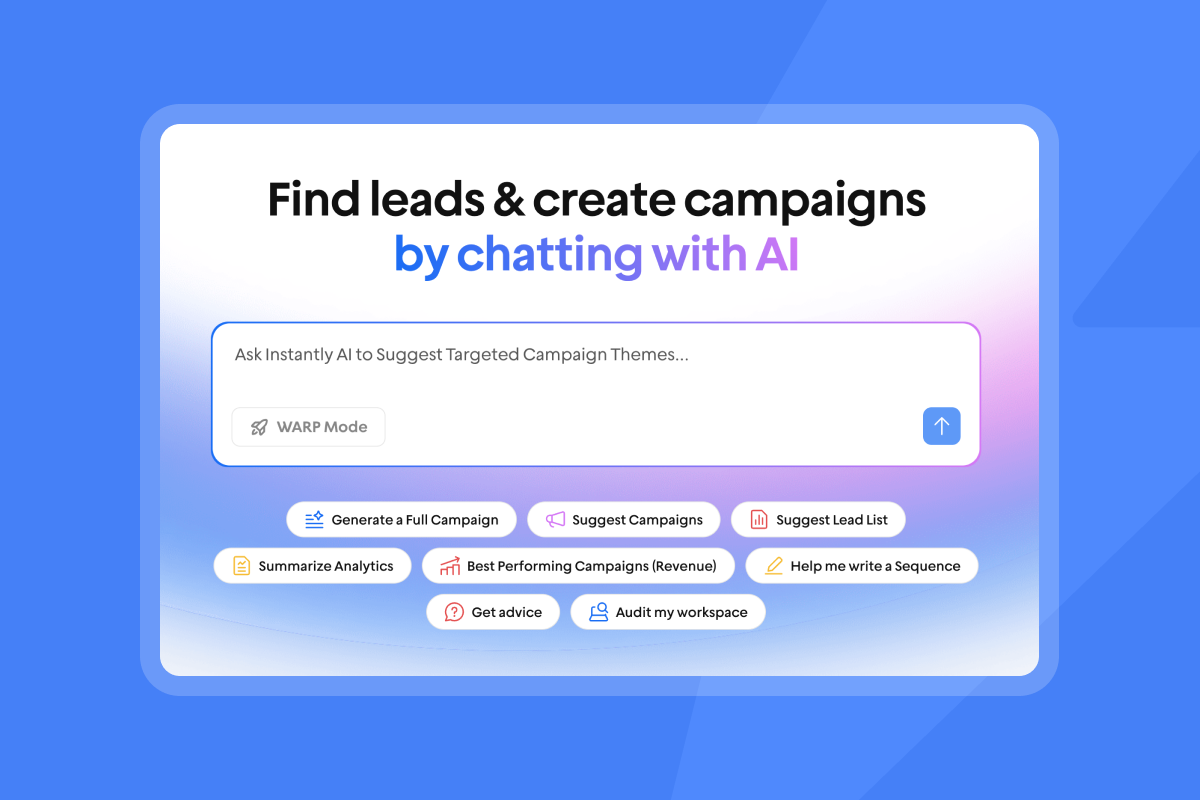
Instantly's Copilot handles the research, segment-building, and campaign creation tasks that currently eat hours of rep time each week. You describe your target audience, Copilot pulls matching leads from SuperSearch, builds the sequence, and summarizes campaign analytics. It runs as a recurring task, so new leads matching your criteria are added to your pipeline automatically without manual list pulls.
For standardizing this process across a team, the email tracking implementation checklist covers the 30-day rollout framework for getting every rep using the same system with the same guardrails from day one. This is the governance layer that prevents reps from going off-script with unsafe automations.
Enrich lead profiles for outreach
Waterfall enrichment runs a contact record through multiple data providers in sequence until a verified email address is found. Instantly SuperSearch uses 5+ enrichment providers in its waterfall, which means if one provider does not have the email, the next one in the chain attempts verification before the record is flagged as unresolvable.
The payoff is a bounce rate that stays under 2%. Higher bounce rates from unverified data can hurt sender reputation and inbox placement. Amazon SES advises keeping bounce rates below 2% and says rates at 5% or higher can trigger account review. At small volumes, list cleaning is cheap too: some verification tools start around $8 per 1,000 contacts.
Once enriched records are clean, the handoff to CRM matters. Instantly integrates with HubSpot and Salesforce so replied leads sync automatically without manual data entry, keeping your CRM accurate and your AEs working from current pipeline data.
Find targeted B2B leads for cold outreach
Finding verified B2B leads at scale without inflating your software budget or compromising deliverability is exactly what Instantly's B2B SuperSearch solves. You get 450M+ verified contacts, LLM-assisted filtering by industry, role, and intent signals, and direct integration with unlimited outreach accounts and built-in warmup on a flat monthly fee. No per-seat penalties. No fragmented stack. No deliverability surprises.
A starter stack covering cold email campaigns, SuperSearch, and CRM runs at approximately $141/month. That includes unlimited sending accounts, warmup, up to 2,000 verified lead credits, and Unibox for reply management. AI Copilot, AI Sales Agent, and AI Reply Agent are separate add-ons that run on an Instantly Credits subscription starting at $9/month. Try Instantly for free, connect your first inbox, and run your first verified lead search today.
B2B lead finding FAQs
What is a realistic B2B cold email reply rate in 2026?
The average reply rate is 3.43% across campaigns tracked by Instantly. Top-performing campaigns with tight ICPs and verified data consistently exceed 10%, driven by personalization, multi-touch sequences, and daily send caps that protect sender reputation.
How much does B2B lead generation cost per lead?
Cost per lead varies by channel and list quality. A flat-fee model like Instantly's Growth stack at $141/month covers unlimited sending accounts plus lead credits, while traditional per-seat enterprise tools run $49 to $149 per user monthly plus onboarding fees of $1,000 to $8,000.
How long does it take to see results from B2B lead generation?
New domains need 14 to 21 days of warmup before reaching the 30-emails-per-inbox-per-day cap. After that, scale volume by adding more warmed inboxes, not by pushing a single inbox past 30 emails per day. For any mention of 200+ emails per day, make it explicit that this refers to total volume across multiple warmed inboxes, not a single inbox.
Is cold email still legal in 2026?
Yes, with the right compliance setup. CAN-SPAM requires a physical postal address and an opt-out mechanism for every commercial message. Google and Yahoo both require spam complaint rates below 0.3%, with Google recommending you target below 0.1% for reliable inbox placement. One-click unsubscribe is mandated specifically by Google and Yahoo's 2024 bulk sender rules. SPF, DKIM, and DMARC authentication is mandatory for all bulk senders. For a full compliance walkthrough, our email tracking privacy guide covers GDPR and CCPA obligations in detail.
How many touches does it take to convert a B2B lead?
Research from Dreamdata shows the average B2B deal involves about 62 touches across at least three channels before closing.
What is the best time to send cold emails to B2B prospects?
Tuesday through Thursday generates the strongest reply rates, with Wednesday consistently delivering the highest engagement as prospects have settled into the week but not yet wound down for the weekend. Schedule sends between 6 and 9 AM local time for peak reply rates and target the 10 AM to noon window for the highest response rates, as noted in Instantly's send time analysis.
Key terminology
SISR (Server and IP Sharding and Rotation): A deliverability architecture that distributes outbound email across multiple dedicated server and IP pools. If one IP faces filtering or a block, others continue delivering while the flagged IP is investigated, as explained in the SISR system help article. This architecture protects campaigns from single-point-of-failure deliverability crashes and is available on Instantly's Light Speed plan at $358/month.
Waterfall enrichment: A verification process that runs a contact record through multiple data providers in sequence until a valid email is confirmed. Instantly SuperSearch uses 5+ providers in its waterfall, keeping bounce rates at or below the 2% threshold that protects sender reputation.
Primary inbox: The main inbox tab in Gmail, Outlook, and Yahoo, as opposed to Promotions, Spam, or Other folders. Landing here is the primary goal of email warmup, authentication, and deliverability monitoring. Our email deliverability guide for sequences covers the full system for maintaining primary inbox placement at scale.
Sender reputation: The score that email providers assign to your sending domain and IP address based on complaint rates, bounce rates, engagement, and authentication. A damaged sender reputation causes emails to land in spam regardless of content quality. Warmup builds reputation on new domains by simulating organic engagement before live campaign sends begin.
MQL-to-SQL conversion rate: The percentage of marketing-qualified leads that sales accepts as sales-qualified after review. MQL-to-SQL conversion benchmarks vary by industry and company size, with 30 to 90 days being the typical conversion window for mid-market deals, extending to six months or more for enterprise transactions.



