


Updated November 27, 2025
TL;DR: For Agency Operators managing client pipelines, mastering B2B cold call objections is the difference between stalled outreach and booked meetings. This playbook provides three proven scripts to cut "no" responses by 50%, turning common pushbacks like "I'm not interested," "Send me information," and "We're already working with someone" into productive conversations.
Every "no" you hear on a cold call isn't a rejection. It's an unaddressed concern waiting for your response. For Agency Operators, mastering objection handling is the difference between a stalled pipeline and a flood of new client meetings.
This guide provides three battle-tested scripts to confidently handle the most common B2B cold call objections. I'll break down each script, explain the psychology behind it, and show how Instantly's integrated platform helps you implement these strategies from precise lead targeting to automated follow-ups and performance tracking, ultimately boosting your client's booked meetings.
Why B2B cold call objections are opportunities (not roadblocks)
Don't treat objections as roadblocks. They're buying signals disguised as resistance.
When a prospect says "I'm not interested" or "We're already working with someone," you're actually engaging with them. They're processing your offer and revealing their concerns. You face a real dead end when a prospect hangs up without a word. The one who objects is still on the line, which means you have an opportunity to shift the conversation.
If there's one core learning from all the outreach I've done its' this: objections are a natural part of your sales process, not personal attacks.
Effective objection handling reframes these moments as opportunities for more information or insights into the prospect's needs. I touched on this recently, where our research on reviving stalled leads, showed that 80% of sales require five or more touches after the initial objection, making persistence critical.
Understanding the agency operator's cold call challenges
You face unique pressures when making cold calls on behalf of clients. You're not just booking meetings for yourself. You're protecting client domains, managing sender reputation across 10-150+ inboxes, and proving ROI every quarter.
The challenge intensifies because B2B buyers are increasingly selective. When you call, you're interrupting their packed schedule with an unplanned conversation about a problem they may not even recognize yet.
Cold calling offers you the advantage of immediate, real-time objection handling. When a prospect says "not interested," you can pivot instantly.
If you can couple this with cold email, you can further boost your positive responses. Our AI outbound sales playbook shows that agencies with personalising follow ups at scale can see reply rates jump to 5%+ by maintaining consistent touchpoints across channels.
The core principles of effective objection handling
Before diving into specific scripts, you need to understand the universal principles that make objection handling work.
- Listen without interrupting: Your biggest mistake is rushing to deliver your pre-planned rebuttal. Active listening is paramount for understanding the true nature of resistance. Allow the prospect to fully articulate their objection.
- Acknowledge and validate: Never dismiss an objection, even when you recognize it's a knee-jerk reaction. Validation builds rapport and reduces defensiveness. Use phrases like "I hear you, and that's a fair concern."
- Clarify the root cause: The stated objection often masks a deeper concern you need to uncover. Ask clarifying, open-ended questions to dig deeper.
- Respond with targeted value: Once you understand the core concern, offer a concise, relevant solution that directly addresses it. Connect your solution's benefits directly to their validated concern.
- Confirm resolution: Don't assume the prospect is satisfied with your response. Explicitly ask if your response has adequately addressed their concern.
- Transition to next steps: Once the objection is confirmed as resolved, smoothly pivot back to the conversation's objective with a clear, low-pressure next step.
Checklist: Attributes of successful B2B cold callers:
- Resilience: Maintain composure after repeated objections
- Active listening: Pay attention to verbal cues like hesitations and tone shifts
- Adaptability: Adjust scripts based on prospect's industry and role
- Curiosity: Ask diagnostic questions to uncover underlying concerns
- Preparation: Research prospects thoroughly to reduce "not interested" responses
- Follow-up discipline: Document objections and schedule timely follow-ups
Script 1: Handling 'I'm not interested'
The "I'm not interested" objection is often a knee-jerk reaction to an unexpected interruption rather than genuine disinterest. Your goal is to interrupt their expectation of a typical sales pitch and quickly pivot to a highly specific, relevant value proposition.
The script:
- Acknowledge: "I appreciate the honesty. Most people say that because they assume I'm going to waste 20 minutes of their time with a generic pitch."
- Reframe: "I'm actually calling because I noticed [specific trigger, e.g., you're hiring 5 new SDRs]."
- Demonstrate value: "We've helped 3 companies in [their industry] reduce new SDR ramp time from 90 days to 35 days."
- Ask permission: "Would it be worth a 5-minute conversation to see if our approach might work for you too?"
Why this works:
You acknowledge their resistance, reframe your intent from "selling" to "exploring fit," and demonstrate specific, relevant value tied to their observable situation. The key is the specific trigger you mention must be accurate and recent.
How Instantly's SuperSearch reduces 'not interested' objections:
You prevent "not interested" objections by calling the right people at the right time. Instantly's SuperSearch gives you access to 450M+ B2B leads with advanced filtering that lets you build highly qualified lists.
You can target:
- Companies that recently raised funding
- Businesses expanding into new markets
- Organizations with specific technologies in their stack
- Decision-makers with recent job changes
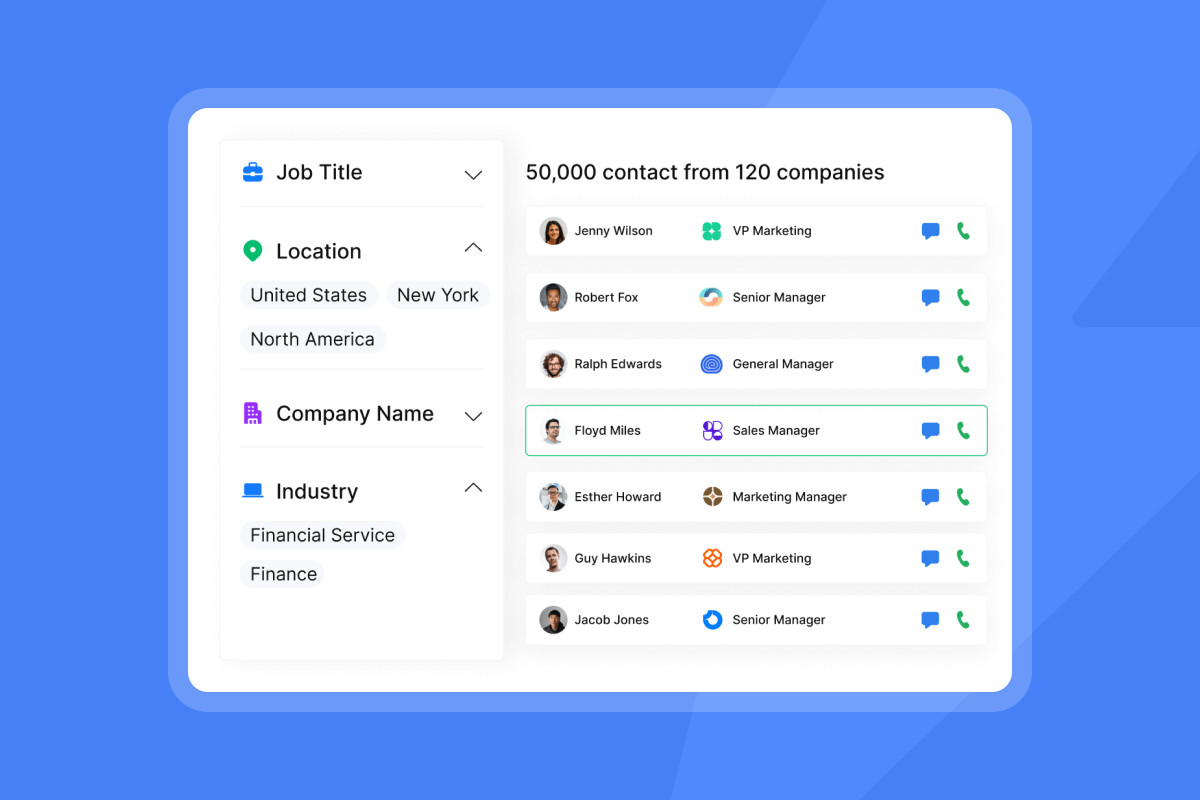
When you call a prospect whose company just raised a Series B and is hiring 10 new sales reps, "I'm not interested" becomes much less common. You're calling with context, not cold.
"Instantly.ai is honestly one of the best outreach tools I've used. Setup is quick, the interface is super clean, and it just works." - TrustPilot review
Watch how to find qualified leads using the SuperSearch lead finder on YouTube.
"Instantly makes email outreach extremely efficient." - G2 review
Script 2: Overcoming 'send me information'
The "send me information" objection is often a polite brush-off, but sometimes it's a genuine request. Your goal is to differentiate between the two while maintaining control of the conversation.
The script:
- Agree and transition: "I'd be happy to send you information."
- Ask diagnostic questions: "Before I do, can I ask you two quick questions so I send exactly what's relevant? First, what specific challenge are you trying to solve right now?"
- Qualify intent: "And second, if the information addresses that challenge, what would be your next step?"
Why this works:
You maintain engagement by asking diagnostic questions that reveal whether they're genuinely interested or brushing you off. The second question about "next steps" is particularly powerful because it gets them to commit to future action if the information is relevant.
How Instantly's AI Reply Agent handles post-call follow-ups:
After your call, timing is everything. You need speed because most sales require multiple touches across days or weeks. When a prospect says "send me information," you need to follow up within minutes, not hours.
Instantly's AI Reply Agent automatically handles email replies in under 5 minutes. After your cold call, you can send a brief email and let the AI Reply Agent monitor for responses. When the prospect replies with questions, the AI Agent can either auto-respond (Autopilot mode) or draft a response for your team review (Human-in-the-Loop mode).
This is particularly powerful for Agency Operators managing multiple client campaigns. Our AI reply management playbook shows how agencies can book more demos by automating lead classification and responding quickly without hiring additional SDRs.
"The automated warm-up, unlimited email sending, and smart campaign management saved me hours every week." - TrustPilot review
Follow-up best practices:
When you send information after a call, follow the 60/40 content balance rule from our sales follow-up guide: 60% informative value and 40% persuasive CTAs.
Here's a template you can adapt:
Subject: [Specific challenge] we discussed + [Company] case study
Hi [Name],
As promised, here's the information we discussed. I'm attaching a brief case study showing how [Similar Company] reduced [specific metric] by X% in [timeframe].
Based on what you shared about [specific challenge], I think [one specific insight] might be particularly relevant.
If this resonates, are you open to a 15-minute call next Tuesday to discuss how this applies to your situation?
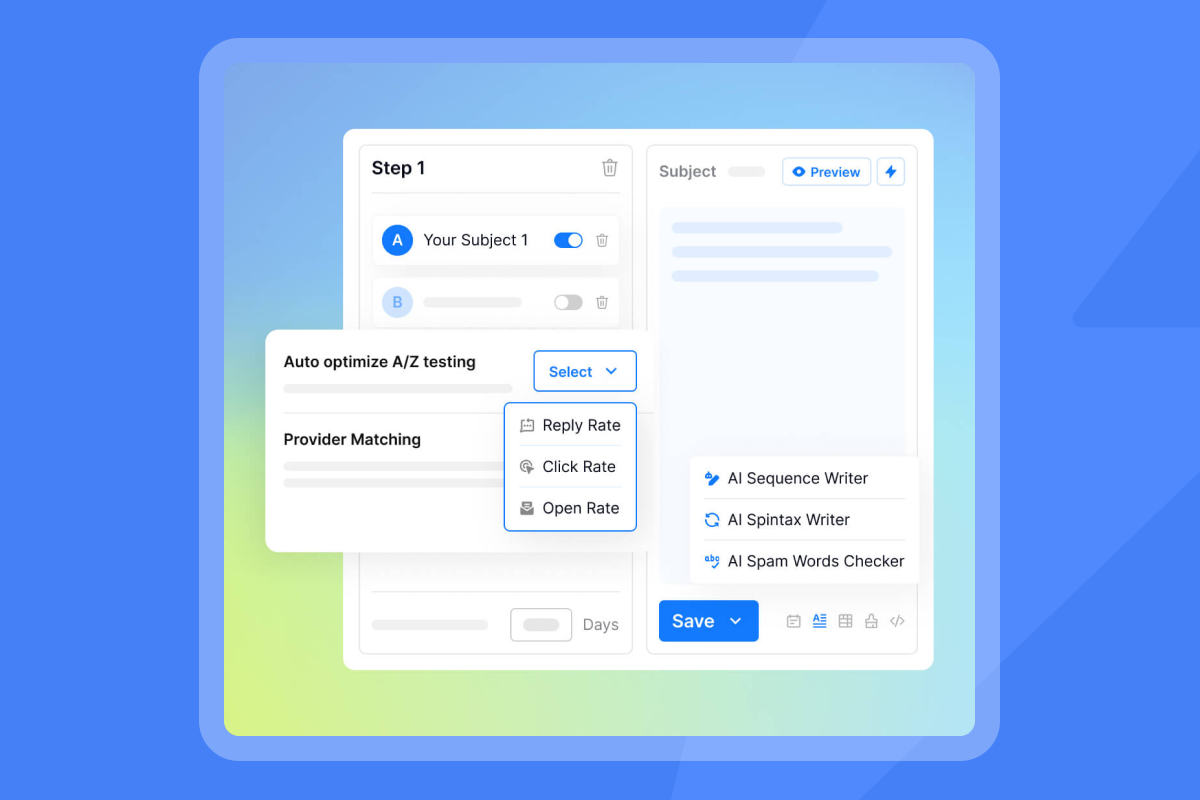
You can also A/B test this with Instantly's A/Z testing framework to find exactly what works for you.
Script 3: Handling 'we're already working with someone'
The competitive objection reveals that the prospect recognizes the value category but is satisfied with their current solution. Your goal is to uncover potential dissatisfaction or unmet needs without criticizing their existing vendor.
The script:
- Validate their choice: "That's great. [Competitor X] offers a solid solution, and many of our current customers previously used them as well."
- Gather intelligence: "Out of curiosity, what do you like most about working with them?" [Pause for answer]
- Uncover gaps: "And is there anything you wish they did better?"
Why this works:
You show respect for their decision and gather competitive intelligence by asking what they like about their current vendor. Prospects are more willing to discuss problems with their current solution when you don't attack their choice.
How Instantly's analytics help you handle competitive objections:
When prospects mention competitors, you need data to refine your positioning. Instantly's analytics dashboard tracks reply patterns, conversion rates, and A/B test results across all your campaigns.
You can identify which value propositions resonate when competing against specific vendors. If you're frequently hearing "we use Apollo" or "we're with Lemlist," you can test different messaging angles in your follow-up sequences and measure which approach generates the most positive responses.
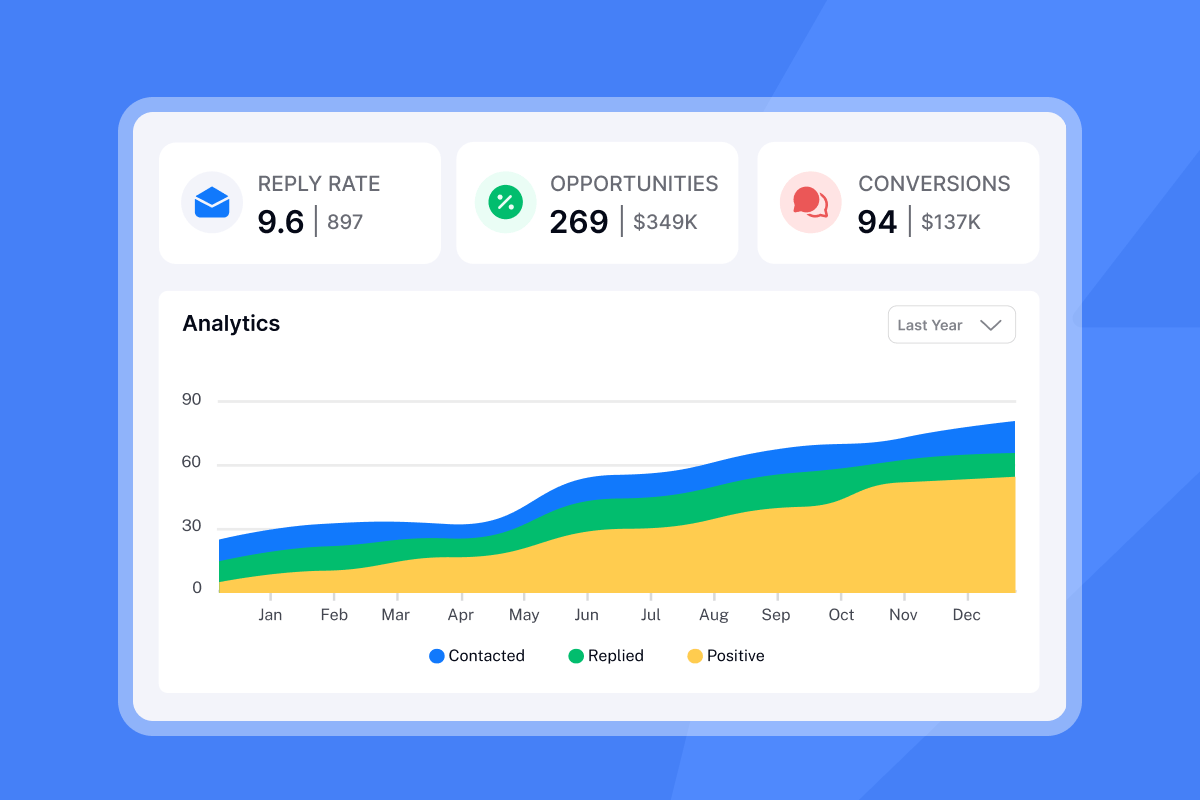
The dashboard helps you answer:
- Which competitive positioning generates the highest reply rates?
- What follow-up timing works best after a competitive objection?
- Which industries are most receptive to switching from incumbent vendors?
Our guide on optimizing underperforming campaigns shows how you can improve results without pausing by analyzing patterns and adjusting your approach based on data.
"Deliverability is great and the analytics give us exactly what we need to optimize campaigns quickly." - G2 review
Differentiation strategies for Agency Operators:
vs. Apollo: "Apollo is excellent for data and multichannel orchestration. Where we differ is our flat-fee unlimited accounts model. You can scale across 50+ client inboxes without per-seat pricing eating your margins. Our deliverability network of 4.2M+ accounts focuses specifically on sender reputation protection."
vs. Lemlist: "Lemlist is a solid cold outreach tool with strong personalization features. Where we add value for agencies is our AI Reply Agent that handles prospect responses in under 5 minutes, plus unlimited warmup on all plans."
Integrating objection handling into your outreach workflow
Objection handling doesn't happen in isolation. It's part of a broader outreach system that includes preparation, execution, and follow-up.
Checklist: Essential cold calling steps for Agency Operators:
Preparation:
- Build verified prospect lists: Use SuperSearch's 450M+ lead database with waterfall enrichment
- Research trigger events: Identify recent funding, hiring, or expansion signals
- Prepare objection responses: Review these three core scripts and adapt them to your offering
- Document call plans: Create brief call guides with key talking points
Execution:
- Lead with context: Reference specific trigger events in your opening 10 seconds
- Listen for verbal cues: Pay attention to tone, hesitations, and questions
- Deploy appropriate scripts: Match your response to the specific objection type
- Confirm resolution: Always verify the objection is addressed before transitioning
Follow-up:
- Send information within 5 minutes: Use the AI Reply Agent to automate rapid follow-up
- Schedule multi-touch sequences: Plan 5-7 touchpoints over 2-3 weeks using proven AI personalization frameworks
- Maintain list hygiene: Keep bounce rates at or below 1% to protect sender reputation
- Monitor reply classification: Use email triage systems to identify qualified responses faster
Watch this full Instantly.ai tutorial for a comprehensive walkthrough of setting up cold email campaigns that support your cold calling efforts.
Measuring success: How to track your objection handling impact
You can't improve what you don't measure. For Agency Operators, tracking objection handling effectiveness ties directly to client retention and profitability.
Key metrics to monitor:
- Call-to-conversation rate: What percentage of cold calls result in a meaningful dialogue beyond the initial objection? Target 15-25% as a healthy benchmark.
- Objection type frequency: Track which objections appear most often. If "not interested" dominates, your targeting or opening statement needs refinement.
- Objection-to-meeting conversion: What percentage of calls where you handle an objection successfully convert to a booked meeting? Establish your own baseline and improve it systematically through better objection handling, tighter targeting, and faster follow-up.
- Follow-up response rates: After handling an objection and sending information, what percentage of prospects respond? Our research on improving cold email reply rates shows that reply rates of 5-10% are good, while 10%+ is strong.
- Cost per meeting: Calculate your total cold calling time investment plus follow-up costs divided by meetings booked.
Instantly's platform helps you track these metrics across multiple client campaigns with unified reporting.
For additional resources on tracking outreach ROI, review our guide to calculating cold outreach ROI, which connects deliverability health to conversion metrics.
Mastering B2B cold call objections transforms how you deliver pipeline for clients. The three scripts we covered handle the most common objections: "I'm not interested," "Send me information," and "We're already working with someone." You need to integrate these scripts into a broader system that includes precise targeting through tools like SuperSearch, rapid follow-up via AI Reply Agents, and data-driven optimization through analytics dashboards. When you combine proven objection handling with the right outreach infrastructure, you cut "no" responses by 50% and consistently deliver the meetings clients need.
Ready to scale your objection handling system?
Try Instantly and implement these objection-handling strategies with verified lead data from SuperSearch, automated follow-ups via the AI Reply Agent, and performance analytics that prove ROI to clients. Start with the Growth plan at $37/month for unlimited email accounts and warmup, scale safely across all your client domains with flat-fee pricing designed for agencies.
FAQs
Does B2B cold calling still work for agencies?
Yes, cold calling remains effective when combined with automated email sequences for consistent touchpoints across channels.
What is a good cold call conversion rate?
Industry benchmarks vary from 2-5% depending on your market, product complexity, and targeting precision. Top performers achieve higher rates by mastering objection handling and using verified lead data.
How can I reduce "not interested" objections?
Use precise targeting tools like Instantly's SuperSearch to call prospects with relevant trigger events like recent funding or hiring. Reference these specific contexts in your opening 10 seconds to demonstrate relevance immediately.
What are the biggest challenges in B2B cold calling?
Time constraints, reaching decision-makers, complex sales cycles, and maintaining consistent follow-up. You also face pressure protecting multiple client domains and proving quarterly ROI.
How does Instantly help with cold call follow-ups?
Instantly's AI Reply Agent automates email responses in under 5 minutes after your calls, ensuring rapid follow-up without manual effort. The platform combines unlimited warmup, verified lead data, and centralized inbox management for complete post-call workflow automation.
Key terms glossary
B2B cold calling: Proactive outreach via phone to business prospects who have no prior relationship with the seller, used for lead generation and meeting booking. Requires systematic objection handling to convert initial resistance into productive dialogue.
Cold call conversion rate: The percentage of cold calls that result in a desired outcome, typically a booked meeting or qualified opportunity. Benchmarks vary based on targeting quality and objection handling skills.
Decision-maker: The individual within an organization with authority to approve purchases or commit resources. In B2B sales, reaching decision-makers quickly reduces sales cycle length and improves conversion rates.
Sales pipeline: The visual representation of prospects at various stages of the sales process from initial contact through closed deals. Effective objection handling increases pipeline velocity by converting more calls into qualified opportunities.
Lead generation: The process of identifying and attracting potential customers. For Agency Operators, tools like SuperSearch provide access to 450M+ verified B2B leads with filtering for precise targeting.
SDR (Sales Development Representative): A sales role focused on outbound prospecting, qualifying leads, and booking meetings for Account Executives. SDRs spend significant time handling cold call objections as part of their daily workflow.
AE (Account Executive): A sales role responsible for managing qualified opportunities through the sales process and closing deals. AEs receive leads from SDRs after initial objection handling and qualification.


