

This article was last updated on December 2, 2025
B2B sales engagement software helps you keep conversations organized and moving so reps don’t waste hours chasing details or wondering who to follow up with next. The right tool fits the way your team already works and grows with you as your pipeline gets heavier.
For cold outreach at scale, Instantly is the top pick. If you need a broad enterprise suite, look at Salesloft, or stick with HubSpot for inbound workflows.
Most sales teams don’t struggle with effort. They struggle with keeping up. You talk to a lead on Monday, follow up on Wednesday, and by Friday, you’re digging through old notes trying to remember what they cared about. Multiply that by a few hundred prospects, and the whole thing starts to wobble.
You can't expect to maintain the same level of detail across hundreds of conversations. That’s why B2B sales engagement software exists. It helps you stay on top of every sales conversation without turning your day into a spreadsheet marathon.
You get a single place to track who opened what, who replied last, and who needs a nudge. You also get smarter follow-ups, cleaner data, useful automation, and a workflow your reps won’t complain about.
If you’ve ever wished your team had a second brain to manage the rhythm of outbound, this guide walks you through what to look for in B2B sales engagement software and our top picks today.
Why Does Sales Engagement Software Even Matter?
Let's answer this by looking at what happens without a well-defined sales engagement. Your team sends emails into the void. Someone replies three days later, but the rep who sent it has already moved on to 40 other prospects. The context is gone.
Meanwhile, your top performer is manually logging every call, email, and tiny signal of interest into your CRM. They're setting calendar reminders for follow-ups and building their own spreadsheets to track who's warm and who's gone cold. It works for them. But it doesn't scale. And the rest of your team is guessing.
Sales engagement software fixes this by turning chaos into a system. Here's how:
- Everything lives in one place: No more hunting through email threads or Slack messages to figure out where a deal stands. Every interaction (emails, calls, meetings, clicks) gets logged automatically. Your new hire can pick up exactly where your senior rep left off because the entire history is right there.
- You actually know what's working: Not "I think our emails are performing okay" but "Our Tuesday sends at 10am get 34% open rates while Thursday afternoons get 19%." You get real numbers across your entire team. Broken down by rep, sequence, and messaging angle. You skip hunches and start optimizing based on what the data shows.
- Follow-ups happen when they should: The software watches prospect behavior and responds accordingly. Someone opened your email twice but didn't reply? They get a different follow-up than someone who ignored it completely. Someone clicked your pricing link? Your rep gets an alert while that prospect is still thinking about it. Timing matters, and sales automation handles it better than memory ever could.
- More conversations become customers: When every lead gets the right message at the right time, when your team can focus on conversations instead of admin work, conversion rates go up. Sometimes dramatically. We're talking 20%-30% improvements in reply rates and 15%-25% increases in meetings booked for teams that implement this right.
The difference between companies that scale and companies that plateau often comes down to this: can you replicate what works without burning out your team? Sales engagement software is how you do that.
Key Features to Look for in Sales Engagement Software
Most sales engagement software looks great in the demo. The sales engineer clicks through a perfect sequence, and everything works beautifully. Then you buy it, your team tries to use it, and reality hits.
The "intuitive" interface requires three clicks to do what should take one. The templates don't fit your sales process. Your CRM integration breaks every other week. Your reps quietly go back to sending emails manually because the tool is more hassle than help.
Here's what one sales leader put it on Reddit:
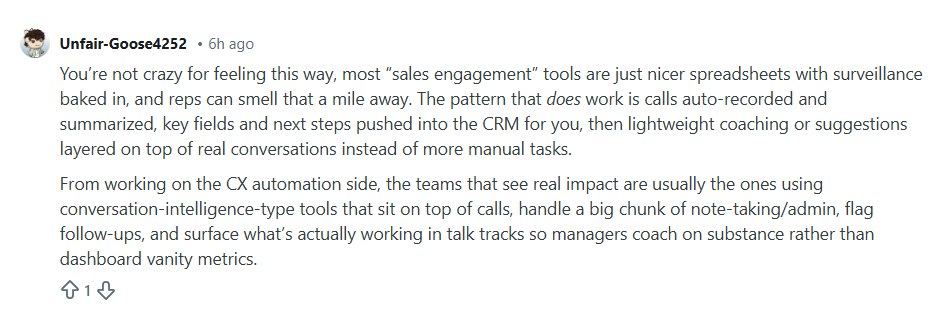
So before you make your decision, it pays to priotize features that actually change the daily grind. Here’s what to watch for:
- A clean, intuitive experience: Your team shouldn't need a training manual to send a sales sequence or check if someone opened an email. The best platforms feel obvious. You click where you'd expect to click. Information shows up where you'd look for it. If a tool requires extensive onboarding just to handle daily tasks, that's a red flag.
- Flexible workflows that match how you sell: Your sales motion isn't the same as everyone else's. Maybe you rely on LinkedIn touches between emails. Maybe your AEs handle different stages than your SDRs. Whatever your process looks like, the software should adapt to it. Look for platforms that let you build custom workflows, edit sequence logic, and adjust touchpoint timing without requiring developer support.
- Analytics that help you make better decisions: You need to see open rates by send time, reply rates by message variant, conversion rates by sequence step. Which subject lines actually get responses? Which follow-up angles move deals forward? Which reps are crushing it and what are they doing differently? If a platform can't break this down granularly, you're flying blind.
- Seamless Integrations: Your engagement platform needs to talk to your CRM, email provider, calendar, and whatever else lives in your stack. Native integrations are best, but Zapier works fine as a backup. Before committing, verify that the integrations you actually need are stable and bi-directional. Data should flow both ways without manual syncing.
- Room to grow seamlessly: Your tool should scale as smoothly from 5 reps to 50 as it does from 1,000 leads to 20,000. Check the pricing tiers carefully. Some platforms hit you with massive jumps when you cross certain thresholds. Others nickel-and-dime you for features that should be standard. Map out what your team will look like in 12-18 months and confirm the platform can handle that growth without forcing a migration.
- Support that delivers: Look for platforms with live chat or phone support during your business hours. Check recent reviews to see how quickly they resolve issues. During the sales process, ask pointed questions about a specific edge case and see how fast and helpful their responses are. That's a preview of what you'll get as a customer.
- Security and compliance: You're handling prospect data, email addresses, conversation history, and potentially sensitive business information. The platform needs to comply with the GDPR, CAN-SPAM, and other laws or industry guidelines that apply to your market. If they're vague about security practices, keep looking.
The platform that checks these boxes won't necessarily have the flashiest demo. But it'll be the one your team is still using a year from now.
5 Leading Sales Engagement Software for Growing Teams
Sales engagement software comes in a few flavors. Some are massive, all-encompassing suites, and some are laser-focused on one high-impact channel. Before you register on anything, it helps to figure out your primary growth motion.
With that said, here's our top picks across key sales engagement use cases:
Instantly.ai
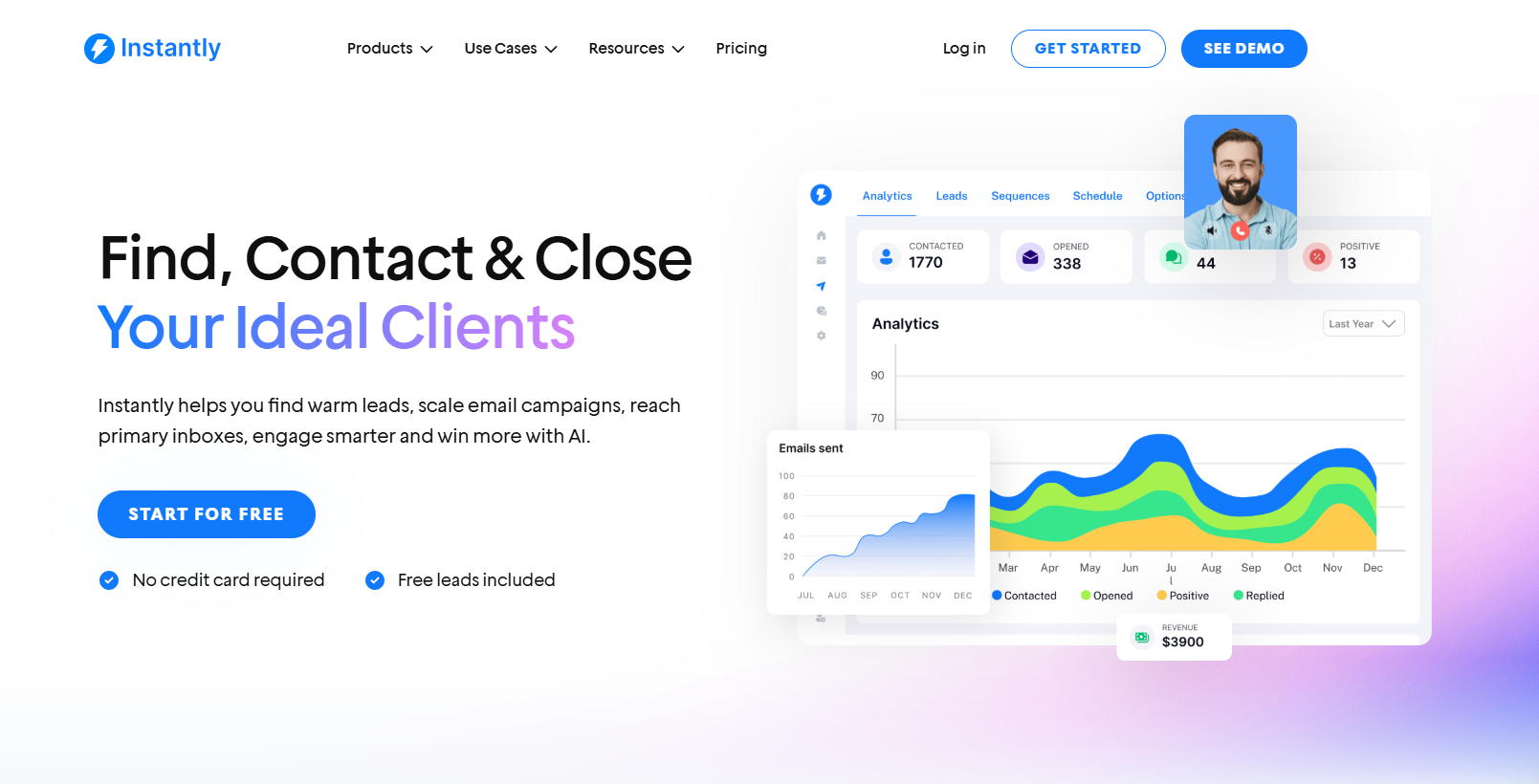
G2 Rating: 4.8/5 ⭐ from 3,854 reviews
If cold email is the core of your sales motion, Instantly gives you a cleaner, more dependable way to run it at scale.
Unlike generalist engagement tools that layer email on top of a broader platform, Instantly is built specifically for high-volume, high-deliverability outreach. Teams can connect unlimited email accounts, warm them up automatically, and distribute sending safely so no domain gets overloaded. It looks natural because it is natural.
Deliverability protections like inbox rotation and SISR system (Server & IP Sharding and Rotation System) run in the background, so your emails land consistently in the inbox even as volume rises.
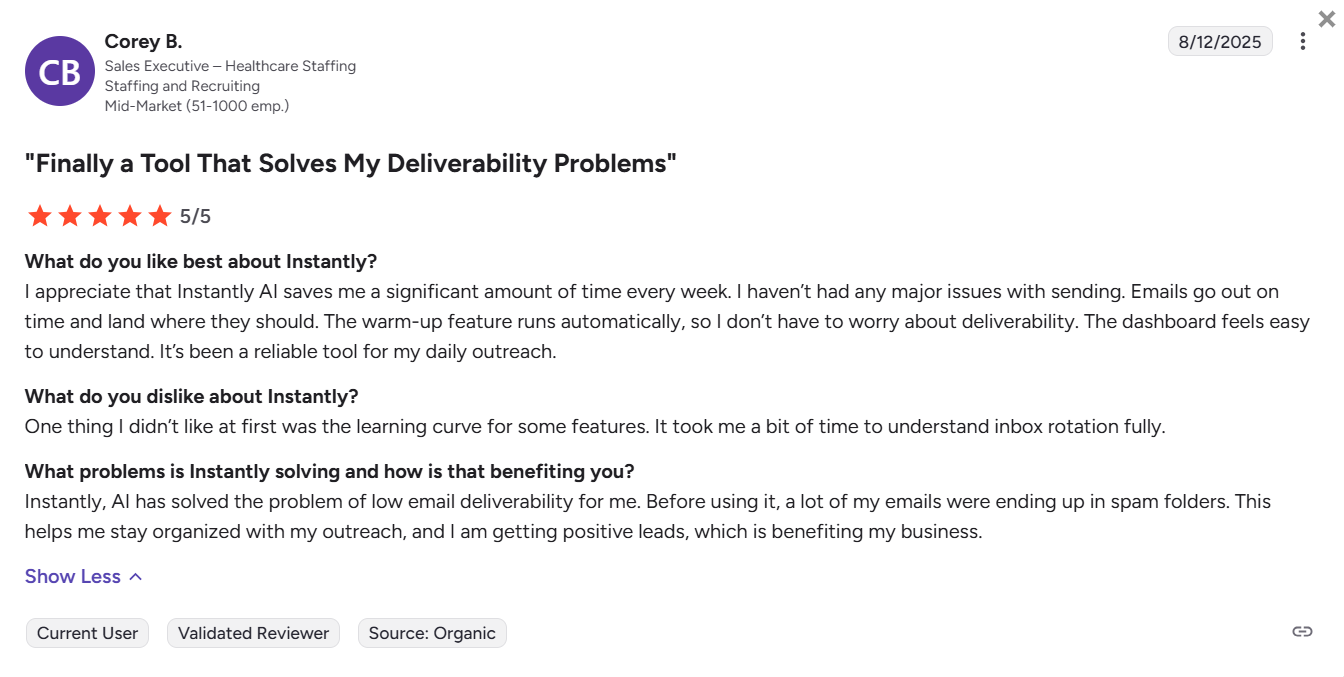
When it comes to sequences, Instantly AI-powered workflows adapt your campaigns based on real prospect behavior. Opens, clicks, and replies trigger tailored follow-up paths, so prospects who show interest aren’t treated the same as those who haven’t engaged at all.
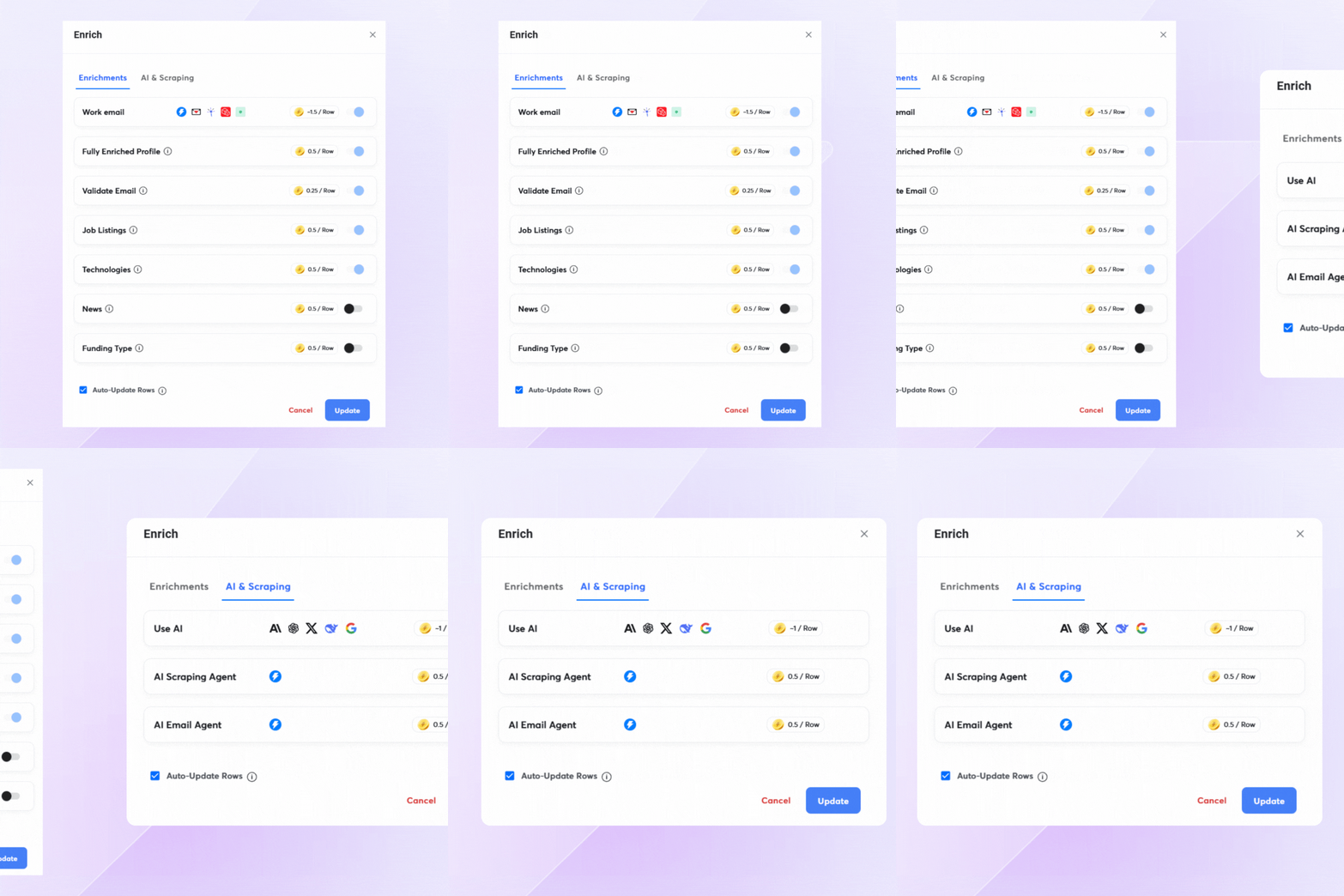
Personalization goes beyond surface-level tactics. Custom merge tags, AI, and data enrichments lets you pull in specific details about a prospect (company info, job titles, tech stack, recent funding, etc) and weaves them into your email sequence.
The built-in CRM means a promising reply doesn't get lost; it smoothly transitions into a tracked deal. Analytics show you what's working down to the subject line level.
Thanks to a Unibox that centralizes every interaction, your reps jump into sales conversations with full context in seconds. For managers, the same unified view makes it easy to understand campaign health and spot bottlenecks without juggling tools.
Key Features:
- Unlimited email accounts and warmup for distributed sending
- AI-powered deliverability optimization with dedicated IP rotation
- Behavioral campaign triggers based on recipient actions
- Lead intelligence tracking across all interactions
- Advanced personalization using custom merge tags
- Robust analytics for campaign optimization
- Built-in CRM for comprehensive pipeline management
Pricing:
- Growth ($37/month): Unlimited email accounts & warmup, 1,000 uploaded contacts, 5,000 emails monthly, chat support
- Hypergrowth ($97/month): Unlimited email accounts & warmup, 25,000 uploaded contacts, 100,000 emails monthly, premium live support
- Light Speed ($358/month): Everything in Hypergrowth + 500,000 emails monthly, 100,000 uploaded contacts, SISR System (Server & IP Sharding and Rotation)
HubSpot Sales Hub
G2 Rating: 4.4/5 ⭐ from 13,256 reviews
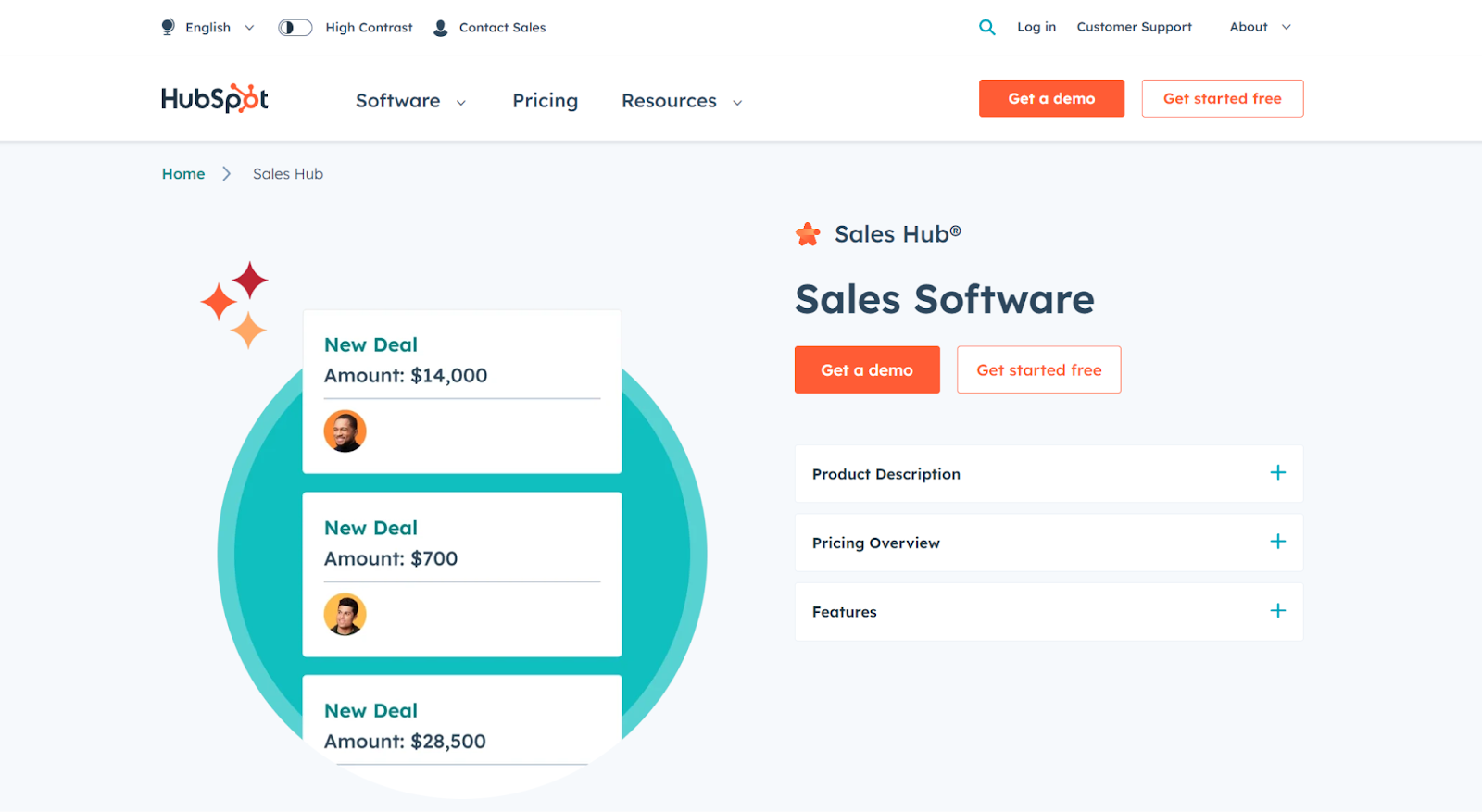
If your company already lives inside HubSpot, Sales Hub is often the most convenient next step. It isn’t a specialized sales engagement tool as much as a broad sales workspace built into the HubSpot ecosystem.
You get meeting scheduling, basic email tracking, lead routing, pipeline management, and lightweight automation, all tightly connected to HubSpot CRM.
The biggest appeal is integration. Everything lives in one place. Your team's campaigns, sales sequences, and support tickets all feeds into the same database. Ease of setup is another advantage, with many users giving rave reviews.
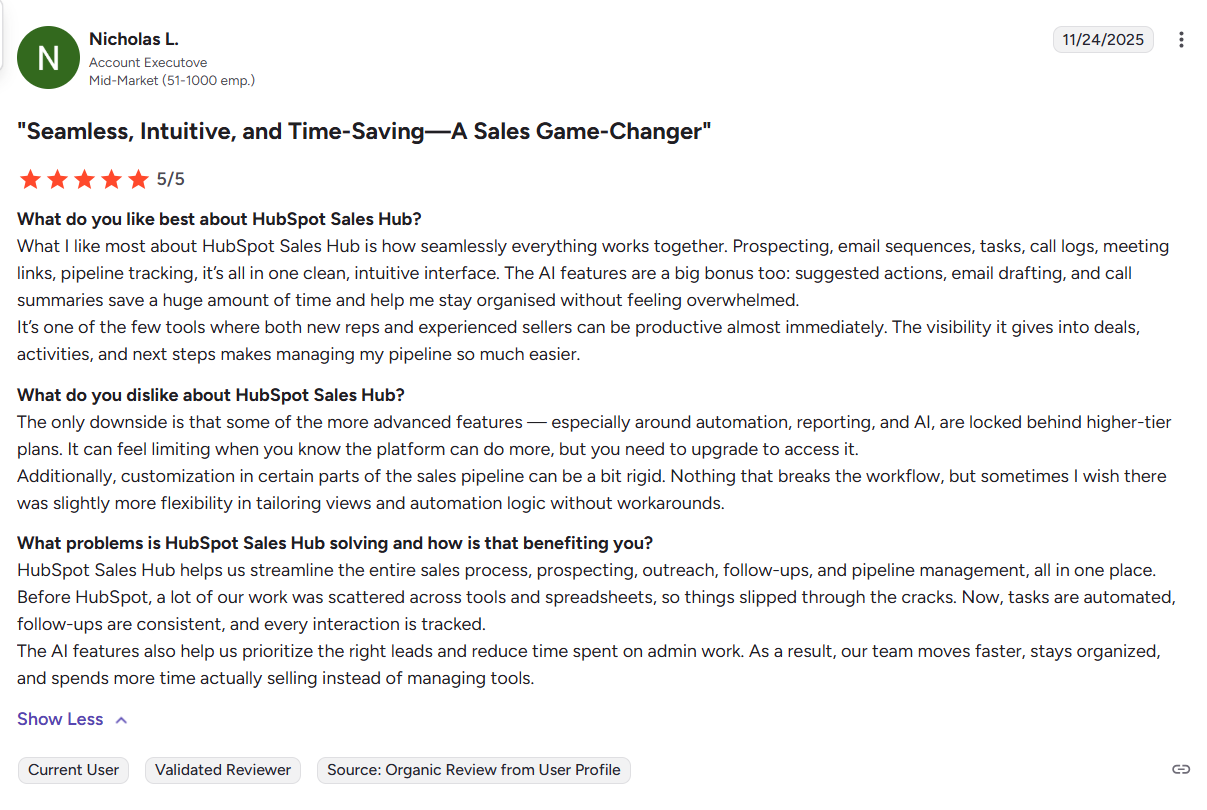
The tradeoff is flexibility. HubSpot wants you to do things the HubSpot way. Custom workflows are possible but clunky compared to more focused tools. Entry pricing is accessible, though the more advanced tiers scale up quickly as you layer in automation and reporting.
Key Features:
- Meeting Scheduling
- Pipeline Management
- Lead Management
- Email Tracking
Pricing:
- Starter at $20/month per seat gets you sequences and simple automation
- Professional at $100/month per seat adds conversation intelligence and predictive lead scoring
- Enterprise at $150/month per seat brings playbooks and advanced permissions
Salesloft
G2 Rating: 4.5/5 ⭐ from 4,144 reviews
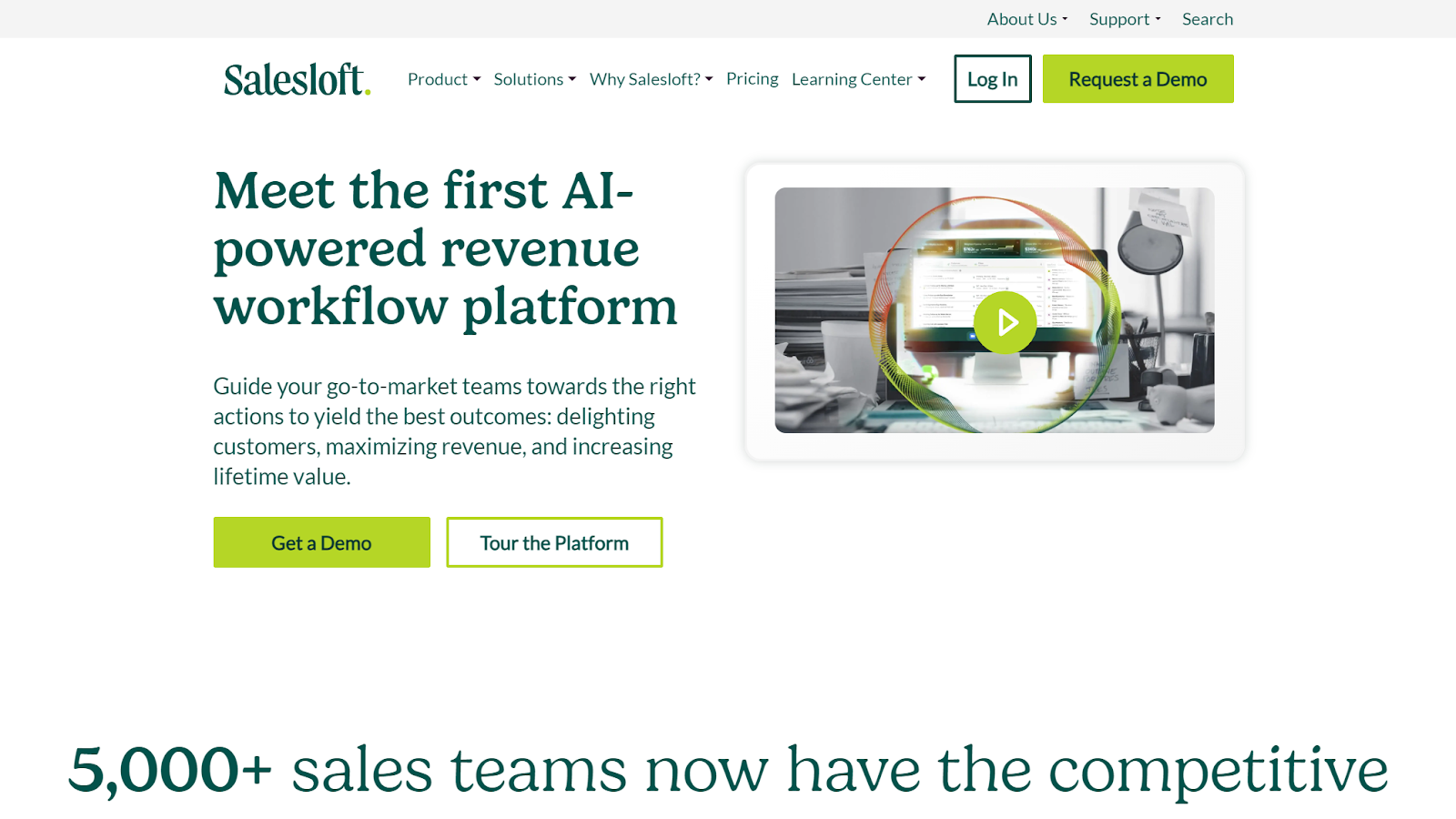
Salesloft is built for teams that want a structured, multi-channel engagement engine at enterprise scale. Its “Cadences” unify calls, emails, LinkedIn touches, and tasks into one workflow, which give managers a clear view of activity across every rep.

Once a cadence step is completed, Salesloft logs the interaction automatically and pushes updates back into your CRM. While powerful, the platform does come with a relatively steeper learning curve.
In return, you get polished enterprise-grade governance, deep analytics, and strong support, which is a major reason the tool sees adoption in larger B2B organizations.
Key Features:
- Sales Email
- Calendar management
- Accessible support
- Mobile App Access
- CRM Sync
- Integrations
- Security and Governance
Pricing:
No publicly listed pricing plans on Salesloft. You'll have to schedule a demo with one of Salesloft’s sales team for more information.
Apollo.io
G2 Rating: 4.7/5 ⭐ from 8,838 reviews
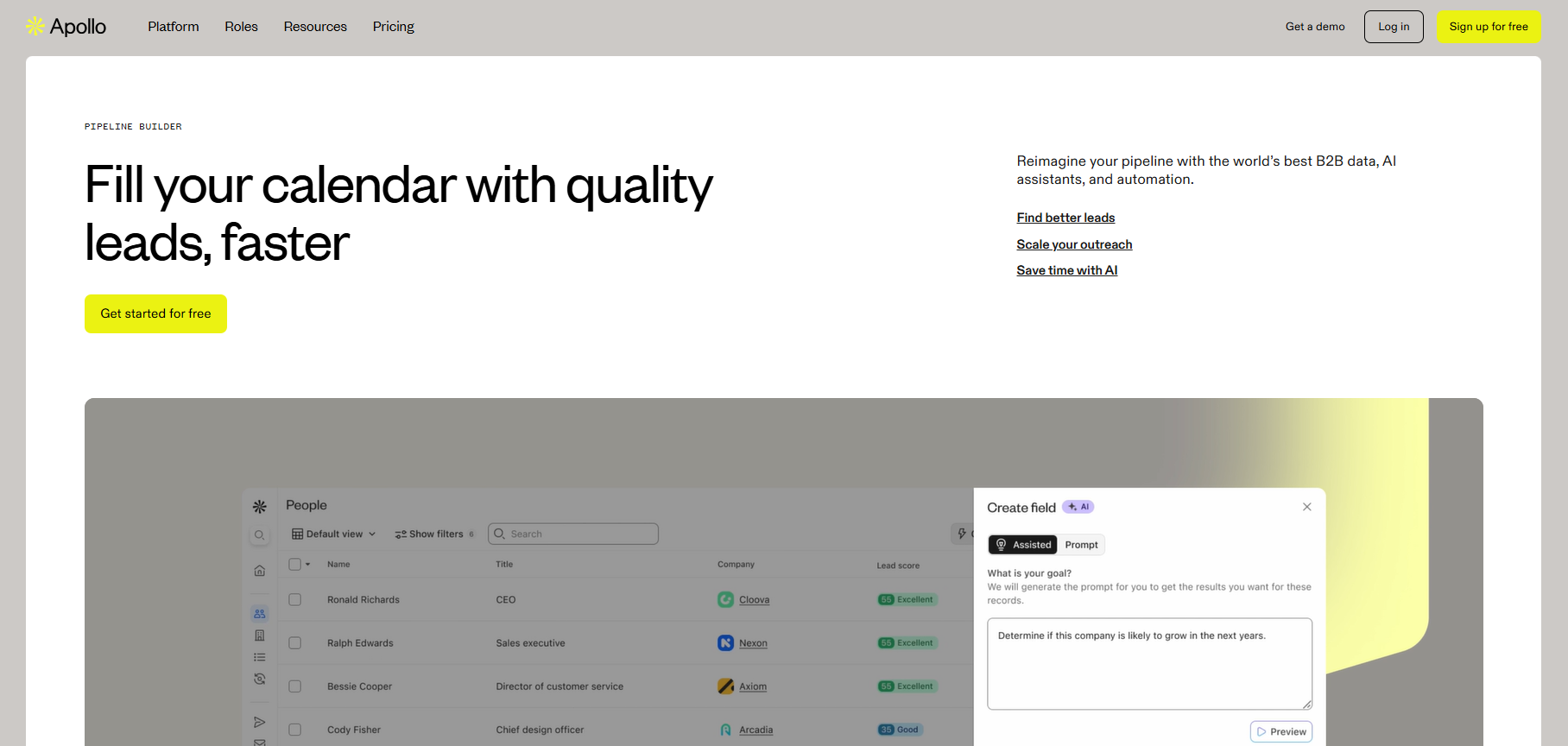
Like Instantly, Apollo is an email-first sales engagement platform with a built-in B2B lead database. It’s a fantastic package deal: you get email sequencing and automation, plus the ability to find and enrich leads right inside the tool.
And with 210M+ verified contacts and 35M+ company profiles, it’s one of the most robust prospecting + outreach tools on the market for small to mid-sized teams.
Email sequencing, advanced filters, enrichment, and integrations are all strong. Apollo also supports phone-based outreach with a dialer (on higher tiers) and provides direct-dial numbers for many prospects.
For teams running blended outbound (email + calling), it’s an effective tool to centralize your workflow without stitching together separate tools.
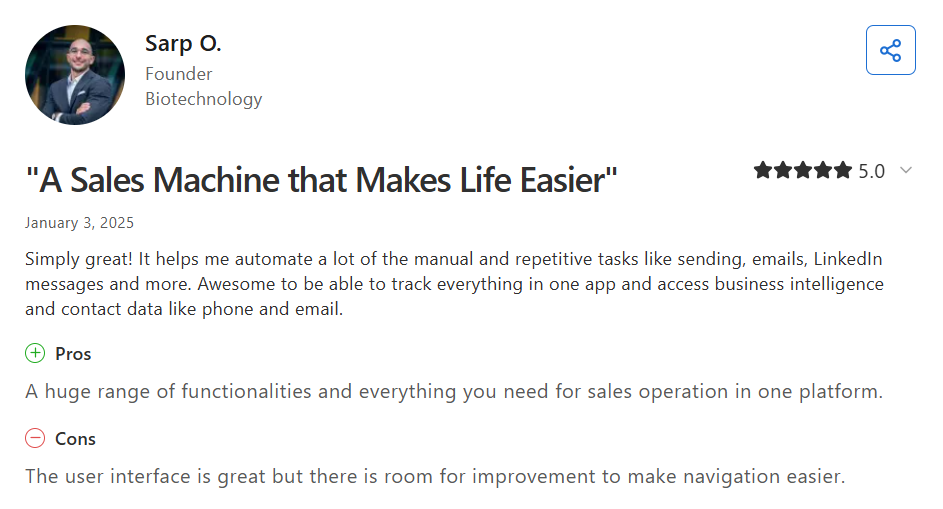
Pricing is also transparent and scales up with sending volume, data access, and automation limits.
Key Features:
- Integration with Email Providers
- Advanced Reports and Dashboards
- Email Credits
- Email Automation through Sequencing
- Dialer (Professional and Custom plans)
- Customizable Reports (Custom plan)
Pricing:
- Free tier available
- Basic: $59/user/month
- Professional: $99/user/month
- Organization: $149/month (billed annually)
Salesforce Sales Cloud
G2 Rating: 4.4/5 ⭐ from 23,344 reviews
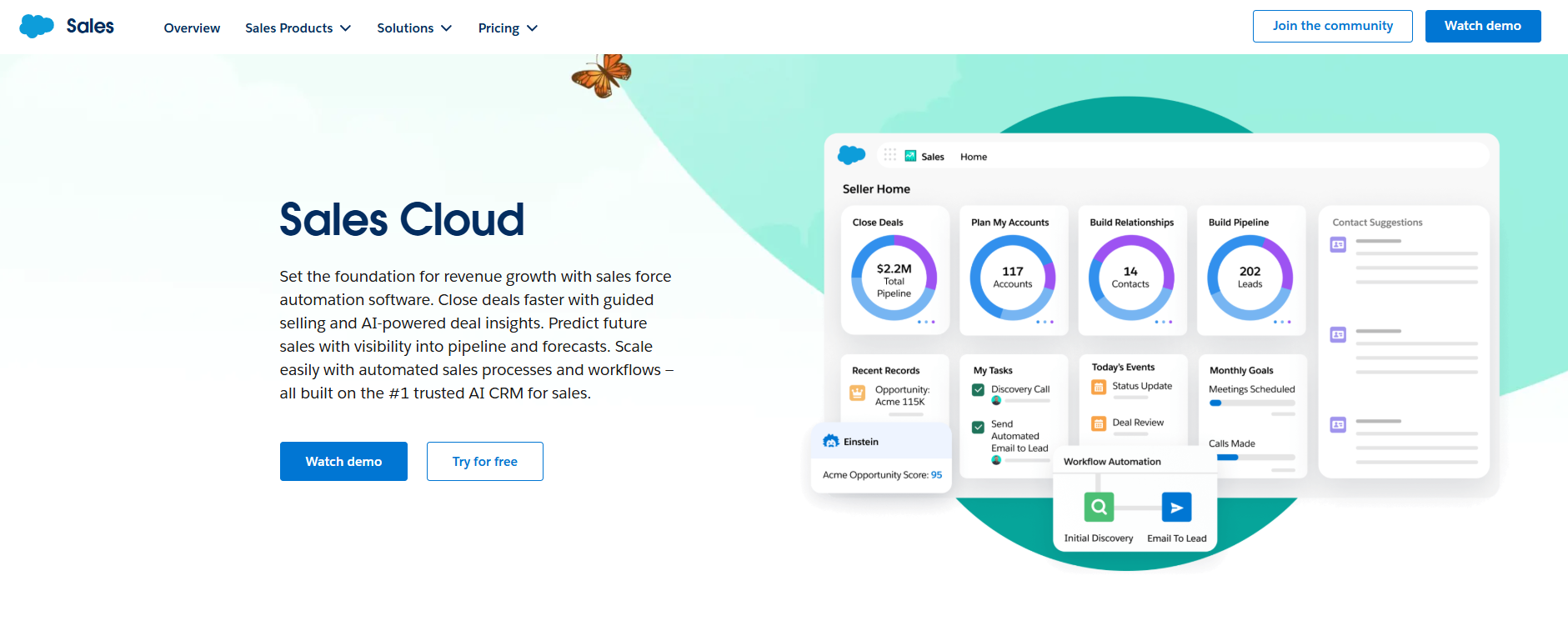
Salesforce is, well, Salesforce. It's the heavyweight sales CRM that everything else often integrates into. Its sales engagement arm (Sales Cloud) is deeply embedded within its vast, highly-customizable platform.
It boasts many comprehensive features, including AI-assissted sales forecasting, mobile access, workflow automation, deep reporting, and an integration ecosystem that connects to virtually everything. This is its greatest strength and its biggest hurdle.
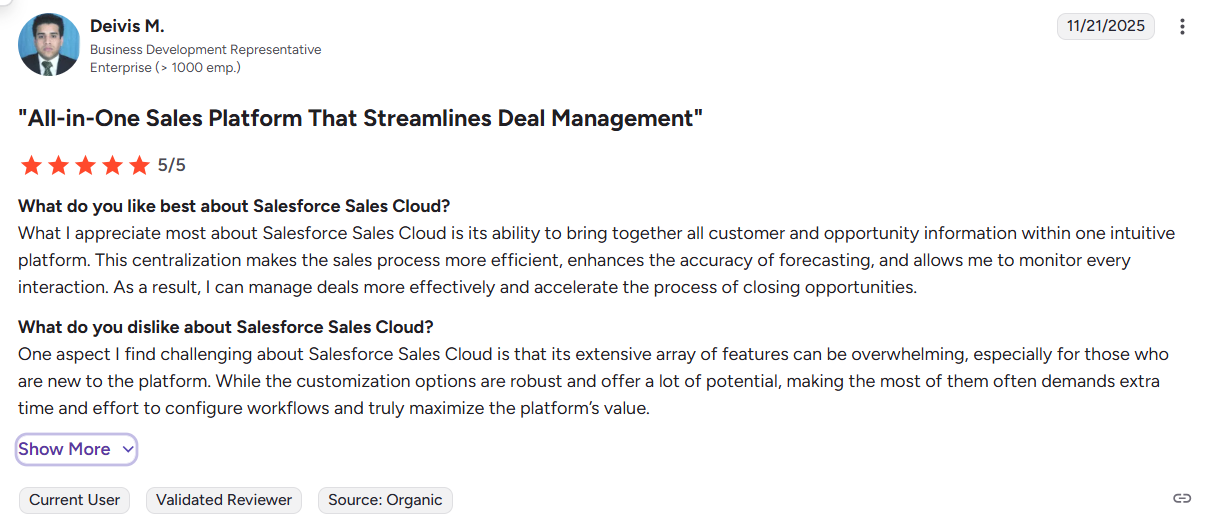
Salesforce can do almost anything, but making it do what you need requires configuration, often by someone who understands Apex and Salesforce architecture.
For large organizations with dedicated Salesforce admins, it's a natural fit. For smaller teams or companies not already invested in the Salesforce ecosystem, it's expensive and relatively over-engineered.
Key Features:
- AI-powered sales insights and forecasts
- Comprehensive reporting and dashboards
- Mobile app with offline capabilities
- Enterprise-grade security and compliance
- Extensive third-party integration ecosystem
- Advanced workflow automation
- Highly customizable CRM platform
Pricing:
- Free trial available for all tiers.
- Starter: $25/user/month (billed monthly or annually)
- Pro: $80/user/month (billed annually)
- Enterprise: $165/user/month (billed annually)
- Unlimited: $330/user/month (billed annually)
- Agentforce 1 sales: $330/user/month (billed annually)
Key Takeaways
Sales engagement software is far from just another tool in your stack. It’s a force multiplier that, when used right, lets your team spend less time chasing and more time closing. That shift alone can dramatically change your pipeline, revenue, and team’s morale.
But results depend on choosing the right platform. One that fits how your business works today, and how it will grow tomorrow. Look for usability and deep integration with the tools you already rely on. Prioritize features that empower your team and keep ROI in sharp focus.
If outbound is your motion, Instantly.ai deserves serious consideration. From high deliverability to campaign automation at scale, it’s built for performance. Start your free Instantly trial and see how far your engagement (and your conversions) can go.


