


Updated January 19, 2026
TL;DR: Cold email sequences in 2026 require precision targeting, real personalization, and strict deliverability guardrails rather than high volume. Effective sequences include 3-4 touchpoints spaced 2-4 business days apart across lead generation, referral, meeting request, and follow-up campaigns. Our new cold email benchmark report shows personalization significantly improves reply rates when each email adds value without sounding pushy. Instantly provides AI sequence generators, proven templates, automated follow-up rules, and analytics to scale campaigns. Stop sequences after clear rejections, adjust based on reply data, and make it easy for prospects to respond yes, no, or later.
You line up your prospects. You hit send. The silence that follows tells you everything. Too many cold email sequences fizzle out before they reach a real conversation.
The problem isn’t always effort or intent. Without a sharp approach, one built for today’s inboxes, you're bound to keep missing the mark while your sender reputation quietly sinks.
In 2026, building a cold email sequence that gets results is about precision, not volume. Smart senders lean into better targeting, real personalization, and strict guardrails on deliverability. They use tools (like Instantly) to automate what slows them down and tie every touch back to a bigger strategy.
Below, we share several ready-to-use cold email sequence templates to inform your strategies going forward. For every sequence, you’ll find 3–4 touchpoints that keep replies coming without sounding canned or desperate.
Lead Generation Sequence
When your goal is to introduce yourself and spark interest with a new prospect, this sequence keeps things relevant and low-pressure.
Start with a hook tailored to their business, follow up by offering something useful, then close with a simple, direct ask.
Email 1: Introduction
Subject: {{Personalized Reason or Quick Benefit}} for {{Prospect’s Company}}
Hi {{First Name}},
I’m with {{Your Company}}, and I noticed {{specific observation about their company, e.g., “you recently expanded your engineering team”}}. We help companies like {{Prospect’s Company}} {{brief value, e.g., “onboard new engineers faster without adding admin work”}}.
Would it be useful to share one quick idea that’s working for others in your space?
Best,
{{Your Name}}
Email 2: Value Add
Subject: Quick idea for {{Goal—e.g., “speeding up onboarding”}}
Hi {{First Name}},
Wanted to follow up and share a {{case study/article/tool}} from {{similar company or industry}} that saw {{clear result, e.g., “15% faster onboarding in Q1”}}. Thought you might find it useful.
If you’re open to it, I’m happy to walk through a few ideas tailored to {{Prospect’s Company}}.
Any interest?
Best,
{{Your Name}}
Email 3: Direct Ask
Subject: Worth a quick chat?
Hi {{First Name}},
If now’s not the right time, no worries. If you’re open to a 15-minute call to see if we’re a fit for {{specific project or pain point}}, just let me know what works.
Thanks either way,
{{Your Name}}
Referral / Mutual Connection Sequence

Referrals and mutual connections open doors that pure cold outreach can’t. This sequence lets you lead with credibility, follow with something helpful, and make your ask without overdoing the name drop.
Email 1: Name Drop Intro
Subject: {{Mutual Contact}} suggested I reach out
Hi {{First Name}},
{{Mutual Contact}} mentioned you’re the right person to speak with about {{project or challenge}}. At {{Your Company}}, we help teams at {{Prospect’s Company or similar companies}} {{brief value, e.g., “improve ramp-up for new hires”}}.
Would it be useful to share a short example from a team like yours?
Best,
{{Your Name}}
Email 2: Helpful Resource
Subject: Thought this might help with {{Relevant Challenge}}
Hi {{First Name}},
Wanted to follow up with a {{one-pager/resource/toolkit}} we recently shared with {{similar team or company}}. If it sparks any questions or ideas, happy to compare notes.
Let me know if you want to dig into anything specific.
Best,
{{Your Name}}
Email 3: Quick Check-In
Subject: Open to a call this month?
Hi {{First Name}},
If this isn’t a priority right now, I won’t chase. But if it helps to see how {{Your Company}} works with {{similar client/industry}}, I’m glad to put time on the calendar. Just let me know.
Thanks,
{{Your Name}}
Sales Meeting Request Sequence
When you want to book a meeting with a prospect who knows your name but hasn’t engaged yet, clarity and brevity matter. This sequence gets right to the ask, adds value in the follow-up, and closes the loop without sounding pushy.
Adjust the specifics to fit your audience, but keep the language direct and easy to personalize.
Email 1: Direct Meeting Ask
Subject: Quick call about {{Specific Topic}}?
Hi {{First Name}},
Saw that {{Prospect’s Company}} is focused on {{specific goal or pain point, e.g., “scaling your customer success team”}}. I work with companies in your space who want to {{achieve similar outcome, e.g., “reduce onboarding time without adding more staff”}}.
Would a short call to share what’s working across the industry help you?
Best,
{{Your Name}}
Email 2: Proof or Perspective
Subject: How {{Similar Company}} approached {{Relevant Topic}}
Hi {{First Name}},
Wanted to send a quick note—{{Similar Company}} saw {{measurable outcome, e.g., “a 20% drop in onboarding time”}} after tweaking their {{process/tool}}. Happy to share what they tested or answer questions.
Let me know if you want the details or prefer to discuss live.
Best,
{{Your Name}}
Email 3: Last Ping
Subject: Should I close the file?
Hi {{First Name}},
If there’s no interest, just let me know—it helps keep my inbox clean. If timing’s tricky but you want to revisit later, I’m happy to circle back down the line.
Either way, thanks for reading.
{{Your Name}}
Follow-Up Sequence for Non-Responders
Sometimes you’ll reach out and get nothing back. A good follow-up sequence repeats your value without nagging, offers something new each time, and makes it easy for the other person to say yes, later, or no.
Keep each message short and change your angle with each touch.
Email 1: Light Nudge
Subject: Wanted to circle back, {{First Name}}
Hi {{First Name}},
Just checking in to see if my last note landed. Sharing a quick {{case study/article}} that’s helped teams like yours {{achieve X}}. If there’s a better time or someone else I should speak with, let me know.
Thanks,
{{Your Name}}
Email 2: Add Value or Alternative Angle
Subject: Quick tip for {{their role or company}}
Hi {{First Name}},
Thought you’d appreciate this {{quick tip/resource}}—it made a difference for {{Similar Company}} handling {{related challenge}}. If you’d prefer I check back next quarter or with a colleague, let me know.
Best,
{{Your Name}}
Email 3: Permission to Close Out
Subject: Should I take this off my list?
Hi {{First Name}},
If now isn’t a fit, no hard feelings. Let me know if another time makes sense.
Thanks,
{{Your Name}}
Follow-Up Sequence for Interested Prospects
When someone responds with interest but goes quiet, your next step should be sending a friendly reminder to keep the door open. These follow-ups should feel helpful and low-pressure, not intrusive.
Email 1: Meeting Reminder
Subject: Still interested in connecting?
Hi {{First Name}},
Wanted to check if you had a chance to look at your calendar. If you’d like to pick a time, here’s a link: {{scheduling link}}. Let me know if another format works better.
Best,
{{Your Name}}
Email 2: Gentle Value Add
Subject: Resource for {{topic you discussed}}
Hi {{First Name}},
Also wanted to share a short {{case study/demo video}} from {{similar company or client}}—thought it might help as you consider next steps. If you need anything else before the meeting, just reply.
Thanks,
{{Your Name}}
Email 3: Checking In
Subject: Wanted to close the loop
Hi {{First Name}},
No rush if you’re still working things out. If plans have changed, just let me know. Otherwise, happy to keep the door open for the future.
Best,
{{Your Name}}
How to Personalize and Use These Templates
Cold email sequences become infinitely better with effective personalization. Before you send, swap in details from the prospect’s recent news, role, or company focus.
Use their first name, mention what caught your eye (like a recent hire or product launch), and adjust the value proposition so it fits their world and priorities. The best part is, AI can now help you do all these and more in minutes.
Timing matters. Most teams space emails by two to four business days. Track which step gets the most replies and which ones fall flat, then adjust your sequence to fit.
If you get a clear “no,” stop the sequence. If someone refers you to a colleague, reach out to them with the same care. The more your emails feel written for one person, the more likely you’ll get a real reply.
Drive Sustainable Cold Email Success with Instantly
G2 Rating: 4.8/5 ⭐ from 3,785 reviews
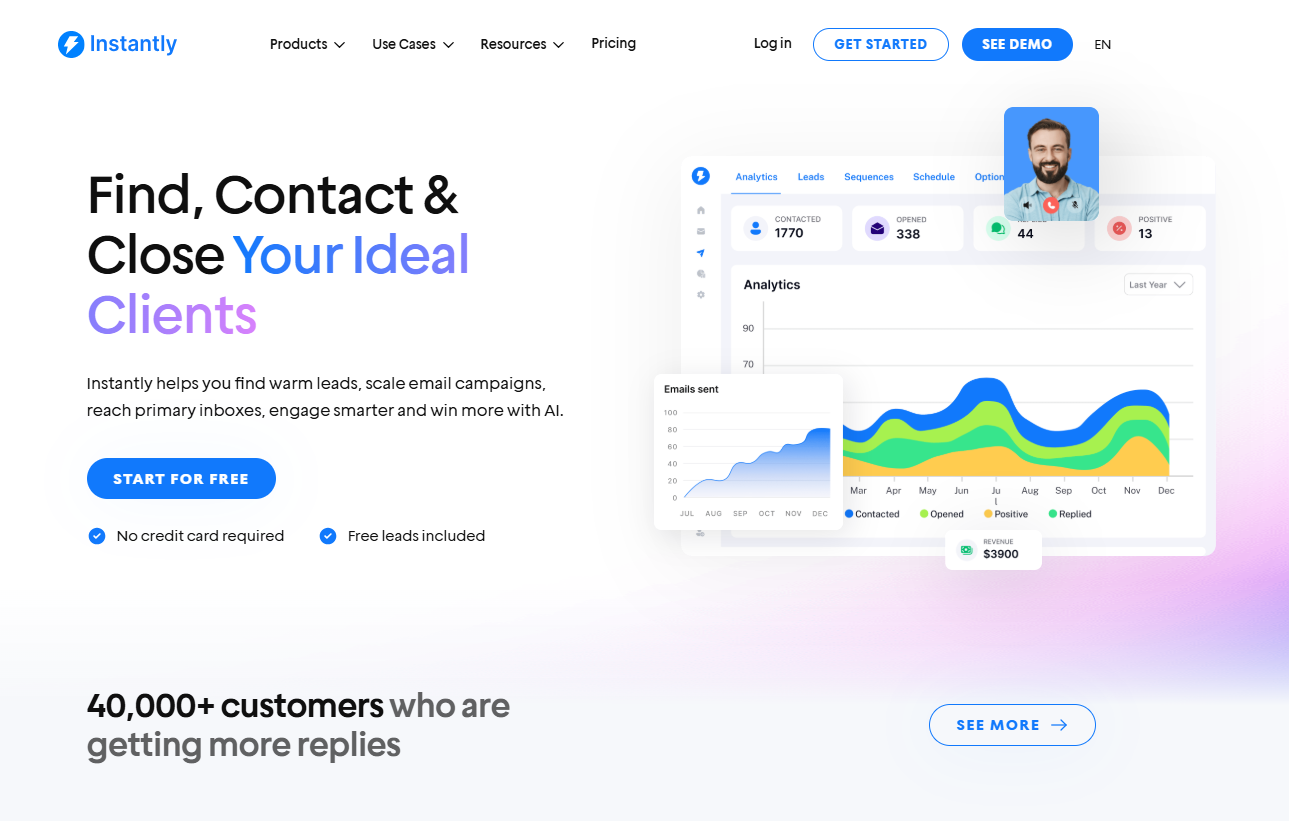
The right tools make these sequences easier to scale, personalize, and measure. Instantly gives B2B teams and agencies everything they need to run proven cold email sequence campaigns, without building from scratch each time.
With Instantly, you get an AI sequence generator, a library of high-performing templates, automated follow-up rules, and in-depth analytics.
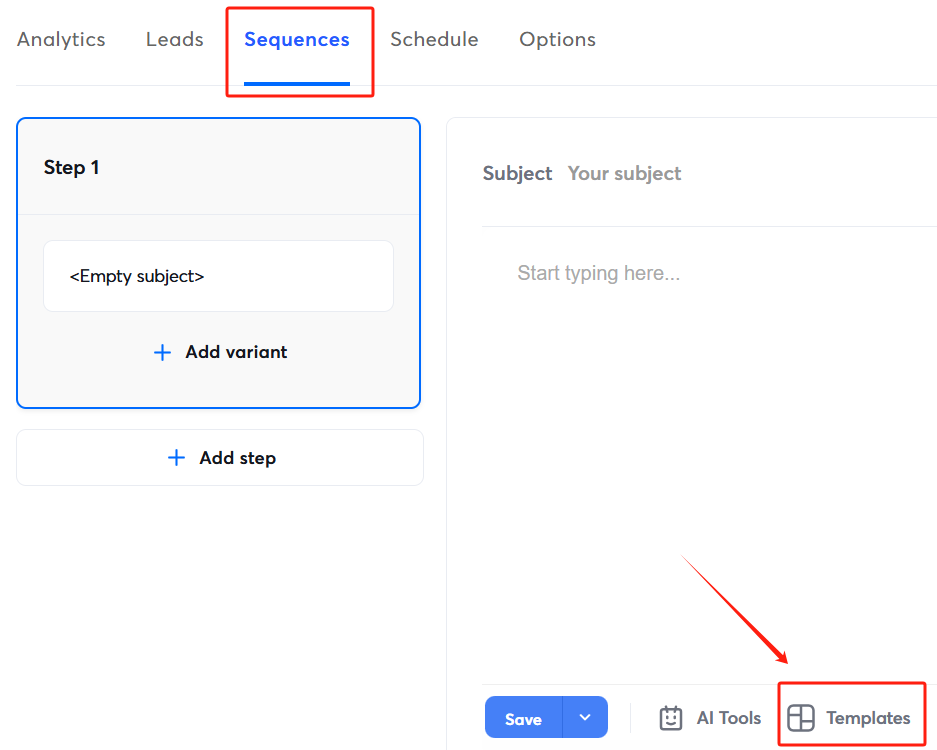
That means you can fill in these frameworks, launch campaigns in less time, and quickly see what gets replies.
If you’re ready to take the manual effort out of cold outreach, Instantly helps you move from copying templates to running tested sequences that fit your brand and your goals.
Key Takeaways
The right cold email sequence gives you a repeatable way to start real conversations and book meetings without burning bridges or wasting time.
Start with proven fill-in-the-blank frameworks, personalize each touch, and don’t be afraid to tweak as you go. Keep your outreach relevant, your follow-ups brief, and always make it easy for prospects to say yes or no.
Templates do the heavy lifting. Consistency and a few smart adjustments do the rest. Ready to run these sequences at scale? Try Instantly for free today and see how easy it is to launch cold emails that get replies.


