


Latest Update: January 04, 2026
Email automation software is essential for scaling outreach. It involves sending customized, strategic email sequences on autopilot, saving sales and marketing teams precious hours daily.
The best tools include deliverability safeguards, smart sequencing and personalization features, effective data and intelligence add-ons, and transparent pricing.
Our top picks in 2026: Instantly, ActiveCampaign, Brevo, MailerLite, and Omnisend. Each serves distinct marketing priorities, from cold outreach to ecommerce campaigns.
Manual email outreach has a 100% failure rate at scale. You can’t build a skyscraper with a hand trowel, and you can’t hold meaningful conversations with hundreds of leads without your quality and sanity plummeting.
At some point, manual effort stops being noble and starts being counterproductive. And that’s when agencies and teams turn to a force multiplier: email automation software.
A stellar automation partner (like Instantly) takes the grind out of every aspect of cold email outreach. Inboxes warm up safely,contacts are verified before sending, and smart message sequences fire off at the right time, all on autopilot.
The hard part nowadays is finding a reliable solution in a market flooded with empty promises. To help inform your decision, we’ll break down the essentials of effective email automation and then provide a few top-tier software partners to give your campaigns the best shot at success.
How Does Email Automation Differ from Bulk Email Blasts?
When you hear “email automation,” your first thought may be those mass, generic emails you get from big corporations. But that’s far from accurate.
True email automation is a smooth, almost effortless process where pre-set rules strategically send personalized emails and manage tasks based on how people interact with your business.
Instead of manually sending one message after another, the engine handles the sequence from start to finish. New prospects are added, their addresses are verified, and the first email goes out automatically.
If there’s no reply, the software sends friendly reminders based on defined parameters. When a prospect does respond, that reply is captured in a shared inbox and synced to your CRM, so you can move the conversation forward all the way to conversion.

A HubSpot study confirms that sales teams using automation save an average of two hours and 15 minutes a day on repetitive tasks. And with AI now fueling automation, sending hyper-personalized emails to thousands of leads has never been easier.
Email automation also paints a much clearer picture of campaign performance. You can test new ideas fast, track the results cleanly, and optimize your process with a level of precision that’s simply not possible when doing it manually.
Your Buyer’s Checklist: What to Look for in a Great Email Automation Software

After testing various platforms and learning from hands-on email outreach experiences, a few essential features separate tools that deliver from expensive disappointments. Here’s what to prioritize when evaluating email automation software:
Deliverability Safeguards
Before anything else, your emails need to land in your recipients’ inboxes. This is arguably the most important factor of campaign success. A great automation software is obsessed with email deliverability.
For the best results, look for a platform that, at a minimum, includes the following:
- Email Warmup: Quality platforms gradually build your sender reputation by exchanging emails between real accounts before you start outreach. Think of it like establishing a credit history before applying for a mortgage. Without warming, you’re essentially asking email providers to trust a stranger with their users’ inboxes.
- Domain Authentication: Make sure the software supports proper technical setup, like SPF, DKIM, and DMARC. This is the digital equivalent of a professional business license. It tells email providers you are who you say you are. At Instantly, for example, we offer a complete Done-For-You (DFY) Email Setup service to get senders up and running without the technical hassle.
- Daily Send Caps: This prevents you from sending too many emails at once, which can trigger spam filters and get your account blacklisted. The best tools maintain reasonable caps by default while still letting you manage these caps yourself if you wish.
For a more thorough coverage of cold email deliverability features, check out our video:
Data & Intelligence
Guesswork is the enemy of scalable growth. A solid email automation software gives you useful insights and meaningful email marketing metrics to make smarter decisions about your campaigns.
Beyond opens and replies, the software dashboard should provide a crystal clear view of your entire sales pipeline. You should be able to see which sequences are booking the most meetings, what emails have the highest engagement, and where leads are dropping off.
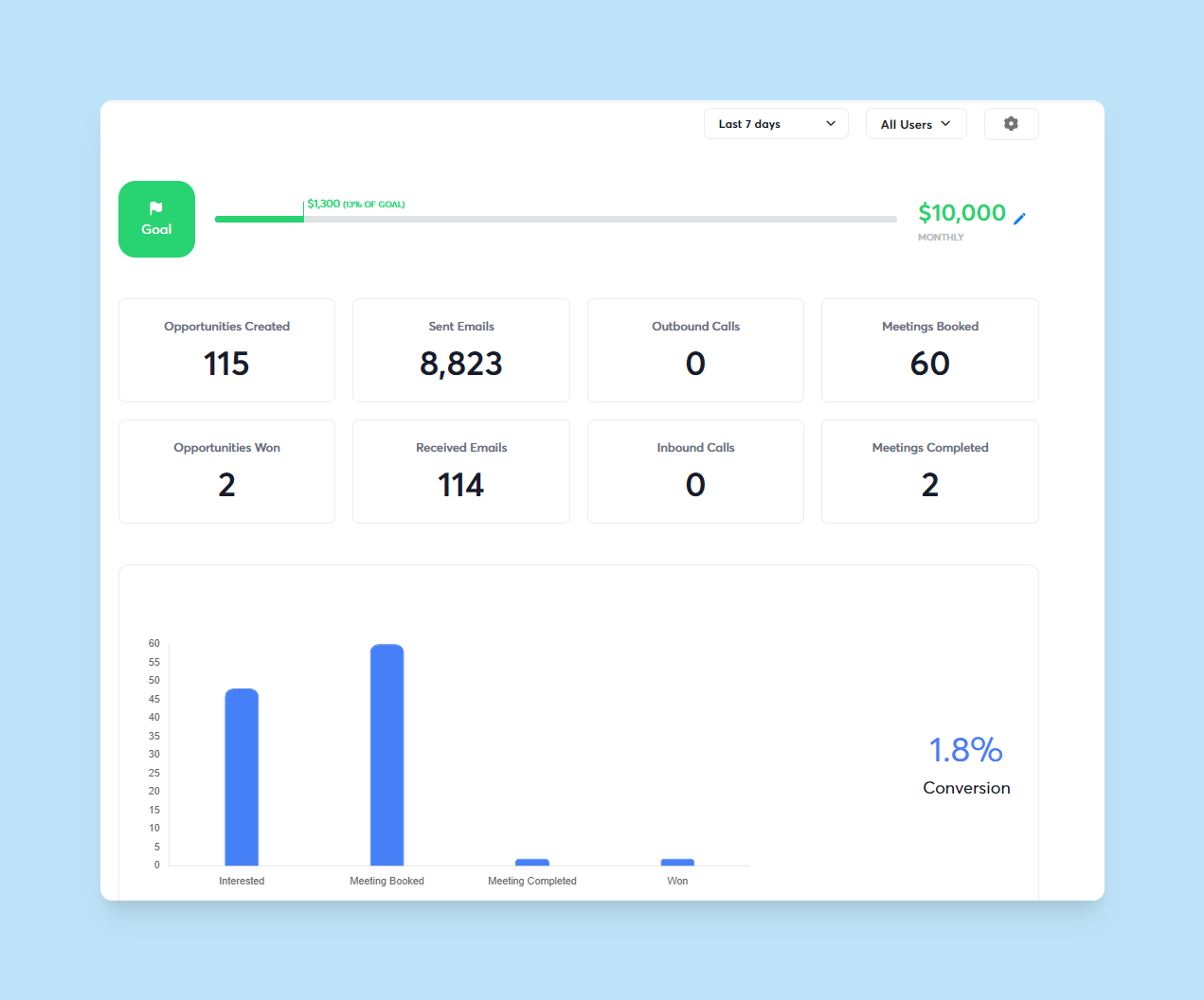
Some top-tier platforms take things even further with valuable email marketing add-ons like email address verification and lead intelligence features to gather prospect data. This saves you the trouble of sending to invalid contacts and gives you much more context for personalizing messages.
Smart Sequencing & Personalization
This is where automation shows its full power. A top-tier email automation software adapts based on how recipients behave rather than simply sending emails in a straight line. It also lets you show you’ve done due research on what matters to recipients. That’s how you maintain the human touch at scale.
At a minimum, you’ll need the following:
- Conditional Logic: The platform should be able to create "if-then" scenarios. For example, “if a prospect doesn't reply in three days, send a polite follow-up. But if they click a link, move them to a different, more specific sequence.” This way, you avoid sending irrelevant messages and keep conversations moving forward.
- A/B Testing: You should be able to test different subject lines, opening lines, and calls to action. A small tweak to a subject line can have a huge impact. For instance, according to a study from Yes Lifecycle Marketing, emails with personalized subject lines have been found to deliver 50% higher open rates than generic ones.
- Dynamic Personalization: Using a prospect’s first name is now table stakes. A decent software should allow for dozens of custom variables, so you can dynamically insert icebreakers, company name, role, industry, and a specific pain point you’ve identified.
CRM Integration & Unified Inbox
The biggest drain on a sales rep’s time is admin functions. Things like switching between tabs, copying and pasting data, manually updating spreadsheets, and similar tasks.
A solid automation software needs to either have a built-in CRM or a seamless, two-way sync with your external CRM, so you get a single source of truth for all your outreach. This way, when a lead engages with your email, that information automatically syncs to their CRM record.
What’s more, all email replies and interactions should flow into one central place, so you never have to jump between inboxes to keep track of sales conversations.
Pricing & Scalability
An effective automation software should be an investment, not a money pit. Look for transparent pricing with no hidden fees, and choose a platform that can grow with you.
A truly scalable automation software can handle your needs today and your growth next year without a major overhaul or absurd price hikes.
Red Flags To Watch Out For
- Unlimited sending promises usually means unlimited reputation damage. Legitimate platforms impose reasonable limits to protect deliverability.
- Missing compliance features for the GDPR, CAN-SPAM, or other regulations puts your business at legal risk. This isn’t optional.
- No trial period or free tier suggests the company doesn’t trust its own product. Quality platforms let you test before committing.
- Poor customer support responsiveness during the trial period predicts how they’ll treat you as a paying customer. If they’re slow to help during the sales process, imagine how long you’ll wait for technical support.
At a Glance: Finding Your Email Automation Software Fit
Like most things, email automation software comes with its specific strengths and trade-offs. Here’s how our top five picks stack up across features that matter most for different business needs:
5 Email Automation Software For High-Performing Campaigns (2026)
Below are our picks for the strongest email automation software in 2026, each with a distinct focus and ideal audience.
Instantly.ai
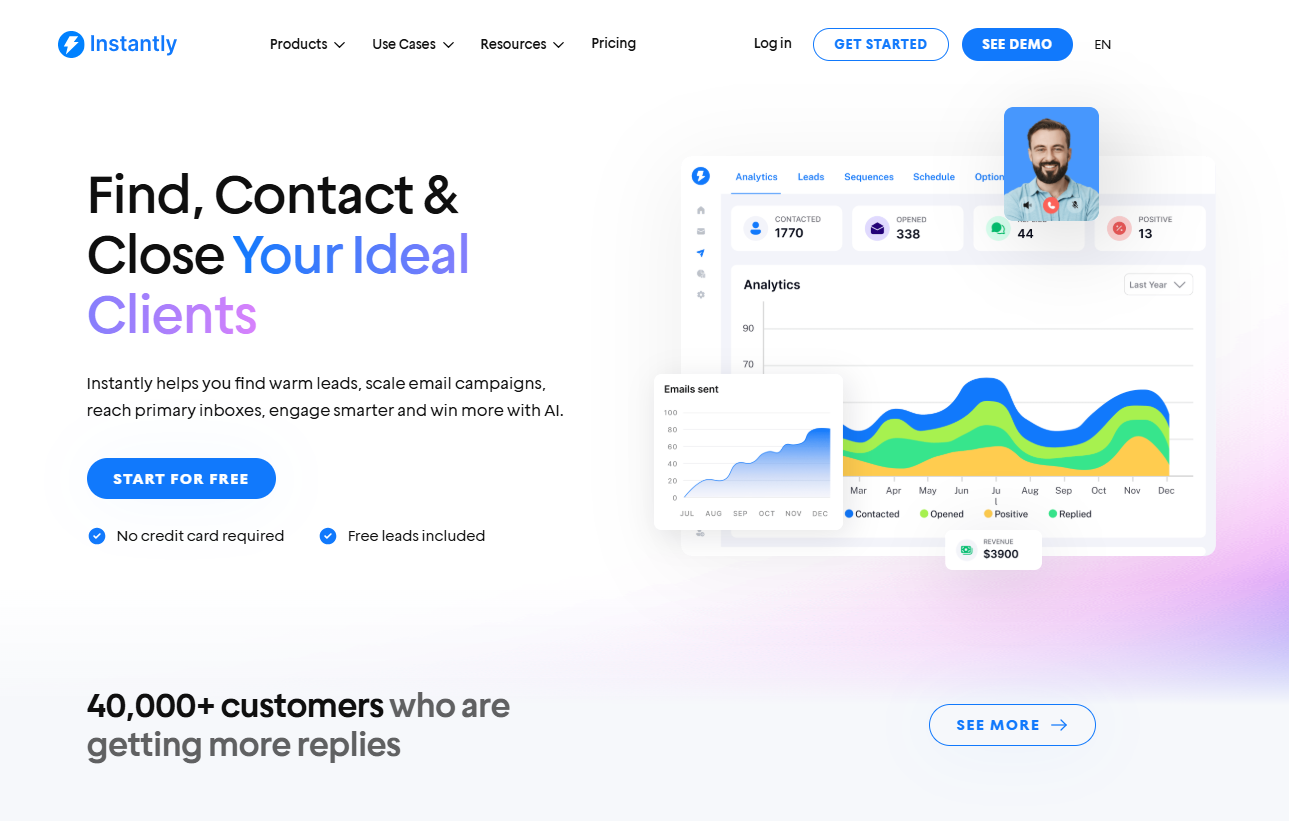
G2 Rating: 4.8/5 ⭐ from 3,780 reviews
Best Suited For: Startups, founders, agencies, and B2B sales/marketing teams running high-volume outbound campaigns who need both automation and deliverability safeguards.
Instantly.ai has quickly become one of the most talked-about names in outbound automation, and for good reason. It’s built from the ground up for all-in-one cold email automation, with a focus on helping teams scale without sacrificing deliverability.
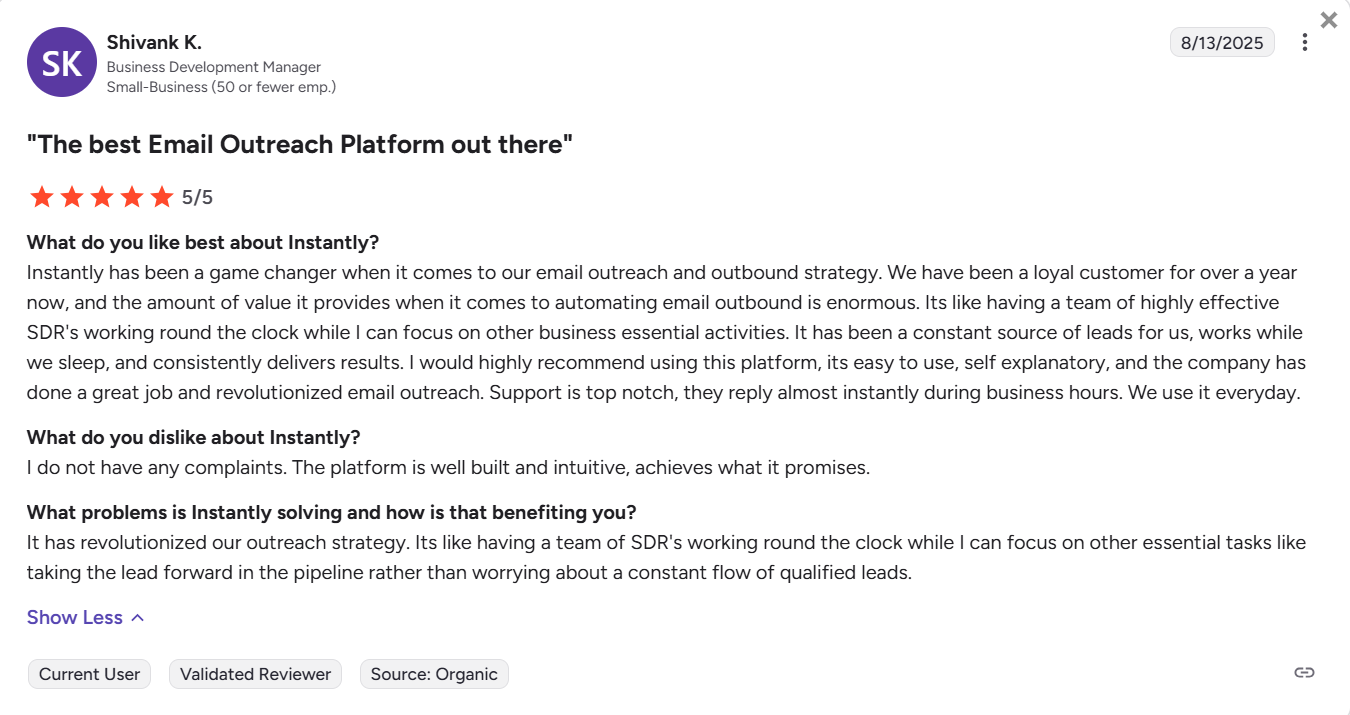
Far from generic bulk email senders, Instantly uses an AI-powered campaign sequencing engine that makes outreach feel natural, even at scale.
You can design dynamic sequences with customizable time delays between touchpoints, vary send windows across inboxes, and rotate sending accounts automatically.
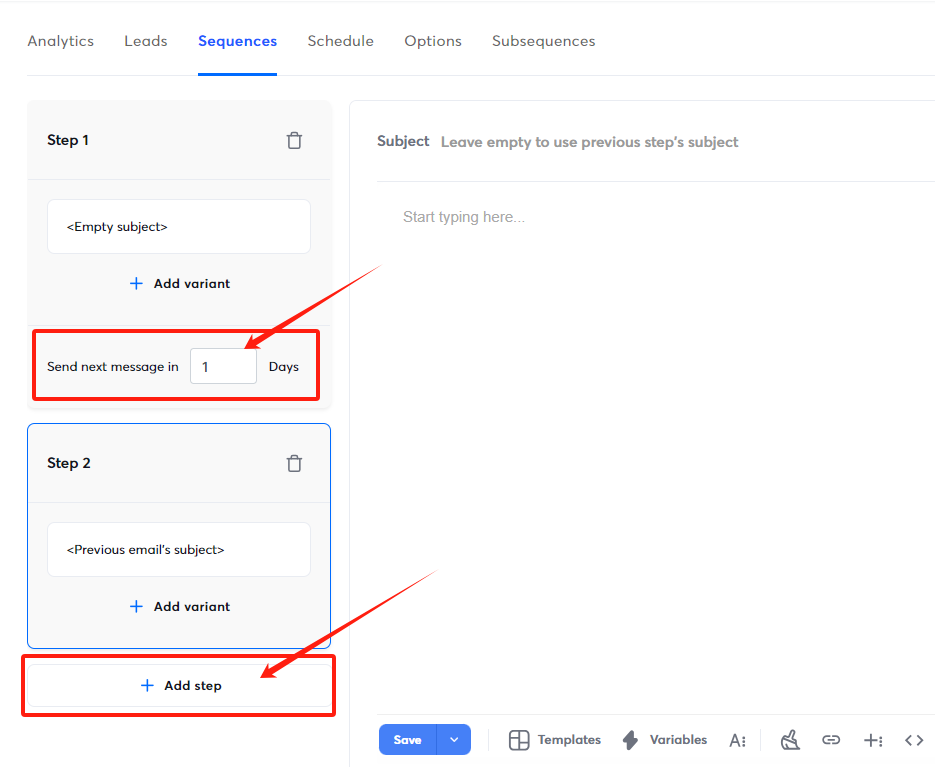
Even better, Instantly’s personalization features go deeper than basic merge tags. We’re talking:
- Spintax to create different message variations from a single template, so your messages avoid spam filter detection
- Conditional logic that lets you create entirely different message paths based on company size, industry, tech stack, role, etc.
- Placeholder values that pull in real-time data about prospects, including their companies, mutual connections, etc.
- Inbox rotation across multiple sending accounts to further humanize outreach patterns and protect your sender reputation.
With this sophisticated feature set, you can send email campaigns to thousands of prospects while keeping every email unique, relevant, and context-aware.
When it comes to data and intelligence, Instantly brings its own lead database of over 450 million verified contacts, plus Instantly Pixel, which identifies website visitors and ties them into campaigns.
Our built-in CRM and Unibox consolidate your replies, while a verification tool cleans your lists before sending. And for senders that prefer not to wrestle with technical setup, Instantly offers a Done-For-You (DFY) email setup service with all technical records preconfigured.
Instantly also recently added VIP Service, where a strategist builds and manages outreach systems for you, and AI Copilot, which lets you chat with AI to design campaigns, analyze performance, or pull new leads.
This combination of sequencing, personalization, deliverability, data, and user-friendliness makes Instantly particularly valuable for senders who are serious about scaling outbound without obsessing over technicalities.
Standout Features
- AI-powered dynamic sequences with behavioral adaptation and custom timing
- Thousands of proven email templates and resources
- Advanced personalization using spintax and conditional logic
- Specialized deliverability network with 1M+ account warming infrastructure
- Inbox rotation and sending pattern optimization for reputation protection
- 450M+ verified B2B contact database with real-time data enrichment
- Built-in sales CRM with unified inbox and deal tracking
- Email address verification and hygiene tools
- Done-For-You email setup with complete technical configuration
- VIP service with a dedicated account strategist
- AI Copilot for conversational campaigns
Pricing
Instantly offers a free trial to let users test the waters before committing. Our plans are structured to provide flexibility for both email outreach and lead access:
- Growth ($37/month): Unlimited email accounts & warmup, 1,000 uploaded contacts, 5,000 emails monthly, chat support
- Hypergrowth ($97/month): Unlimited email accounts & warmup, 25,000 uploaded contacts, 100,000 emails monthly, premium live support
- Light Speed ($358/month): Everything in Hypergrowth + 500,000 emails monthly, 100,000 uploaded contacts, SISR System (Server & IP Sharding and Rotation)
ActiveCampaign
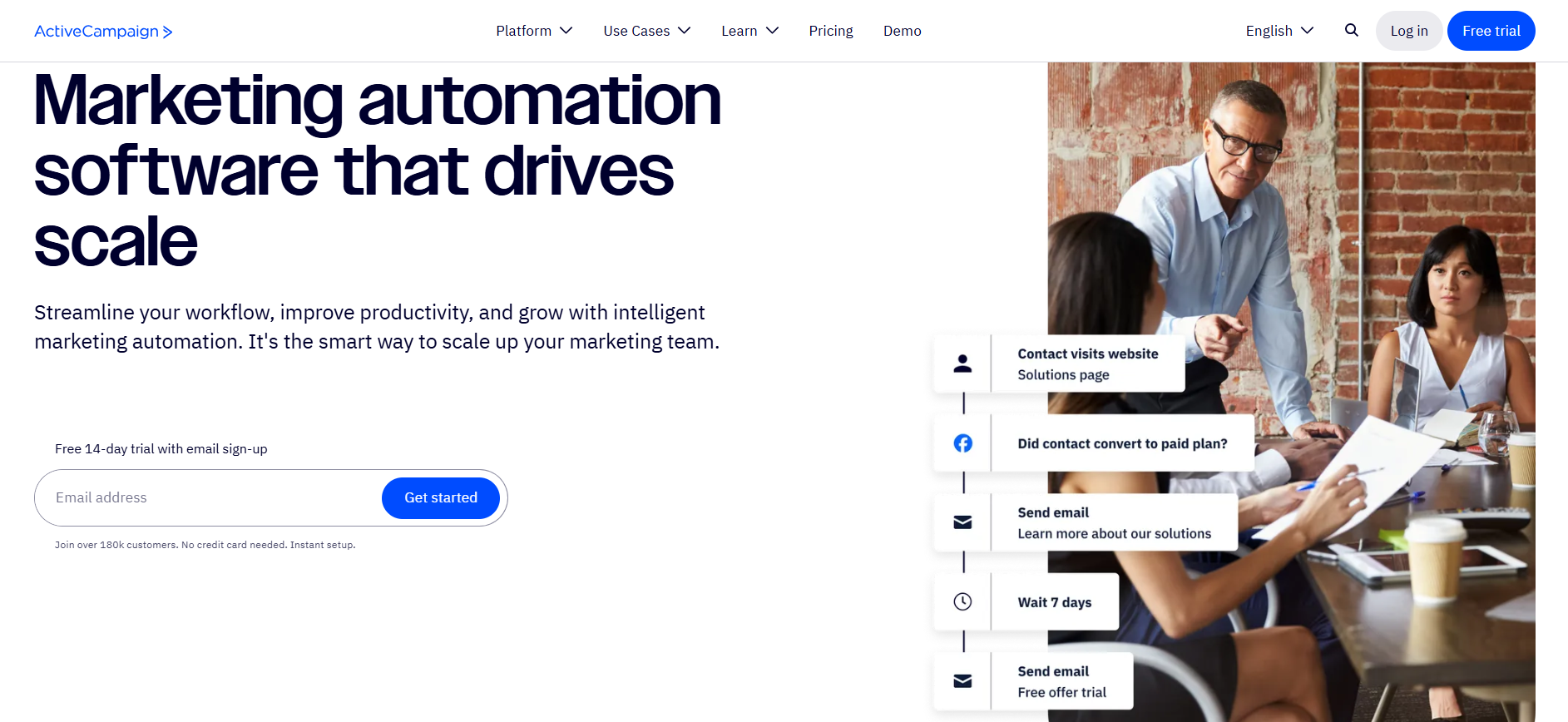
G2 Rating: 4.5/5 ⭐ from 14,302 reviews
Best Suited For: SMBs, marketers, and ecommerce brands that want email automation tightly connected to customer lifecycle and broader, multichannel marketing.
ActiveCampaign is known more for marketing automation than outbound email automation, but it earns its place here because of its flexibility with list segmentation, triggers, and multichannel support.
The platform excels at designing workflows that react to customer behavior (opens, clicks, form fills, purchases) and tailoring follow-ups accordingly. This makes it a strong fit for teams that want email capabilities tied closely to broader marketing and ecommerce workflows.
The built-in CRM is great for moving deals forward, and the extensive library of automation triggers/actions makes ActiveCampaign approachable even for beginners. The drawback for most users is the relatively high pricing compared to alternatives for the same feature set.
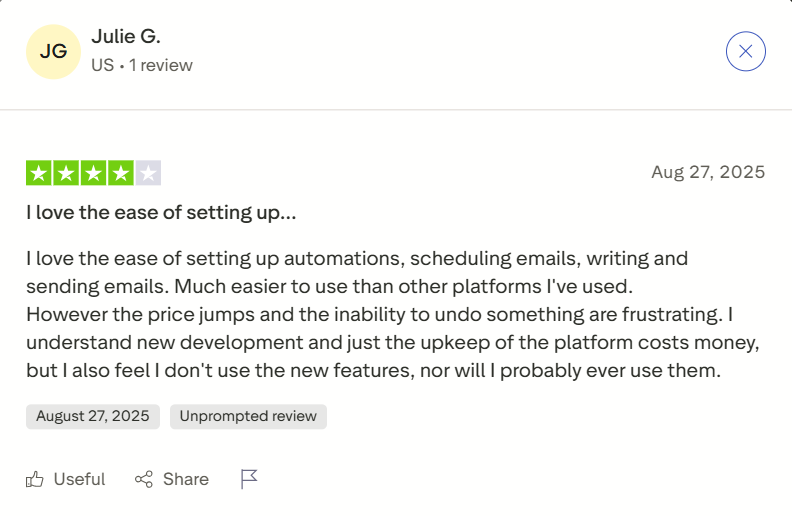
It’s also worth noting that deliverability features like email warmup and inbox rotation aren’t native on ActiveCampaign, so teams focused on outbound scale need to add complementary tools.
Standout Features
- Advanced segmentation and conditional triggers
- Visual workflow builder with automation recipes
- Native CRM with deal tracking
- Behavioral tracking across site and email
- Multichannel support (email, WhatsApp)
- Reporting dashboards for campaign performance
Pricing
- 14-day free trial
- Starter from $15/mo: basic personalized email campaigns
- Plus from $49/mo: automation and customer insights
- Pro from $79/mo: advanced email orchestration
- Enterprise from $145/mo: large-scale email marketing with enterprise support
Brevo (formerly Sendinblue)
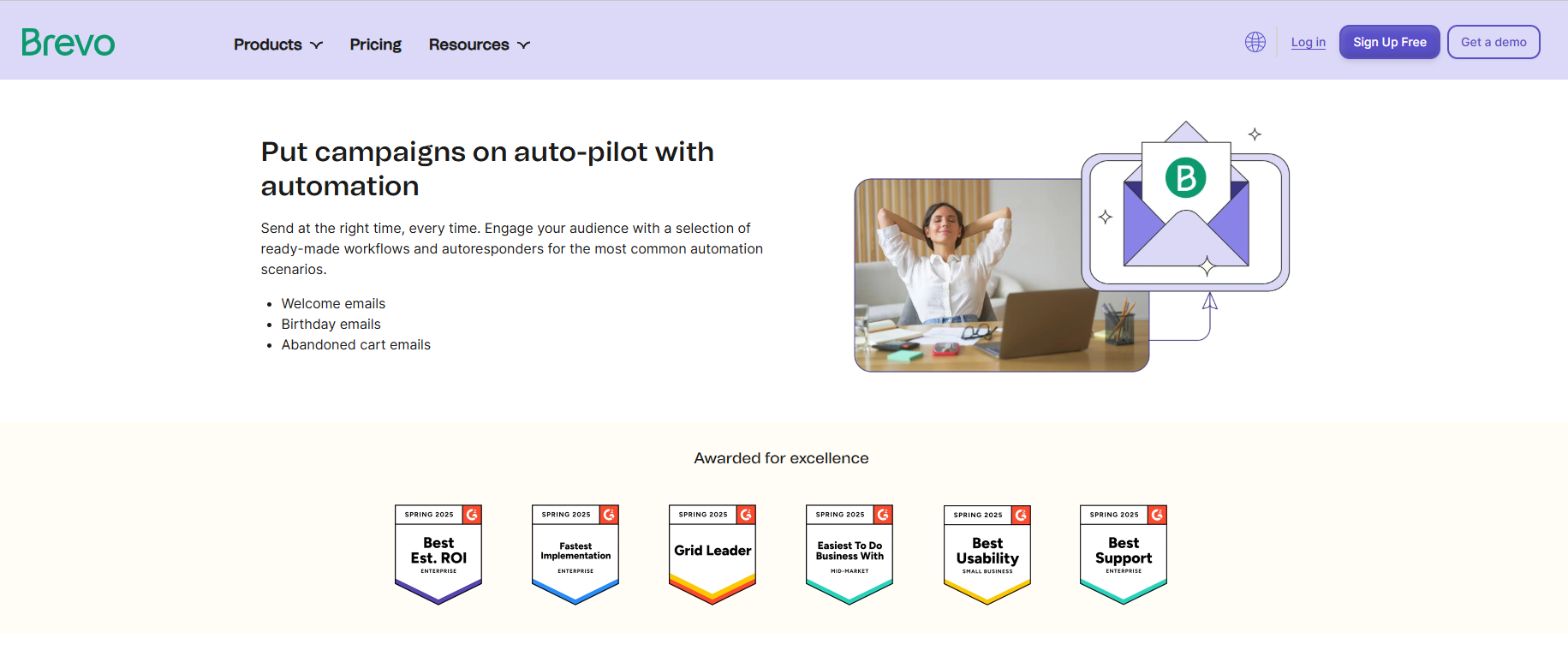
G2 Rating: 4.5/5 ⭐ from 2,480 reviews
Best Suited For: SMBs, marketers, and businesses that want affordable multichannel outreach (email, SMS, WhatsApp); particularly useful for companies with a large contact list.
Beyond having solid email automation features, Brevo takes a refreshingly unique approach when it comes to pricing by charging based on emails sent rather than contacts stored. This makes it particularly attractive for businesses with large contact lists but moderate sending volumes.
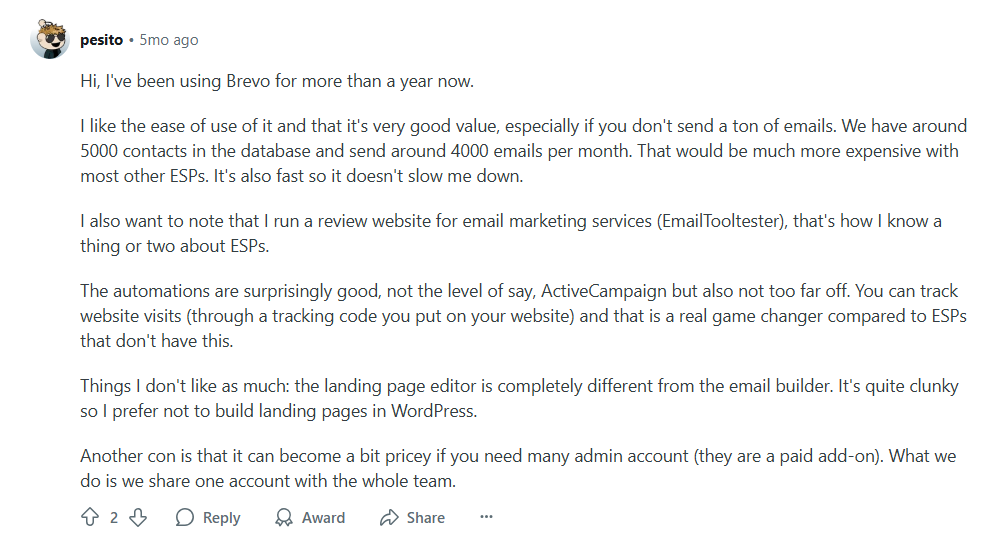
In practice, Brevo is more of a multichannel marketing hub. Besides email, it offers SMS, WhatsApp campaigns, and marketing automation logic that reacts to customer behavior.
The trade-off is that it isn’t built specifically for cold outreach, so teams may find its sequencing less flexible than platforms tailor-made for outbound campaigns. Still, for SMBs that want everything under one roof at an affordable entry point, Brevo is hard to beat.
Standout Features
- Contact-unlimited pricing model based on email volume
- Email, SMS, and WhatsApp campaigns in one platform
- Transactional email support (order confirmations, shipping updates)
- Drag-and-drop email editor
- Behavior-based marketing automation workflows
- Built-in CRM and pipeline management
- Reporting with open, click, and engagement stats
Pricing
- Free: 300 emails/day, templates, drag-and-drop editor, transactional emails, SMS & WhatsApp campaigns.
- Starter ($9/month): 5,000+ emails/month, no daily limit, basic reporting, 24/7 email support.
- Business ($18/month): automation, predictive sending, A/B testing, landing pages, advanced stats, phone support.
- Enterprise (custom pricing): unlimited contacts, sub-accounts, advanced integrations, tailored onboarding, enterprise-grade support, and security.
MailerLite
G2 Rating: 4.6/5 ⭐ from 1,071 reviews
Best Suited For: Small businesses, creators, nonprofits, and solopreneurs just getting started with email marketing, who prioritize ease of use and clean design above all else.
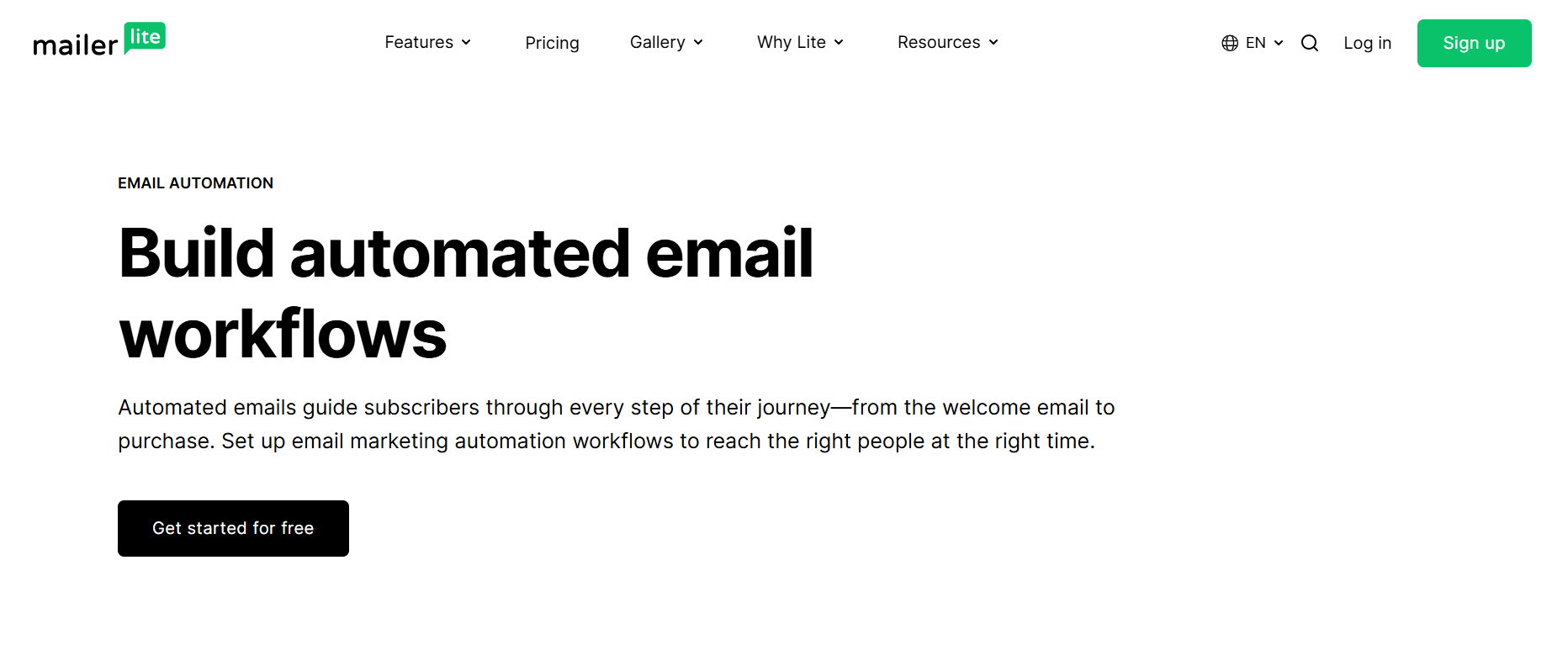
MailerLite has built a reputation on two things: simplicity and a generous free plan. It’s a beautifully designed platform that prioritizes a clean interface and an easy-to-use editor.
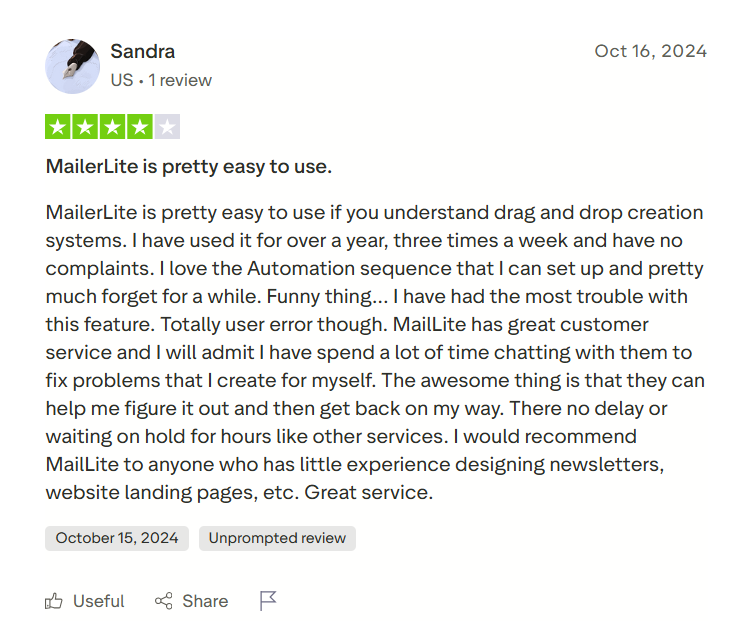
Deliverability is another strong point in MailerLite’s favor, with its sending infrastructure earning many users’ praises and industry awards.
On the automation side of things, MailerLite supports sequences like drip campaigns, though it doesn’t offer advanced outbound-specific features like inbox rotation or deep conditional logic.
While MailerLite may not have the enterprise-level features of a more robust email automation tool, what it does, it does very well. It’s a fantastic option for small teams, content creators, and nonprofits who value an uncluttered approach to their marketing.
Standout Features
- Generous free plan (up to 500 subscribers)
- Drag-and-drop editor with modern templates
- Automation workflows with triggers and actions
- Built-in landing page and form builder
- Transactional email support via add-on
- Strong deliverability reputation
Pricing
- Free: up to 500 subscribers, 12,000 monthly emails, 1 user, automation builder, websites, 10 landing pages, forms, and basic reporting.
- Growing Business ($10/month): unlimited emails, 3 users, sell digital products, dynamic emails, multivariate testing, unlimited sites/landing pages.
- Advanced ($20/month): unlimited emails/users, smart sending, Facebook integration, enhanced automations, promotion pop-ups, AI writing assistant.
- Enterprise (custom): 100K+ subscribers, unlimited users, dedicated success manager, IP/deliverability consulting, onboarding, and account audit.
Omnisend
G2 Rating: 4.6/5 ⭐ from 954 reviews
Best Suited For: Ecommerce brands and online retailers looking for multichannel automation (email, SMS, push) tied directly to store behavior.
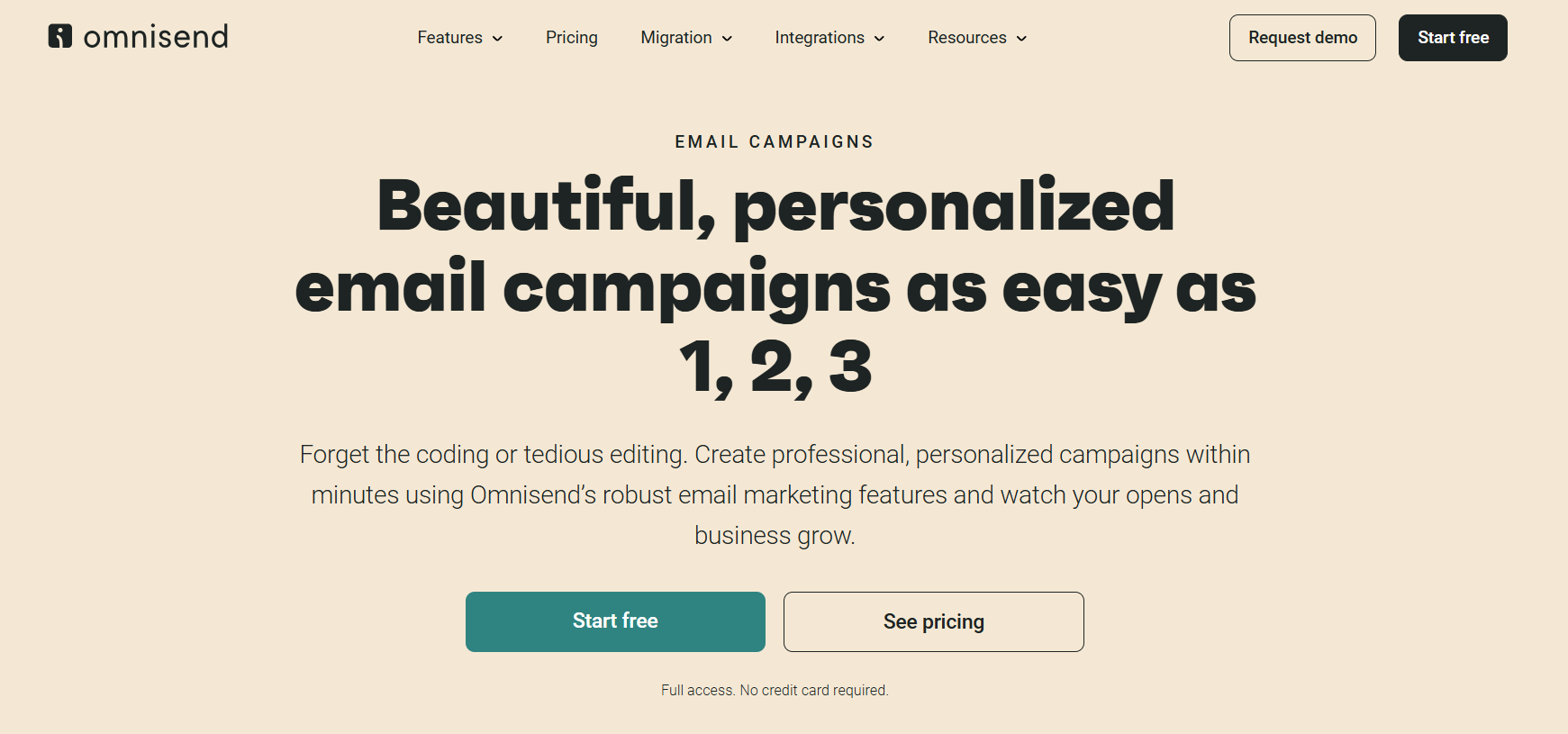
Omnisend is built with ecommerce in mind. It combines email automation with SMS and push notifications to give online stores a single platform for multichannel campaigns.
The platform understands shopping behavior in ways few email automation tools can. You’ll find strong workflows around purchase patterns, cart abandonment, customer lifecycle stages, and similar aspects relevant to ecommerce operations.
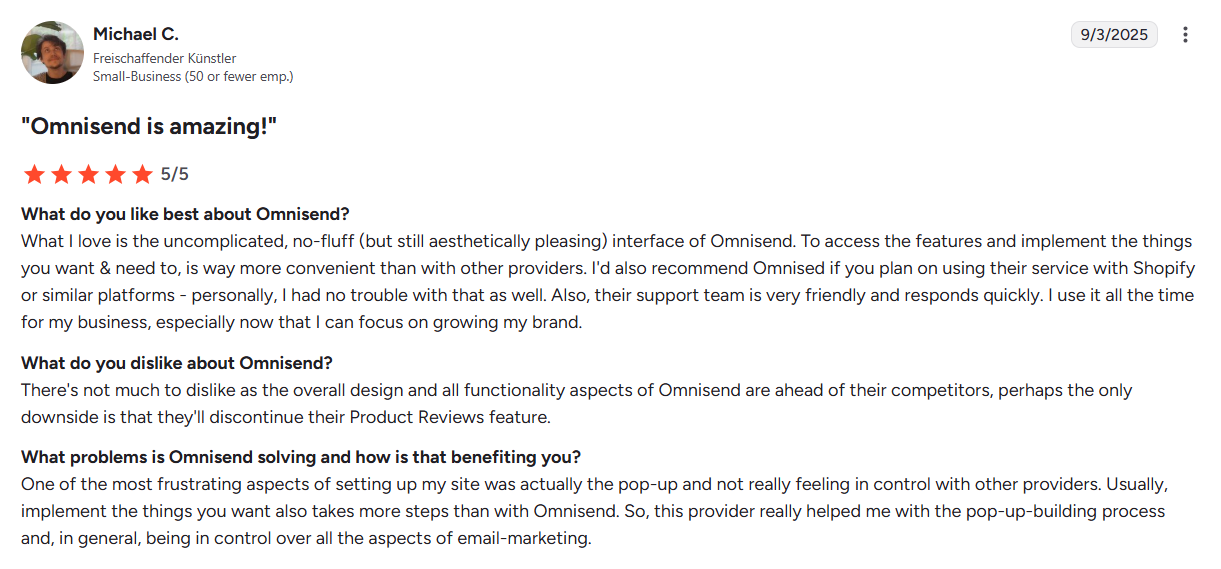
The drag-and-drop editor is also easy to use, and integrations with ecommerce marketplaces like Shopify and WooCommerce make setup straightforward.
That said, Omnisend is less focused on cold outreach and more on lifecycle marketing within the ecommerce space, so sales-led B2B teams may find it less tuned for their operations.
Standout Features
- Pre-built ecommerce workflows (cart recovery, product recommendations, etc.)
- Omnichannel campaigns with email, SMS, and push notifications
- Drag-and-drop editor with customizable templates
- Advanced segmentation and targeting
- A/B testing for campaigns
- Deep integrations with Shopify, WooCommerce, and BigCommerce
Pricing
- Standard (from $11.20/month): 500 contacts, 6,000 emails, unlimited web push, $1 free SMS, 24/7 priority support, account expert from $400.
- Pro from ($41.30/month): 2,500 contacts, unlimited emails/push, advanced reporting, product recommendations, $41.30 monthly SMS credit.
- Custom: unlimited emails/push, global SMS, free migration, dedicated onboarding, advanced reporting, priority support.
Key Takeaways
Manual email sending is a high-effort, low-reward cycle that simply doesn’t scale. You spend more time working on admin tasks than having meaningful sales conversations.
Email automation software is the force multiplier that changes that. With the right platform, your team sends smarter campaigns and keeps deliverability strong without piling on admin work.
The shortlist above gives a few top tools worth your time, but if you want a platform built specifically for B2B sales engagement and cold email outreach, Instantly is virtually unbeatable.
Explore it for yourself, test a campaign, and see how quickly you can build outreach that scales. Sign up for a free Instantly trial today.


