


Updated November 25, 2025
TL;DR: Startup founders can consistently generate 10+ meetings monthly through a cash-efficient outbound lead generation strategy by focusing on cold email as the primary channel. Choose an all-in-one platform like Instantly that combines deliverability, data, automation, and AI reply handling in a single flat-fee system. Start with a 30-day warmup, maintain strict list hygiene, craft personalized sequences under 100 words, and automate follow-ups to achieve 5%+ reply rates and 1%+ meeting conversion.
Your startup needs meetings fast, but traditional outbound can burn through your budget before you see results. The good news is that founders are consistently booking 10+ meetings monthly using lean outbound systems that cost a fraction of a full sales team. This guide shows you exactly how to build that system, starting with the right foundation and leveraging AI for your business.
Why outbound lead generation is key for startups
The startup challenge: limited resources, high growth demands
Startups face a specific constraint: you need predictable pipeline growth but lack the budget for a large SDR team or multiple software subscriptions. Defining a clear Ideal Customer Profile (ICP) prevents wasted resources on unsuitable prospects, which is critical when every dollar counts.
Outbound lead generation, particularly cold email, offers a direct and cost-effective path to rapid pipeline growth because you control who you reach, when you reach them, and how fast you scale. Unlike inbound strategies that require months of content creation and AEO/SEO investment, outbound can generate meetings within two weeks of launch.
Outbound as a direct path to market
Cold email remains the most budget-friendly outbound channel for early-stage companies. According to a 2024 DMA report, email marketing delivers an average ROI of $36 for every $1 spent, making it one of the highest-return channels available to startups. Building targeted prospect lists through tools like LinkedIn Sales Navigator emphasizes quality over volume, which keeps costs low while maintaining effectiveness.
The math is simple. One founder running a well-structured campaign can reach 500 qualified prospects per week using automation and verified data. At a 5% reply rate, that produces 25 conversations. At a 20% meeting rate from replies, you book 5 meetings weekly, which translates to 20+ per month on a flat monthly fee.
Understanding outbound lead generation
What is outbound lead generation and core principles
Outbound lead generation is the practice of proactively reaching out to potential customers who fit your ICP, rather than waiting for them to discover you. The core channels include cold email, cold calling, LinkedIn outreach, and targeted social selling. For startups, cold email offers the best return because it scales without compounding labor costs.
Effective outbound relies on three principles: precision targeting, personalized messaging, and systematic follow-up. Most sales require multiple interactions, so consistent follow-up prevents leads from disengaging.
Deliverability is the hidden lever. If your emails land in spam, nothing else matters. Maintaining sender reputation through correct setup, warmup, list hygiene, and pacing protects your ability to reach inboxes consistently. This is why all-in-one platforms with built-in warmup and reputation monitoring provide an operational advantage.
Watch our deep dive on deliverability in 2025 below:
Outbound lead generation best practices checklist
Pre-launch:
- Define your ICP and build a verified list: Start with 300 to 500 contacts matching firmographic and behavioral criteria.
- Warm accounts for 30 days: Set up SPF, DKIM, and DMARC records before launching.
- Test inbox placement: Run placement tests to confirm emails reach primary inboxes.
Campaign setup:
- Keep emails under 100 words: Include one clear call to action with personalized first lines.
- Test 2 to 3 subject variants: Use A/B splits to identify winning subject lines.
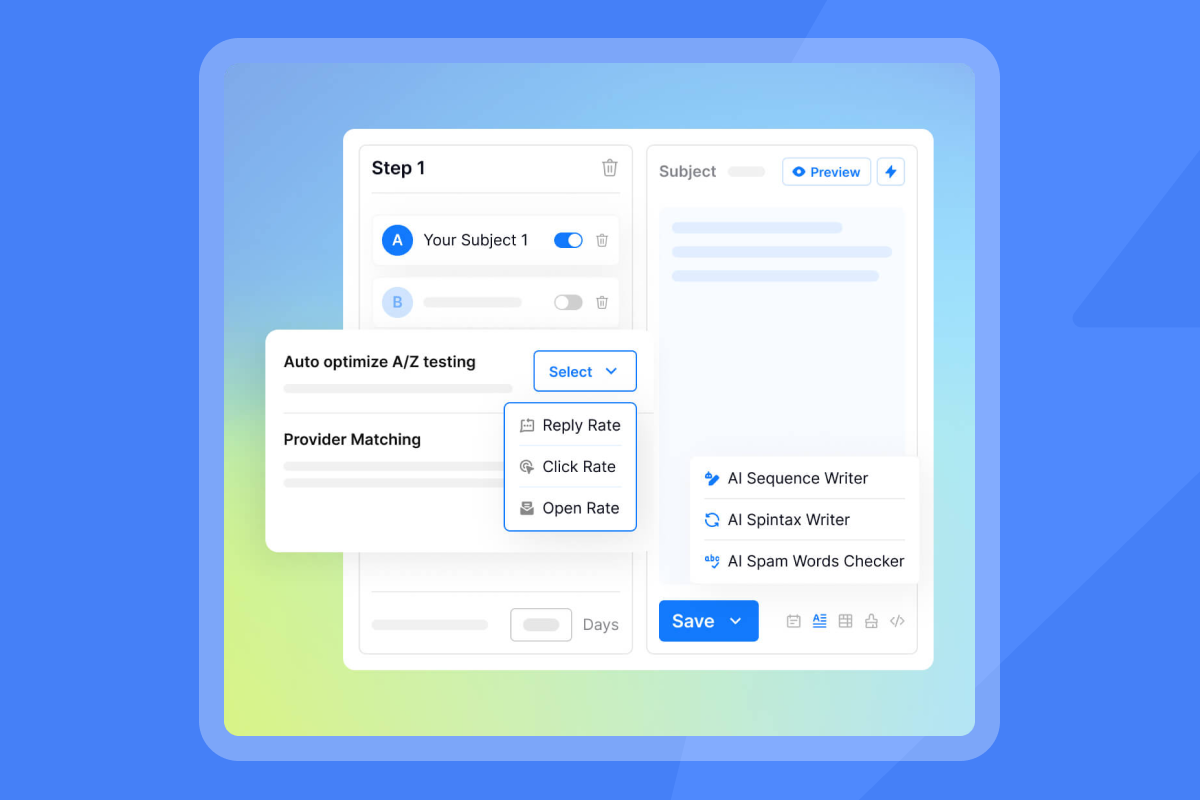
- Schedule sends strategically: Send during business hours in the prospect's time zone.
Ongoing management:
- Monitor bounce rates daily: Pause campaigns at 1% or higher bounce rates.
- Track reply rates weekly: Aim for 5% or above and adjust messaging as needed.
- Qualify leads quickly: Route hot prospects to calendars within 24 hours.
- Run monthly hygiene checks: Remove bounces and unsubscribes to maintain list health.
Building your outbound engine: a step-by-step guide
1. Define your ideal customer profile (ICP)
Start by identifying the 3 to 5 firmographic attributes that define your best customers. Common criteria include company size, industry, technology stack, and geographic location. Research and segmentation of your target market ensure you allocate resources only to suitable prospects.
Layer in behavioral signals when possible. According to Gartner research, B2B buyers spend only 17% of their time meeting with potential suppliers, which means your message must land cleanly and quickly. Look for companies that recently raised funding, hired in specific roles, or announced product launches. These trigger events indicate higher buying intent and improve your reply rates by 2x to 3x compared to static lists.
2. Find high-quality leads with SuperSearch
Manual prospecting through LinkedIn takes hours per day and often produces outdated contact data. Instantly's SuperSearch gives you access to 450M+ B2B leads with waterfall enrichment across 5+ data providers, which reduces bounce rates and saves time.
The platform includes LLM-assisted enrichment and AI templates that help you build targeted lists faster. Export directly to campaigns or integrate with your CRM. Watch how SuperSearch works end to end below:
"It has all the tools needed for cold outbound in one place. Previously, I was running 3 different systems to get a fraction of the results." - James L. on G2
3. Warm up your email accounts for deliverability
Cold domains with no sending history trigger spam filters immediately. Automated warmup gradually builds sender reputation by exchanging emails with a private deliverability network of 4.2M+ accounts. This simulates natural engagement patterns that inbox providers recognize as legitimate.
Warm for 30 days minimum, starting at 5 emails per day and ramping to 15 by week two, then 30 by week three. Instantly's Inbox Placement tests show you exactly where your emails land (primary, promotions, or spam) before you launch campaigns, so you can fix issues early.
"The platform is super intuitive, easy to set up, and makes it simple to manage multiple domains and inboxes at scale. Deliverability is great and the analytics give us exactly what we need to optimize campaigns quickly." - Shaiel P. on G2
4. Craft compelling cold email sequences
Your first email must answer three questions in under 100 words: why you are reaching out, what value you offer, and what small action you want them to take. Personalization at scale using AI and dynamic variables based on lead profiles improves engagement significantly and protects deliverability.
Use spin syntax to create variants within the same template. This keeps your sending pattern natural and reduces spam signals. A complete guide to improving reply rates shows that 5% to 10% is a solid benchmark, with 10%+ considered strong performance.
Structure your sequence with 3 to 5 touchpoints over 10 to 14 days. Follow-ups should reference the previous email and add new context or value. One proven pattern: initial email with value prop, follow-up with case study, third email with social proof or question.
5. Automate follow-ups and reply handling with AI
You will receive most replies between days 2 and 7 of your sequence, which is when automated follow-ups deliver the highest value. Set up sequences that respond based on prospect behavior or their stage in the sales funnel to ensure consistent engagement without manual intervention.
Instantly's AI Reply Agent handles incoming replies in under 5 minutes, categorizing them as interested, not interested, or out-of-office. It can auto-respond in Autopilot mode or wait for human approval in Human-in-the-Loop mode. This feature uses 5 credits per AI reply and integrates with Slack for real-time review.
"Instantly has transformed my outreach process. The platform is intuitive, has a ton of cool features and delivers great results." - Jon M. on G2
6. Monitor and optimize your campaigns
Track four metrics weekly: bounce rate (keep at or below 1%), reply rate (aim for 5%+), meeting rate from replies (target 20%+), and inbox placement (primary vs promotions vs spam). Real-time insights into campaign performance facilitate rapid adjustments without extensive manual data collection.
Run A/B tests on one variable at a time. Test subject lines first because they have the largest impact on open rates. Then test send times, personalization depth, and call-to-action phrasing. Agencies report booking 15 demos in 10 days by following this systematic optimization approach.
If reply rates drop below 3% or bounce rates exceed 1%, pause the campaign immediately. Run the hygiene checklist, re-verify your list, and lower your send cap for 3 to 5 days before resuming.
Outbound lead generation services vs. all-in-one platforms
The pros and cons of outsourcing
Outsourcing your outbound to agencies or lead generation services removes operational burden but introduces new risks. You lose direct control over messaging, domain health, and reply handling. Pricing often scales per lead or per meeting, which means your costs rise as you grow.
Many services use shared infrastructure or low-quality data that damages your domain reputation. If they burn your sending domains, you inherit the recovery work. The alternative is hiring an in-house SDR, but that requires $60k+ in annual salary plus benefits before you know if the hire will perform.
Why an all-in-one platform wins for founders
All-in-one platforms consolidate multiple business functions into a single system, reducing the time spent integrating various tools. For founders, this means you control the entire stack from lead sourcing to reply management without juggling five separate subscriptions.
Bundled pricing is often more cost-effective than subscribing to multiple specialized tools individually. Centralized data creates a single source of truth, which results in more consistent reporting and faster decision-making.
| Criteria | Outbound Lead Gen Services | All-in-One Platform (Instantly) |
|---|---|---|
| Monthly Cost | $2,000+ per month or per-lead pricing | $84 to $555/mo flat fee |
| Domain Control | Agency owns infrastructure or uses your domains | You own all domains and inboxes |
| Data Quality | Variable, often shared lists | 450M+ verified contacts with waterfall enrichment |
| Transparency | Limited campaign visibility | Full analytics and real-time dashboards |
"I love the comprehensive capabilities of Instantly, which have significantly streamlined my operations by replacing about 5 or 6 other technologies I used to rely on." - Heather O. on G2
Instantly: your all-in-one solution for 10+ meetings monthly
Unlimited accounts, predictable costs
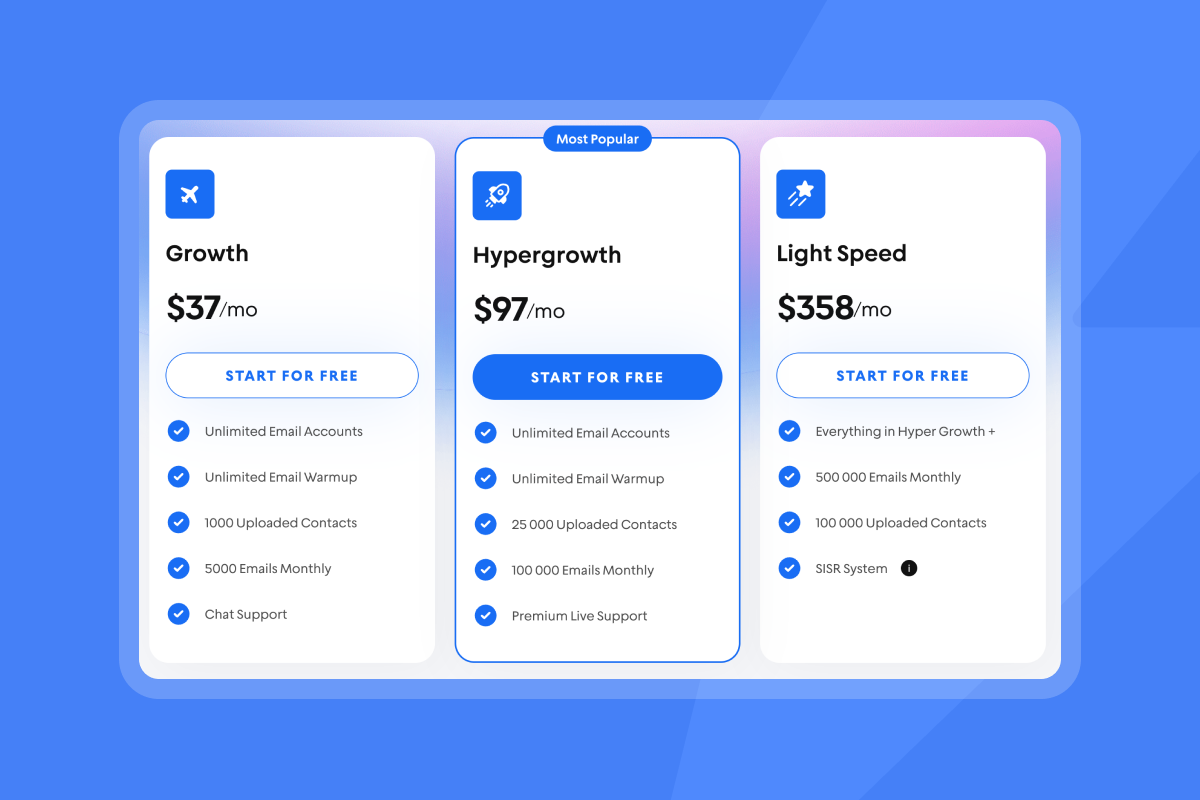
Instantly offers unlimited email accounts and warmup on all plans, starting at $37/month for Outreach Growth. This flat-fee structure eliminates per-seat penalties that other platforms charge. Add SuperSearch Growth at $47/month for access to 450M+ leads, and you have a complete outbound stack for $84/month.
Compare that to traditional sales engagement platforms that charge $99+ per seat and cap your sending accounts. As you scale from 5 inboxes to 50, your costs stay flat while your throughput increases. Users consistently report streamlining operations and consolidating multiple tools after switching to Instantly's all-in-one platform.
Built-in deliverability and reputation protection
Deliverability is not optional. It's the foundation of every successful outbound campaign. Instantly's private deliverability network of 4.2M+ accounts warms your inboxes automatically, building engagement history that inbox providers trust.
Automated Inbox Placement tests run on a schedule you define, checking where your emails land across Gmail, Outlook, and other providers. If placement drops, the platform pauses campaigns automatically and alerts you to fix the issue before it spreads to other accounts.
The Light Speed plan includes SISR (Server and IP Sharding and Rotation), which uses dedicated and private IP pools to further isolate your sending reputation. This is critical for agencies managing multiple client domains or founders scaling past 10k sends per month.
"Instantly is extremely user-friendly. We use it regularly to contact physicians about our opportunities, and it simplifies the process of creating email campaigns from our physician lists. Additionally, we have been seeing excellent response rates." - Theo S. on G2
AI-powered efficiency for lean teams
Manual reply sorting takes 30 to 60 minutes per day when you are running multiple campaigns. Instantly's AI Reply Agent categorizes every reply as interested, not interested, or out-of-office in under 5 minutes. It can auto-respond to interested leads with calendar links or custom messages, which cuts your response time from hours to minutes.
Copilot serves as an in-app assistant for research, lead targeting, campaign creation, and analytics summaries. It can run recurring Copilot Tasks that automate routine processes like list building or performance reporting. This means you spend less time in spreadsheets and more time on high-value activities like closing deals.
For a single founder or a two-person team, these AI agents replace the workload of a junior SDR without the salary or benefits cost.
"The platform allows me to efficiently get in touch with hundreds, if not thousands, of business owners daily." - Thomas D. on G2
Centralized management for simplicity
Unibox consolidates all replies across your sending accounts into one unified inbox, so you do not need to log into 10 different email accounts to manage conversations. Tag, filter, and assign leads to team members directly from the dashboard.
Opportunities and pipeline tracking keep your deals organized by stage. Tasks and follow-ups ensure nothing falls through the cracks. The platform's analytics dashboards show reply rates, meetings booked, and cost per meeting in real time, which helps you identify what is working and what needs adjustment.
Direct integration with HubSpot and Salesforce keeps customer data synchronized across systems. For deeper workflow automation, use the API v2, webhooks, Zapier, Make, or Pabbly to connect Instantly with your existing stack.
Inbound vs. outbound: a strategic comparison for founders
Inbound lead generation focuses on attracting prospects through content marketing, SEO, lead magnets, and paid ads. It builds long-term brand authority but requires 3 to 6 months before producing consistent leads.
Outbound reaches prospects directly and can generate meetings within two weeks of launch. The table below compares the two strategies for early-stage startups:
| Criteria | Inbound Lead Generation | Outbound Lead Generation |
|---|---|---|
| Approach | Attract prospects via content, SEO, paid ads | Proactively reach out via cold email, calls, LinkedIn |
| Time to First Meeting | 3 to 6 months (content production and SEO ramp) | 2 to 4 weeks (after warmup and list building) |
| Scalability | Scales with content volume and ad spend | Scales with sending accounts and data quality |
| Cost Structure | Content production, SEO tools, ad spend (variable) | Flat-fee platform + data ($84 to $555/mo) |
| Measurement | Traffic, MQLs, conversion rates, CAC | Reply rate, meeting rate, cost per meeting |
Both strategies have a place. Use outbound to generate immediate pipeline and validate product-market fit. Layer in inbound over time to reduce acquisition costs and build a repeatable funnel.
Your path to consistent meetings starts with the right system. Outbound lead generation works when you combine verified data, deliverability protection, personalized messaging, and automated follow-ups into a single repeatable process. Founders who commit to this approach book 10+ meetings monthly without hiring a full sales team or managing five disconnected tools.
Instantly provides the all-in-one platform to make this possible. Unlimited accounts and warmup protect your sender reputation at scale. SuperSearch delivers 450M+ verified leads with waterfall enrichment. AI Reply Agent and Copilot automate reply handling and campaign creation. Flat-fee pricing keeps costs predictable as you grow.
Start your free trial today and use the 7-step cold email checklist to build your first campaign. Warm your accounts for 30 days, launch with 300 to 500 verified contacts, and monitor inbox placement weekly. Apply the principles in this guide and you will have a repeatable system that generates meetings on demand.
FAQs
How long does it take to see results from outbound lead generation?
You can book your first meetings within 2 to 4 weeks after completing a 30-day warmup period and launching campaigns with verified contacts.
What is a realistic reply rate for cold email campaigns?
A 5% to 10% reply rate is solid for most B2B campaigns, with 10%+ considered strong performance when targeting a well-defined ICP.
How many email accounts do I need to start?
Start with 2 to 3 warmed email accounts sending 30 emails per day each, then scale to 5 to 10 accounts as reply rates stabilize above 5%.
What is the typical cost per meeting for outbound?
With Instantly's flat-fee pricing starting at $84/month, founders typically achieve $20 to $50 cost per meeting when reply rates exceed 5% and meeting conversion from replies reaches 20%.
Can I run outbound campaigns without damaging my primary domain?
Yes, use secondary domains for cold outreach and reserve your primary domain for transactional and relationship emails to protect sender reputation.
How do I know if my emails are landing in spam?
Run automated Inbox Placement tests before launching campaigns and weekly during active sends to check placement across Gmail, Outlook, and other providers.
Key terminology
Ideal Customer Profile (ICP): The firmographic and behavioral attributes that define your best-fit customers, used to guide prospecting and messaging decisions.
Sender reputation: A score inbox providers assign to your domain and IP based on engagement rates, bounce rates, spam complaints, and sending patterns.
Warmup: The process of gradually building sender reputation by exchanging emails with a private deliverability network before launching cold campaigns.
List hygiene: The practice of regularly verifying, deduplicating, and removing invalid or inactive contacts to maintain low bounce rates and protect deliverability.
Reply rate: The percentage of sent emails that receive a response, calculated as (replies / delivered emails) × 100.
Waterfall enrichment: A data sourcing method that queries multiple providers sequentially until valid contact information is found, improving data accuracy and reducing bounces.
Spin syntax: A templating technique that creates multiple copy variants within a single email template to keep sending patterns natural and reduce spam signals.
Unified inbox (Unibox): A centralized dashboard that consolidates replies from multiple sending accounts into one interface for faster reply management.
Bounce rate: The percentage of emails that fail to deliver, calculated as (bounces / total sent) × 100, with 1% or below considered healthy.
Meeting rate: The percentage of replies that convert to booked meetings, typically 20% to 30% for well-qualified outbound campaigns.


