


AI is refining sales at the fundamental level. The most successful teams today use AI to unify data, personalize at scale, and automate what slows them down.
From lead generation and enrichment to CRM syncing and campaign optimization, AI turns hours of manual work into minutes.
A holistic stack (including a powerful CRM and an integrated platform like Instantly) is essential to qualify leads and run high-volume, automated cold email campaigns efficiently.
AI agents are now ingrained in every aspect of the sales process. It's changed how sales teams operate, not by reinventing the process, but by accelerating and scaling what already works. One Reddit user summed it up best: “AI doesn’t make you better at sales. It gives you back more time to sell.”
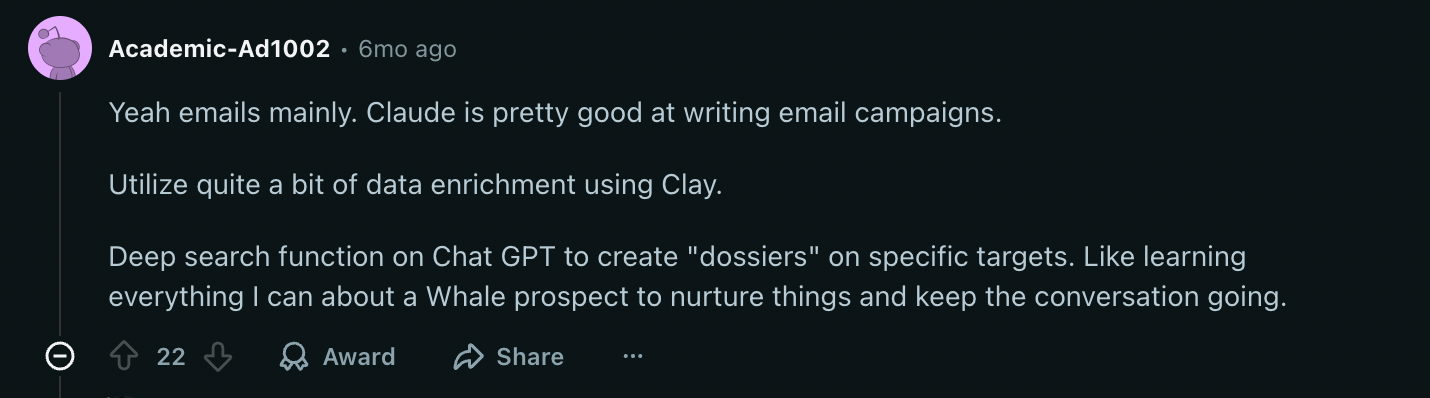
This user talks about creating hyper-personalized sales emails using Clay for enrichment and ChatGPT for topics on nurturing. The process isn’t new to sales veterans. What works has always been knowing everything about your lead and creating something valuable to present.
And this is just scratching the surface. With Instantly, you can create your own company database, enrich lead data, and automate personalization using unique selling propositions that best fit each lead.
Before diving into specific tools and workflows, let’s break down how to use AI in sales to make your pipeline faster, smarter, and far more predictable.
Why Sales Teams Are Increasingly Adopting AI
AI has quickly become one of the most essential tools in an SDR’s arsenal. While many focus on automation, an underrated advantage of AI lies in data. Instead of juggling scattered sources, AI makes it easy to unify information into a single, reliable source of truth.
With richer, more organized data, your team targets smarter, personalizes better, and closes faster. Sales teams instantly surface insights like buying signals, ideal customer profiles, and engagement history that would typically take hours of manual research.
AI Essentials To Have in Every Sales Stack
Every sales team operates differently, but the fundamentals stay the same. So, if you want to use AI in sales, here are some of the most essential tools you’ll need in your tech stack:
Email Automation
A DragApp study found that 86% of professionals prefer email over other channels for business communications. And if you’re scaling outreach efforts, email automation becomes all the more critical. But sending automation isn’t the only feature you’d want. You also need the following:
- Email copy automation based on lead data
- Deliverability safety features
- A/B testing capabilities
- Cadence humanization
- Auto-optimization based on engagement
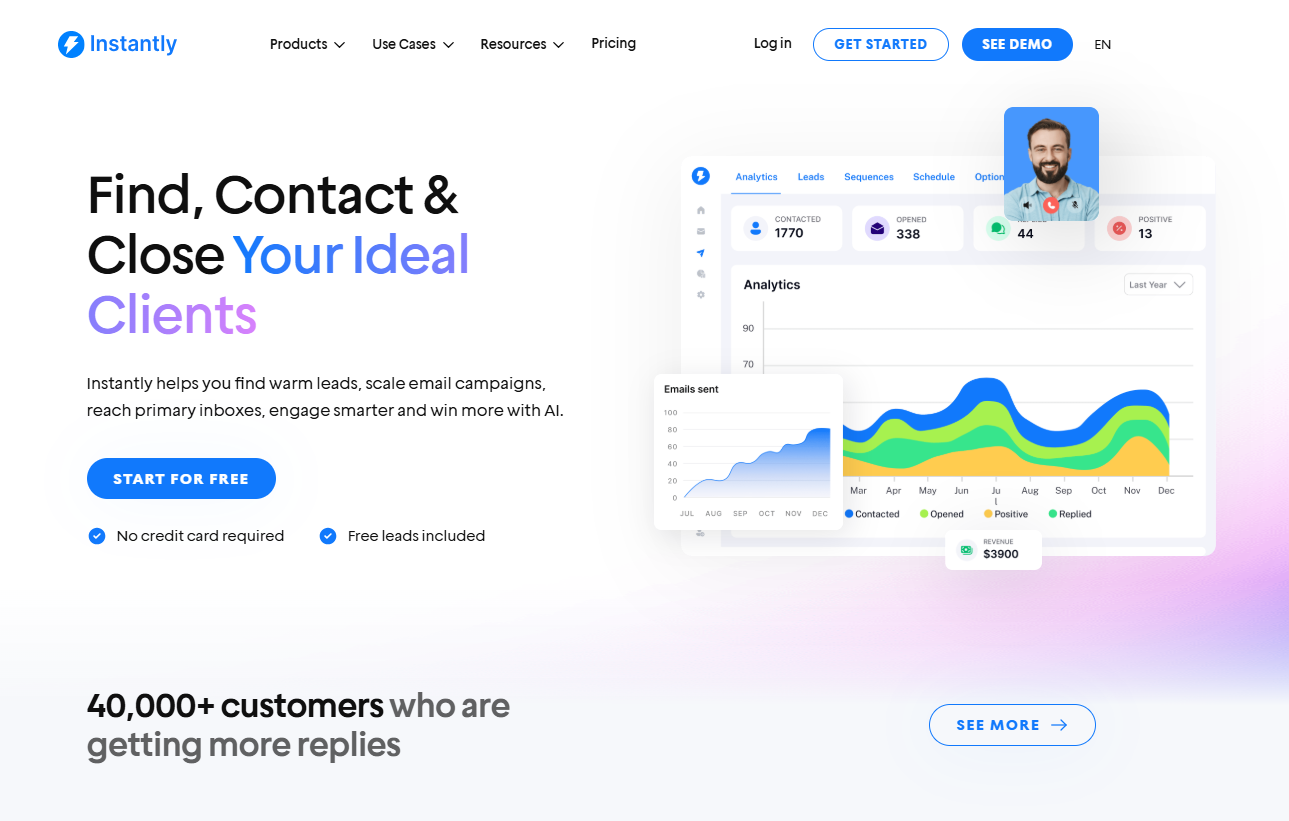
G2 Rating: 4.8/5 ⭐ from 3,854 reviews
Instantly was built with all these features in mind. Our goal has always been to lower the barrier to entry to cold email, which is why many of our success stories come from small businesses. All you need to scale, from email automation to lead generation, is compiled in one intuitive dashboard.
Lead Generation
You can’t have a sales campaign without leads. And AI has made finding leads that fit your ideal customer profile (ICP) almost effortless. Now, you don’t have to compromise on volume over quality. But before adding leads to campaigns, you must validate every lead.
Email verification or validation tools ensure high deliverability rates and keep your messages reaching real people who are likely to engage meaningfully. With AI-driven verification, you can automatically check email health, enrich contacts, and flag risky domains.
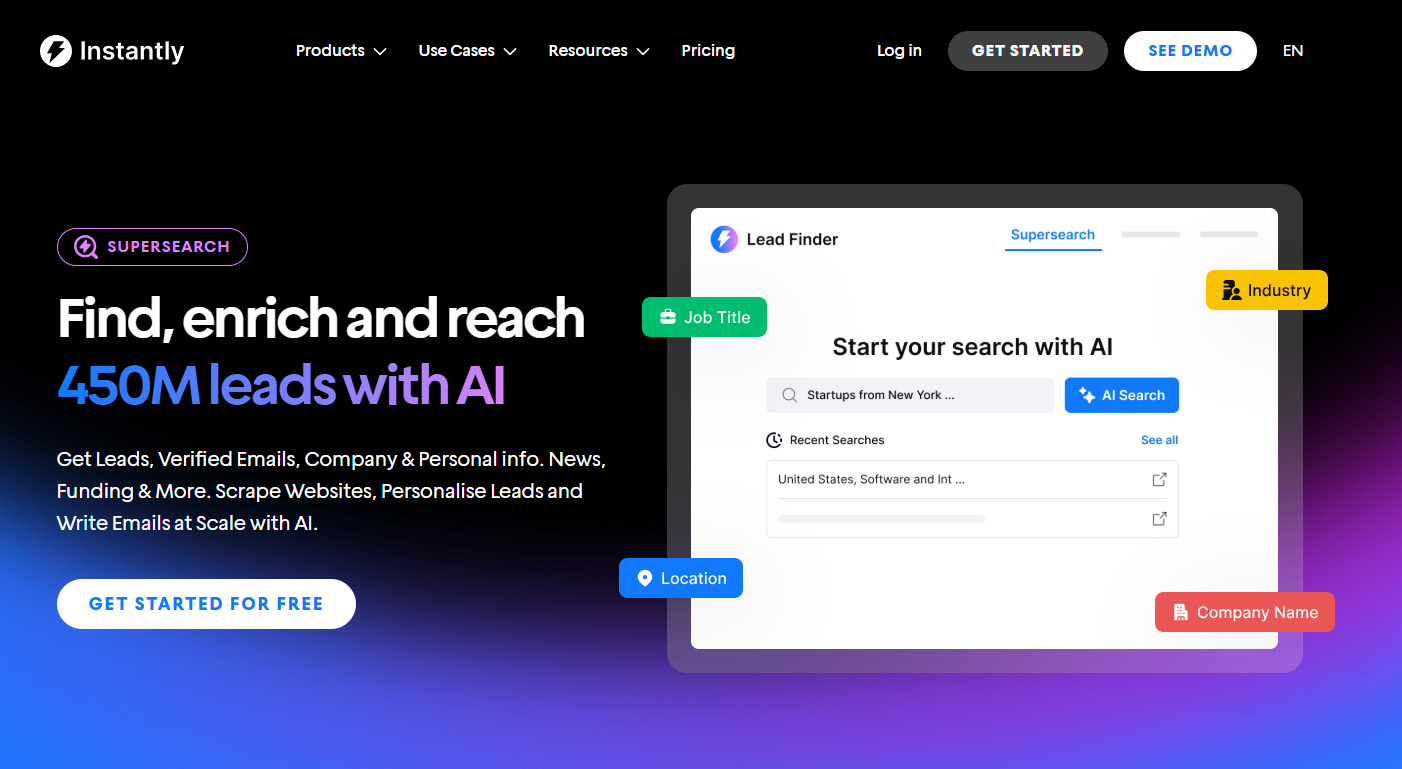
If you’re looking for a tool to find leads, validate data, and enrich lists, try Instantly SuperSearch. You can access over 450M pre-validated leads, validate your lead lists, and enrich data.
Deep Enrichment
The more you know about your prospect, the better you can position your value. After validating lead lists, the next step is to enrich your leads. You want to gather data points that give context to your leads' pain points, goals, and roadblocks.
People love AI tools like Clay because they’re one of the best for enriching lead lists. If you look through forums across the internet, you’ll see that they’ve been integral to the success of many businesses, agencies, and solopreneurs.
But all that data has to go somewhere. You need a platform that is organized and centralized for every department. That’s where a customer relationship management (CRM) tool comes in.
CRM
Your CRM becomes your information headquarters. It’s where enriched lead data, activity history, and deal progress all come together in one place. Without it, enrichment ends up as scattered notes. With it, sales, marketing, and customer success can all work from the same reliable source of truth.
AI makes your CRM more than just storage. Instead of manual updates, it can log interactions, score leads based on intent signals, and suggest the next best step for your reps.
Your CRM becomes a playbook that guides the sales process. The result is shorter sales cycles, consistent follow-ups, and a clearer view of which prospects are most likely to convert. Ensure your sales CRM can be integrated with every tool in your stack.
Your Favorite LLM
Large language models (LLMs) like ChatGPT and Perplexity are a part of every modern SDR's life. Each LLM has its own strengths, weaknesses, and use cases. Take this scenario from an SDR on Reddit, for example:
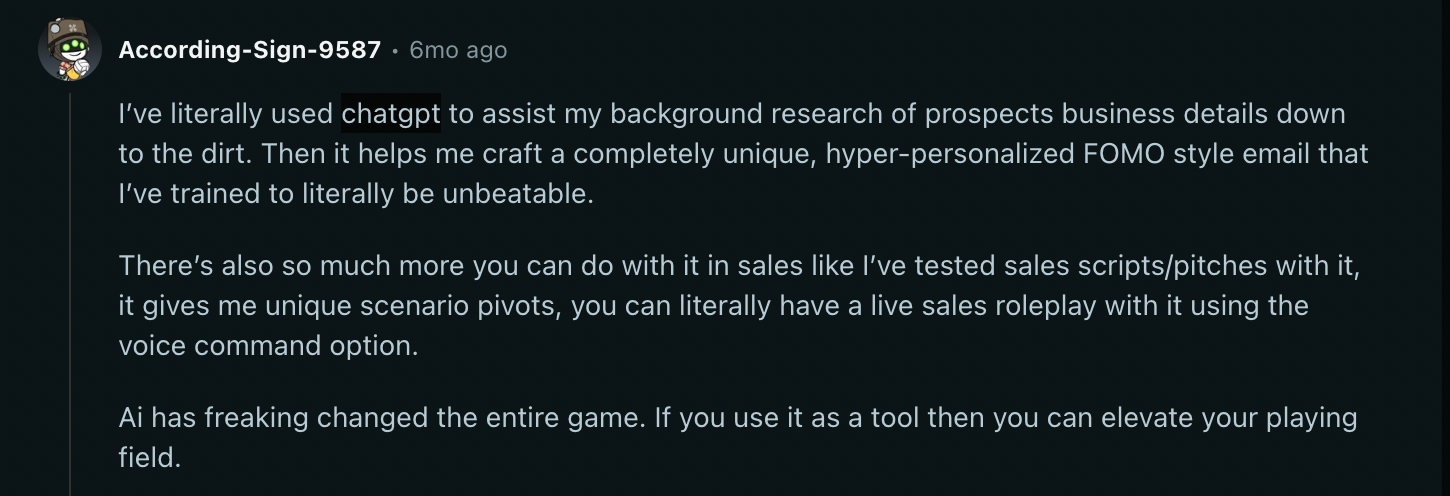
Here’s another gem from Reddit you can try in your sales process. Instead of just asking it to write personalized emails, this SDR used ChatGPT to learn his entire sales process, product knowledge, and competitor data.
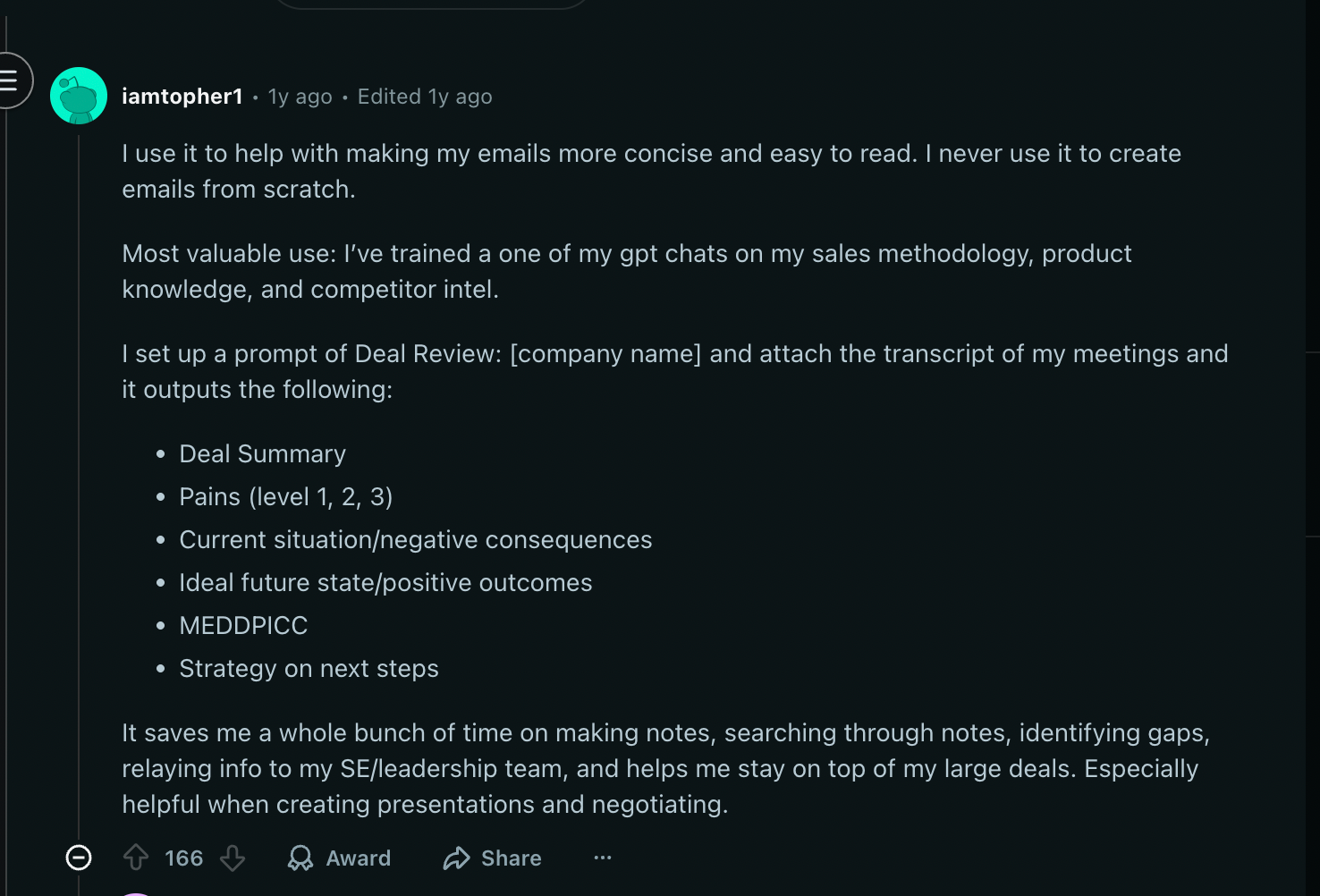
The key here is not to get pigeonholed into one LLM. They’re tools, not brands to worship. One is never intrinsically better than the other.
In most cases, combining LLMs can yield the best results. Take this SDR, for example. Their team uses ChatGPT and Perplexity for deep research since both are useful for different contexts.
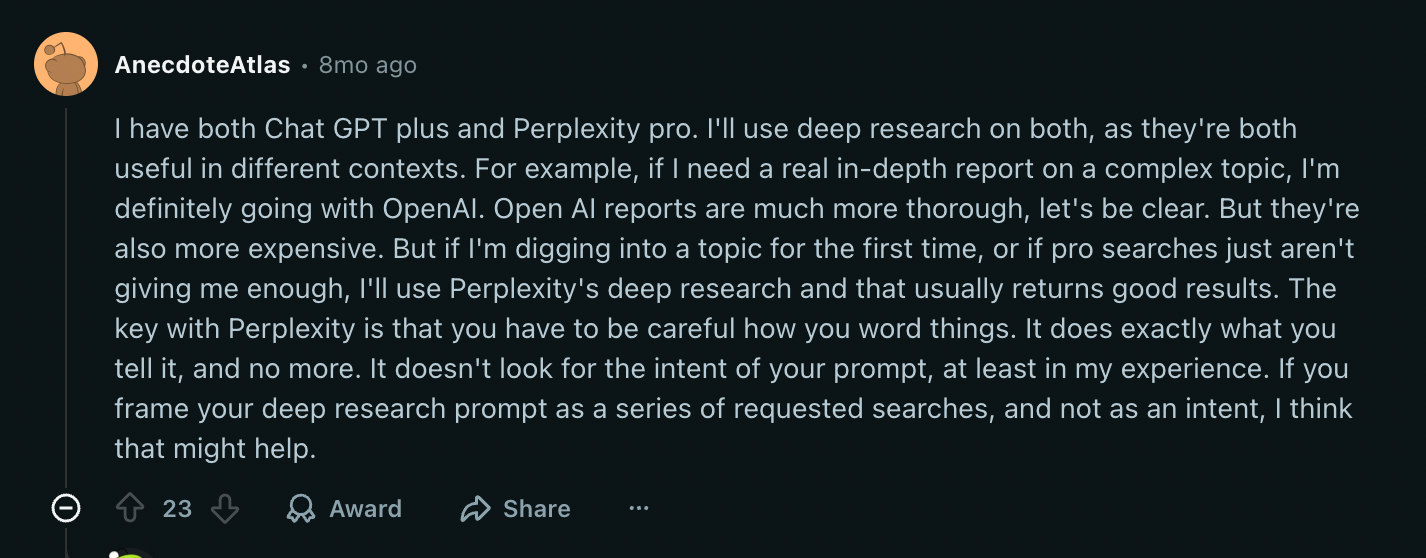
If you want access to your favorite LLMs without paying a monthly fee, Instantly lets you access five major LLMs, including ChatGPT, Claude, DeepSeek, XAI, and Gemini. But if you already have an account, you can still integrate your LLM with Instantly through API.
Best Use Cases for AI in Sales
AI shows up in every step of the sales process. With the pace of innovation and the creativity of sales teams applying it to their own use cases, AI is taking a life of its own.
Here are some of the best ways teams are using AI in sales that you can take inspiration from:
Tracking Data and Creating Actionable Plans for Your Team
Some of AI's most effective use cases involve teams tracking data and turning it into actionable plans. One SDR shared on Reddit how they use ChatGPT to create multi-sheet Excel workbooks with a single detailed prompt.
These sheets come preloaded with color coding, drop-down menus, and graphs that track sales performance. What would normally take hours of manual setup can now be produced in a couple of tries.
But it doesn’t stop at dashboards. The same SDR also built five-day onboarding plans for new reps. These schedules cover morning, afternoon, and evening tasks, with proven sales data and actionable tips sprinkled throughout.
Leveraging AI Agents to Qualify Leads
One of the most time-consuming parts of sales is qualifying accounts. Reps can easily spend hours digging into company websites, LinkedIn profiles, and job boards to figure out which accounts are worth pursuing. Different types of AI agents are changing that.
You can use AI agents to scan their entire account list and get insights like who’s hiring, what roles they’re hiring for, and other publicly available intent signals. An AI agent can run through hundreds of accounts, flagging ones that fit your ICP and showing why they’re a good fit.
If you want to replicate these results, here’s a quick overview of the AI tech stack you’d want to have:
- Enrichment + firmographic/intent data: Data like hiring activity, open roles, and company growth signals help indicate whether an account is active or ripe.
- Automated scoring/flagging: AI assigns a “fit” or “intent” score so you can prioritise accounts rather than manually review all.
- Bulk processing/automation: You upload or sync your account list, the tool runs through many records, and outputs a filtered list.
- Integration with CRM or workflow: So flagged accounts flow to your SDRs with context, notes, and next steps.
- Explainability/insight: Beyond a “score,” it’s useful when you can see why the account was flagged (“hiring data,” “company opened 2 new roles in past 30 days,” etc.).
- Customisation for your ICP: You define your ideal customer profile (industry, company size, role, behavior) and the tool uses those filters.
Using AI to Map Out Campaign Structure
The best sales campaigns are ones that follow a flexible structure. You need to have a roadmap and set goals based on your data and past campaigns—whether for SEO, cold sales emails, or nurturing campaigns. AI can help you create that structure faster.
One Reddit user shared how they feed in historical results, sales budgets, and campaign goals, then let AI suggest initial ad set groupings. The AI doesn’t replace strategy, but it gives them a starting framework that’s about 80% complete.
From there, a human review fine-tunes the details, saving hours of planning time while still ensuring the campaign reflects the team’s unique insights. This approach means you’re not starting every campaign from scratch for sales teams.
Reducing Friction and Information Gap for Inbound Leads
Inbound leads often show the highest buying intent. They’ve already engaged with your content enough to share their contact information, so they’re actively exploring solutions and evaluating fit. The key is ensuring nothing slows them down once they reach your site or product pages.
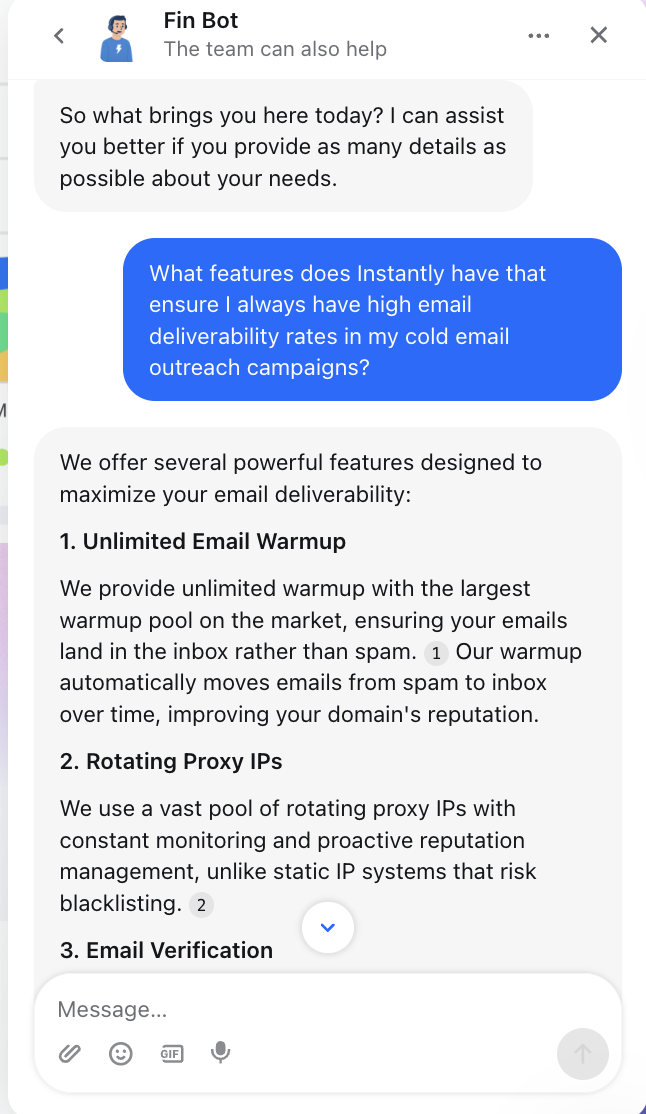
If they can get answers quickly and clearly, they’re far more likely to move forward with your team. One of the best strategies is using a contextual AI chatbot, sometimes called a retrieval-augmented or augmented AI assistant.
Unlike a basic FAQ bot that spits out canned answers, these bots pull from your knowledge base, product docs, FAQs, and CRM data, and generate tailored responses based on each visitor’s query. Here’s an example of that at play on Instantly’s own chatbot:
Automating the Cold Email Outreach Process
Cold email marketing has so many moving parts. But once you’ve set up an email infrastructure that works for your business or agency, scaling the process becomes much easier with AI.
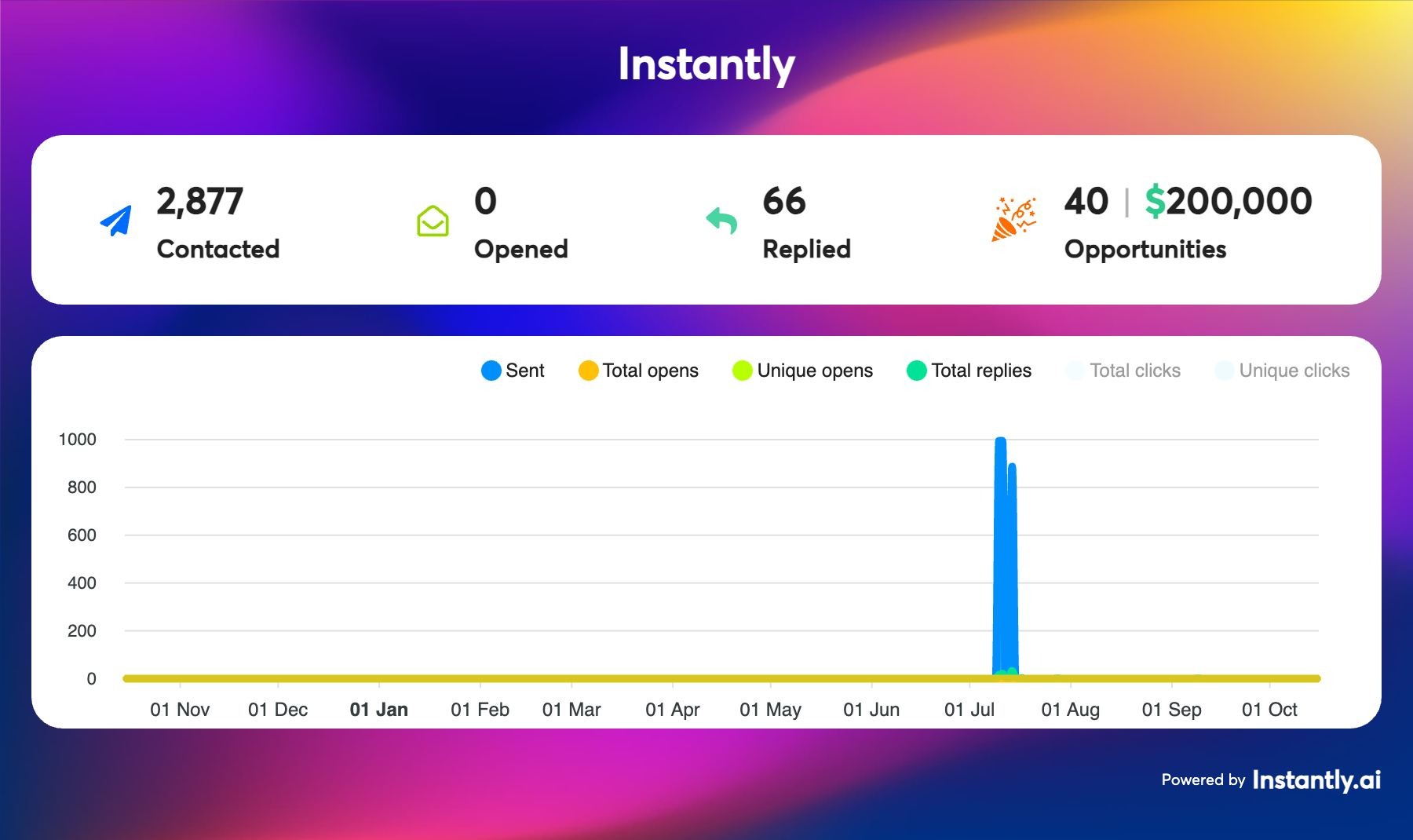
Here’s a strategy from Sagar, one of our Cold Email Masterclass group members, that landed their client 40 leads in one week. They aimed to reach industries like commercial pest control, commercial HVAC, commercial solar, and commercial cleaning.
Domains
Avoid using your main domain for cold outreach. Doing so risks permanent blacklisting, which could cripple your business communications. Instead, the team used Porkbun to register new domains dedicated solely to cold email.
However, you still need to manually set up DMARC, DKIM, and SPF. Instantly offers a Done-For-You (DFY) email setup service if you'd prefer to streamline the process.
You buy the domains and inboxes, and Instantly handles the rest. Then, you get the emails in 2-3 business days with warmup automatically enabled once setup is finished.
Data Collection
Finding quality data for local businesses is tough. Traditional B2B databases like Apollo might fall short at the local level.
The team solved this by building an in-house scraper for Google Maps, pulling results for searches like “Commercial Solar Installer in {{city name}}.”
This approach netted them around 50,000 company records. The downside: Google Maps data rarely includes emails, which led to the next step.
Data Enrichment with Clay
To enrich and qualify data, they turned to Clay and its Claygent agent:
- Qualification: Claygent visited company websites to confirm if they sold commercial solar, HVAC, or pest control services.
- Decision-Maker Discovery: Claygent searched LinkedIn and Google for owners, founders, CEOs, or managing directors, and added those contacts into the database.
- Fallback Email Capture: If no decision-maker could be identified, Claygent scraped emails directly from the company’s website—common for small local businesses where owners monitor general inboxes.
Email Verification
Verification was non-negotiable. Using TryKitt, they verified every address before sending. Skipping this step is one of the fastest ways to trigger spam filters.
Sending Campaigns
Finally, the outreach itself was launched on Instantly. And the best part is you can imitate their success without using 4-5 tools in your stack. You can do everything from within Instantly. Here’s a quick rundown of the exact process:
- Get domains from Instantly DFY email setup
- Generate leads using Instantly SuperSearch
- Every lead you get is already pre-verified, so you don’t need to worry about verification
- SuperSearch also has deep enrichment features and an AI web researcher.
Key Takeaways
AI in sales is the new norm. But it’s important not to get tunnel-visioned with all the fancy automations. The best way to use AI in sales is to accelerate what’s already working. This is why cold sales emails are the best place to test AI use-cases.
Once you find a strategy that works, all you need to scale is more leads, domains, and a way to monitor deliverability to ensure campaigns run in peak condition. Instantly is a no-brainer if you want all of this under one roof. Try it out for free today.


