


Updated October 26, 2025
TL;DR: Outreach.io is an enterprise sales engagement platform that prices per user and typically requires an annual contract. Industry estimates place entry pricing around 100 to 160 dollars per user per month, with quotes varying by seat count and add‑ons. Instantly uses a predictable, flat‑fee model with unlimited email accounts, built‑in warmup, and a focus on deliverability. For high‑volume cold email and teams that need cost predictability, Instantly often delivers a lower total cost of ownership, especially as you scale inboxes. For organizations that need deep native CRM sync, advanced revenue analytics, and multichannel, Outreach.io remains a strong enterprise choice.
For sales leaders choosing a sales engagement platform, the pricing model affects more than budget. It changes how you scale inboxes, manage deliverability risk, and forecast ROI. This guide compares Instantly and Outreach.io in plain language so you can pick the platform that maps to your sending volume, reporting needs, and finance constraints.
Understanding sales engagement platform pricing models
The fastest way to compare tools is to name how you pay. Four pricing models show up most often.
Per‑user (per‑seat) pricing
- What it is: You pay a monthly fee per user. Price often increases with feature depth and a 12‑month term.
- Where you see it: Enterprise SEPs like Outreach.io. Typical entry estimates start around 100 dollars per user per month, scaling with seats and add‑ons.
- Trade‑offs: Easy to predict at small team sizes. Can balloon as you add users, especially if outcomes do not scale linearly with headcount.
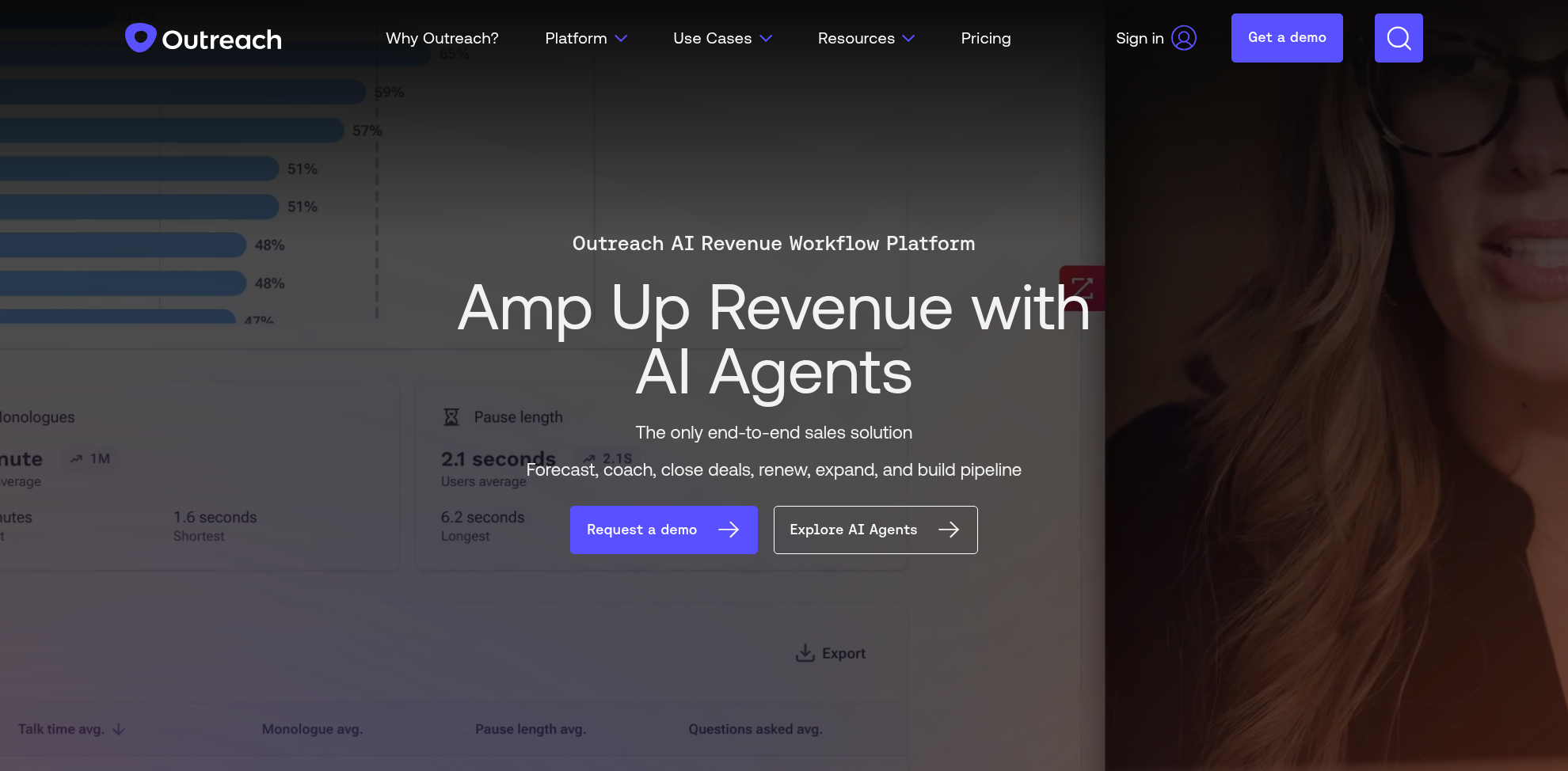
Outreach offers an enterprise pricing model per seat which can easily cut into your margins if not carefully managed.
Flat‑fee pricing
- What it is: One monthly price covers the product regardless of user count or number of connected inboxes.
- Where you see it: Instantly’s Outreach plans start at 37 dollars per month and include unlimited email accounts and warmup.
- Trade‑offs: Highly predictable. Great for agencies and teams that scale by adding inboxes. You still need to watch usage‑based add‑ons like lead and AI credits.
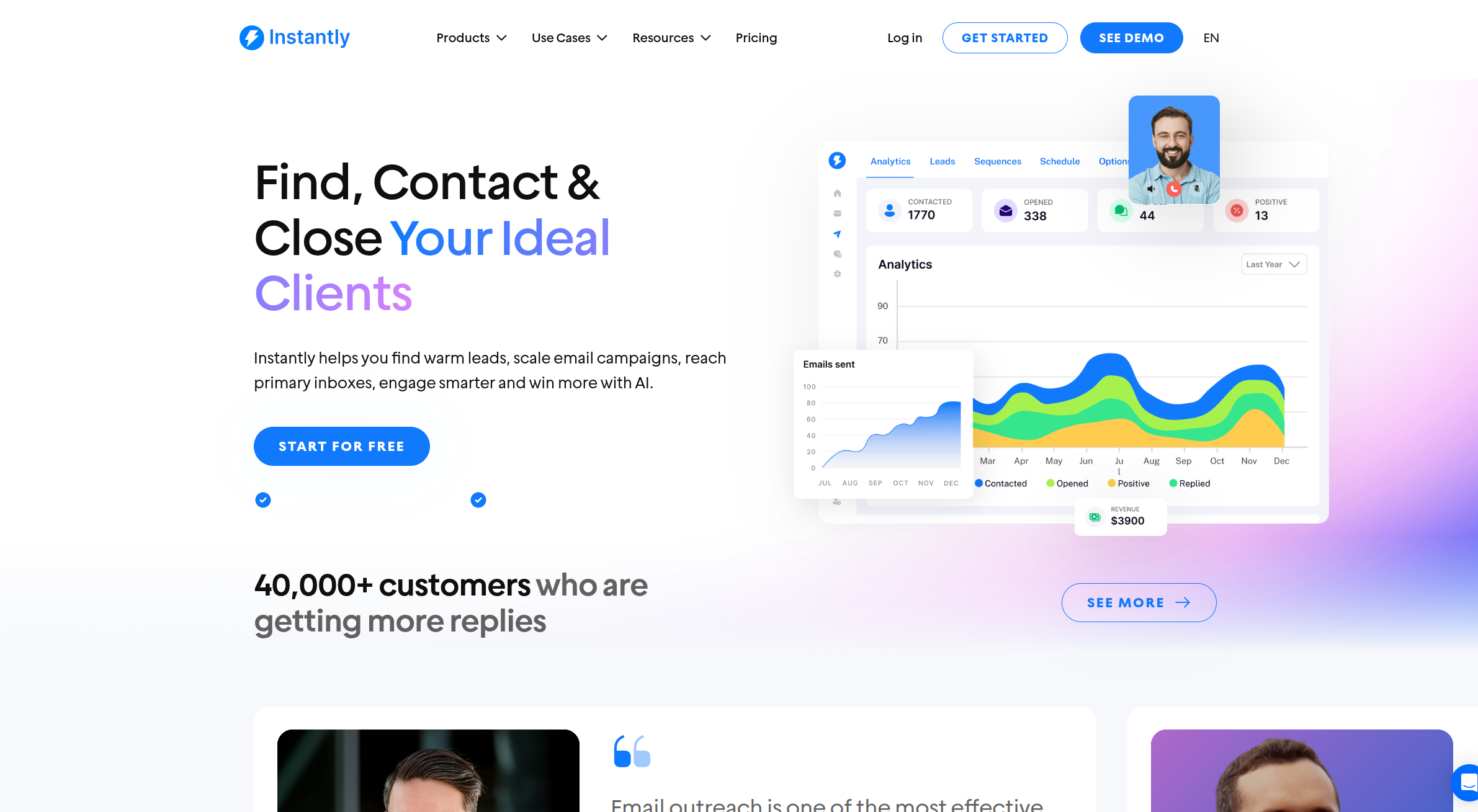
Instantly offers a flat fee pricing model which doesn't penalize your growth and gives you predictable cost with peace of mind.
Credit‑based pricing for AI and leads
- What it is: You buy a pool of credits. Features like AI replies or lead exports consume credits as you use them.
- Where you see it: Instantly’s SuperSearch lead database and AI Reply Agent. The AI Reply Agent costs 5 credits per AI reply, and SuperSearch plans package monthly credits.
- Trade‑offs: Elastic and fair. You control spend by pacing usage. Requires monitoring to avoid overconsuming credits during scaling.
Watch how to generate verified leads with Instantly's Supersearch end to end in this tutorial:
Per‑email volume pricing
- What it is: Pricing tied to monthly send volume or uploaded contacts.
- Where you see it: Some cold email tools and marketing ESPs. Many enterprise SEPs cap throughput per mailbox or sequence step indirectly through plan limits reported by reviewers.
Instantly vs. Outreach.io: a direct pricing comparison
Instantly’s pricing structure and tiers
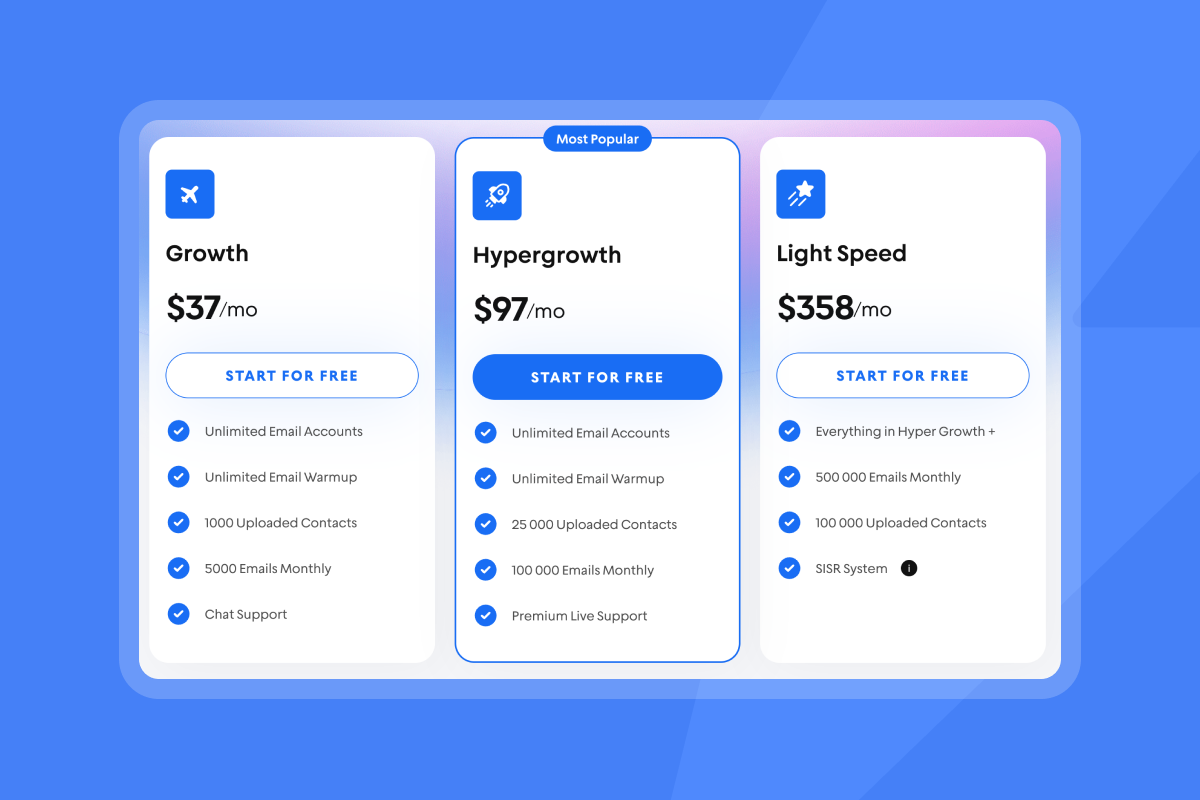
Instantly is flat‑fee and public. Outreach plans start at 37 dollars per month, Hypergrowth at 97 dollars per month, and Light Speed at 358 dollars per month. All Outreach plans include unlimited email accounts and warmup. SuperSearch lead plans and CRM plans are separate modules with transparent pricing, and Website Visitors is an optional add‑on. For pricing context and value modeling, see Instantly Pricing ROI.
What this means:
- Flat‑fee outreach lets you scale inboxes without adding per‑seat costs.
- You opt into SuperSearch credits and AI credits based on need, not headcount.
- Higher‑tier Light Speed adds Server and IP Sharding and Rotation for placement control on larger sending.
Outreach.io’s pricing structure and transparency
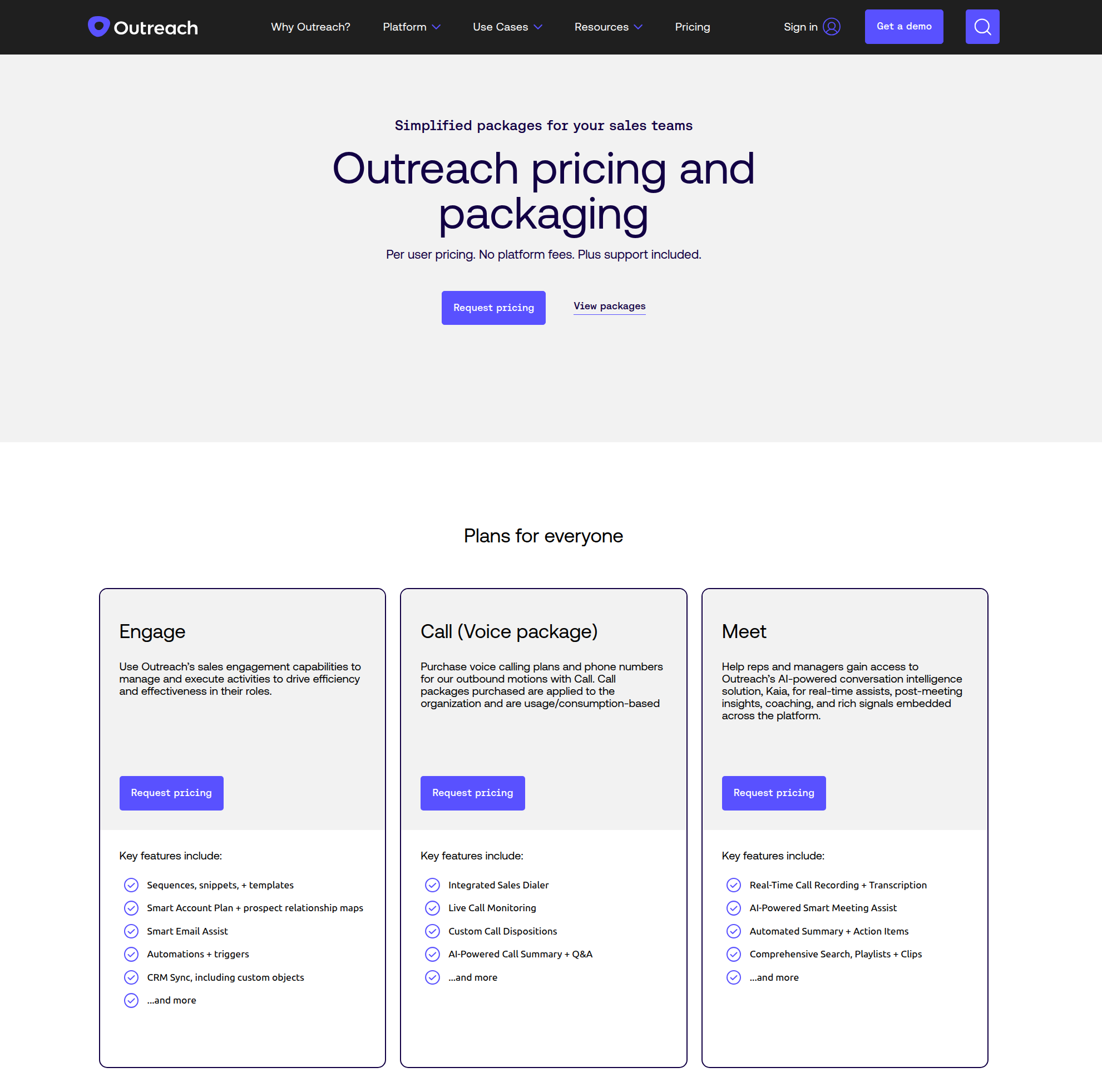
Outreach.io uses a subscription tier model with per‑user pricing. It does not list public prices and sells via quote. Independent sources place starting prices near 100 to 160 dollars per user per month, with higher tiers for additional features and integrations.
What this means:
- Costs scale linearly with users. Forecast carefully for teams with 5 to 20 SDRs.
- Expect annual contracts and potential implementation fees in enterprise deals, as noted by third‑party analyses.
- You've got to get on a call with a sales rep for an hour and do the whole dance to figure out how much it will cost you to start, but then there's the hidden costs.
Hidden costs and add‑ons to consider
- Outreach.io: Budget for per‑seat licenses across SDRs, managers, and sometimes AEs. Many buyers report quotes tied to features and integrations, with discounts negotiated by seat count and term.
- Support and rollout: Reviews for both vendors show a spectrum of support experiences. Some Outreach customer comments mention protracted implementations and support friction.
Feature set showdown: value beyond the price tag
Core outreach and automation capabilities
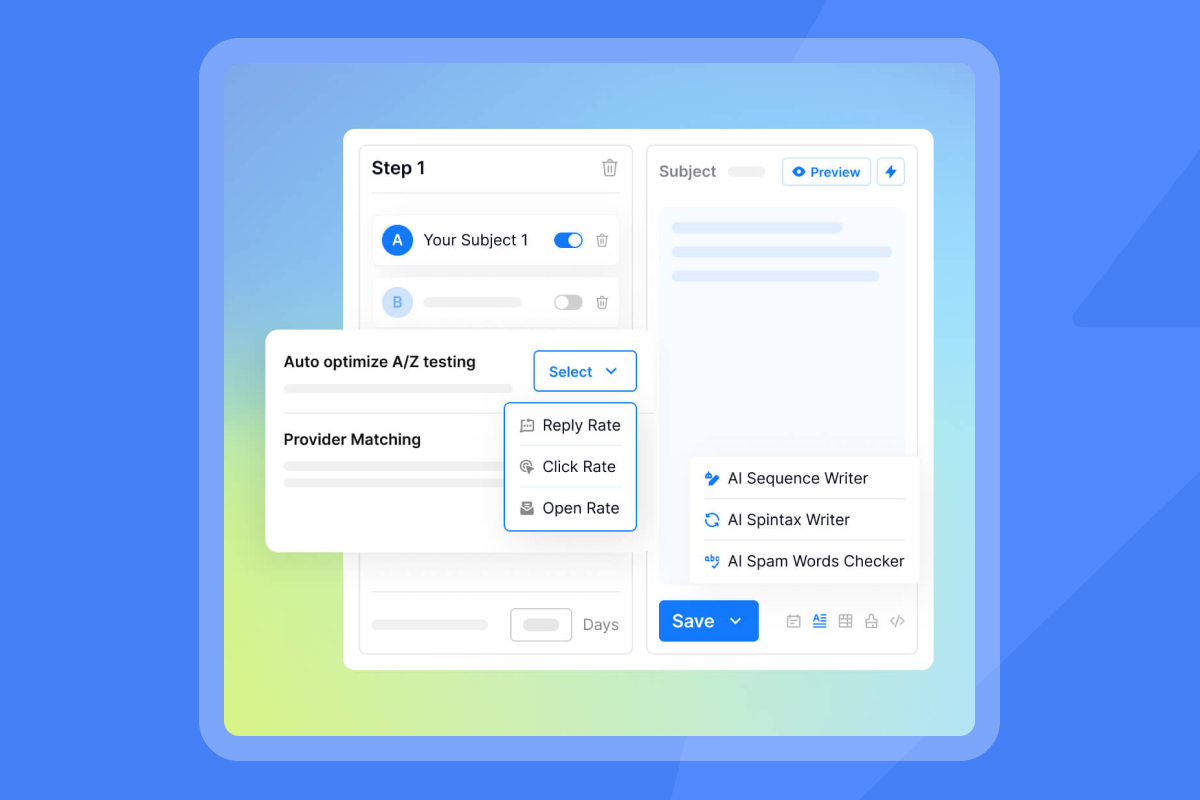
Instantly: Sequence building with automated follow‑ups, evergreen campaigns, and A/Z testing. Many users favor Instantly’s fast sequence builder and AI assistance.
Outreach.io: good sequencing for multichannel workflows with email, calls, and tasks. Third‑party reviews highlight classic A/B testing with guidance to test one variable at a time and run for weeks with 100 to 200 prospects per variant for clean results. Source: Weezly feature review
Key difference: Instantly supports A/Z tests and auto‑optimization to favor winning variants, while Outreach emphasizes traditional but limited A/B testing with manual decisioning.
Deliverability and inbox placement features
Instantly: Built around landing in the primary inbox. You get unlimited warmup accounts, a 4.2M+ private deliverability network, automated Inbox Placement tests, and Light Speed SISR for larger sending.
"Deliverability tools that actually move the needle: warmup, inbox rotation, and smart sending windows help us land in Primary instead of Promotions/Spam." - G2 review by Anthony V.
Outreach.io: Marketed as a multichannel SEP with strong sales execution. Third‑party reviews focus more on engagement workflows than built‑in deliverability tooling. If email is your main pipeline driver, verify domain health controls, ramp plans, and any warmup guidance during evaluation.
What to check in a pilot:
- DNS alignment and ramp plans.
- Inbox placement across Gmail and Microsoft using seed tests.
- Bounce rate at or below 1 percent with verified contacts.
Lead generation and data enrichment
Instantly: SuperSearch includes 450M+ B2B contacts with waterfall enrichment from multiple providers. Plans include monthly credits so your data and outreach live in one place.
Outreach.io: Typically paired with external data vendors for prospecting. Teams add sources like SalesIntel or enrichment tools through integrations outlined in reviews.
AI agents and personalization
Instantly: Copilot helps with research, campaign builds, and recurring tasks, while the AI Reply Agent triages and drafts replies within minutes. AI replies use credits, so set budgets and approval flows.
"I am impressed by Instantly's AI features and super search functionality, which significantly enhance our lead management efficiency." - G2 review by Sanket A.
Outreach.io: basic generative assistance for drafting and personalization across channels. Teams can standardize prompts and use AI at scale for reps.
CRM, reporting, and integrations
- Instantly: Native connectors can be setup in just a few clicks plus API and webhooks. For deep, bidirectional sync with Salesforce and HubSpot, partners like OutboundSync are recommended. Unified reply handling in Unibox keeps hygiene high before creating CRM records.
- Outreach.io: Recognized for good native CRM sync across Salesforce, HubSpot, and Microsoft Dynamics with activity logging and object mapping.
Scalability and team management
- Instantly: Flat‑fee pricing plus unlimited email accounts supports scaling by inbox rather than seat. Add warm inboxes and throttle throughput without per‑user penalties.
- Outreach.io: Per‑seat pricing maps cleanly to rep headcount and manager oversight. Costs scale with users and feature tiers.
How pricing scales: per‑seat vs. flat‑fee
Here is how costs can grow for the same sending operation.
| Platform | Pricing model | Starting price |
|---|---|---|
| Instantly | Flat-fee. Unlimited email accounts and warmup. Credits for AI and leads. | 37 dollars per month for Outreach, or $9/mo for Nano plan on SuperSearch. |
| Outreach.io | Per-user, quoted. Annual term common. | Estimated 100 to 160 dollars per user per month based on what we've heard folks quoted but likely more |
Per‑seat model: A 10‑rep team at 120 dollars per user per month is about 1,200 dollars monthly before add‑ons. At 20 reps it is about 2,400 dollars monthly.
Flat‑fee model: Instantly's Growth plan costs 37 dollars per month and covers unlimited email accounts. Adding SuperSearch credits at 97 to 197 dollars per month and Growth CRM at 47 dollars per month still keeps most stacks under 300 dollars monthly at that tier, that's less than 1/8 the price of Outreach.io and you have unlimited email accounts.
Which platform offers the best ROI for your sales team?
You get ROI when your cost per qualified meeting and cost per dollar of pipeline improve as you scale.
A simple model:
- Cost per meeting = Monthly platform spend divided by booked meetings.
- Cost per 1 dollar of pipeline = Monthly platform spend divided by pipeline value created.
Example:
- Instantly stack at 555 dollars per month (Light Speed + Hyper Credits). If that supports 25 meetings, cost per meeting is 22.20 dollars.
- Per‑seat stack at 1,200 dollars per month for 10 reps. If that supports 25 meetings, cost per meeting is 48 dollars.
Your actual numbers depend on domain age, ramp plans, list hygiene, and reply handling.
ROI for sales leaders: predictable costs and pipeline health
- Predictability: Flat‑fee and credits let you forecast spend without adding seats as you add inboxes.
- Pipeline health: Deliverability checks and placement tests reduce outages from domain health dips.
- CRM trust: If you rely on Salesforce dashboards, Outreach.io’s native sync and reporting depth can compress admin time and drive accurate attribution along with our huge range of supported integrations.
"The platform is super intuitive, easy to set up, and makes it simple to manage multiple domains and inboxes at scale." - G2 review by Shaiel P.
ROI for agency operators: scalable operations and client margins
- Scale by inbox, not seats: Unlimited accounts plus warmup help you partition sending per client without per‑user penalties.
- Lead sourcing in‑app: SuperSearch reduces vendor sprawl and context switching.
- Reply triage: AI Reply Agent can draft responses within minutes to protect SLAs during peak volume. AI replies cost credits, so cap daily usage.
ROI for startup founders: cash‑efficient pipeline growth
- Cash efficiency: A starter Instantly stack for outreach, leads, and CRM can be near 131 dollars per month.
- Time to value: Public pricing and self‑serve start reduce sales cycles and implementation inertia referenced in enterprise tool reviews.
Watch Instantly's CRM in action:
ROI for growth marketers: transparent campaign costs
- Clear variable cost: Credits map to the number of AI replies and verified contacts exported.
- Test velocity: A/Z testing and automated optimization speed learning cycles and reduce wasted sends. Read more about our Automated email setup in Instantly.
Making your decision: Instantly or Outreach.io?
When to choose Instantly
- You need predictable, flat‑fee economics with unlimited email accounts and warmup.
- Email deliverability, inbox placement, and reply handling matter more than multichannel breadth.
- You want prospecting, outreach, and AI in one place, and are comfortable using partner connectors for deep CRM sync.
When to consider Outreach.io
- You run a large team that needs rep coaching, and multichannel workflow depth.
- You accept per‑seat costs and annual terms to get enterprise analytics, dashboards, and governance.
Powering your sales outreach with confidence
The right platform matches your outreach motion. If high‑volume cold email is core, Instantly’s flat‑fee pricing, unlimited inboxes, and deliverability system help you scale safely and forecast costs. If your priority is multichannel sales execution with deep, native CRM reporting and coaching, Outreach.io is built for that. Pilot with real domains, warm gradually, verify inbox placement weekly, and measure cost per meeting before you commit.
See how Instantly delivers predictable outreach at scale
Start your free trial to connect warmed inboxes, run an Inbox Placement test, and ship your first A/Z test in under a day.
For more visual walkthroughs, watch these short tutorials:
FAQ
What is the average cost of a sales engagement platform per user per month?
Third‑party estimates for enterprise SEPs like Outreach.io often start around 100 to 160 dollars per user per month, quote‑based and billed annually.
How do AI features impact the pricing of email outreach tools?
AI reply handling and enrichment usually draw from credits. In Instantly, the AI Reply Agent costs 5 credits per AI reply, so set budgets and approval flows.
Are there flat‑fee options for unlimited email accounts?
Yes. Instantly provides flat‑fee Outreach plans with unlimited email accounts and warmup, starting at 37 dollars per month.
How can I calculate the ROI of a cold email tool for my team?
Use cost per meeting and cost per dollar of pipeline. Example: 555 dollars per month spend divided by 25 meetings equals 22.20 dollars per meeting.
What are typical pricing tiers for outbound email software?
- Per‑seat tiers, often annual, common at enterprise SEPs with quotes.
- Flat‑fee tiers with usage‑based credits for data and AI are common in modern cold email tools.
Key terminology glossary
- Sales engagement platform: Tool to organize and automate outbound activities.
- Per‑seat pricing: Cost per named user per month.
- Flat‑fee pricing: One monthly price, no per‑seat penalties.
- Credits: Units consumed by AI tasks or data exports.
- Warmup: Controlled sends to build sender reputation.
- Inbox placement: Where emails land across folders.
- Sender reputation: Trust score tied to domain and IP.
- List hygiene: Removing risky or invalid contacts.
- Verified contacts: Addresses confirmed deliverable.
- Send windows: Time ranges when campaigns send.
- A/Z testing: Testing many content variants, not just two.
- Reply rate: Replies divided by delivered emails.
- Unibox: Unified inbox to triage and route replies.
- Throughput: Total sends across connected inboxes.


