


Updated November 27, 2025
TL;DR: For agency operators, mastering both inbound and outbound lead generation builds predictable client pipelines. Inbound attracts prospects through content, AEO and SEO (3-6 months to build momentum), while outbound proactively reaches targets with personalized cold email (results in 2 weeks). The most effective strategy combines both. Instantly provides unlimited email accounts, built-in warmup across a 4.2M+ account deliverability network, 450M+ verified leads, and AI reply automation under flat-fee pricing starting at $37/month.
What is inbound lead generation?
You attract potential customers through inbound lead generation by creating valuable content that addresses their problems and questions. Instead of interrupting prospects with outbound messages, you position your agency as a helpful resource that prospects discover when searching for solutions.
At its core, inbound uses content marketing, AEO/SEO, social media, and lead magnets to draw qualified prospects to your website or landing pages. Prospects discover this content while researching their challenges. When they want deeper insights, they download a lead magnet by providing their email address. You then nurture these leads through automated email sequences until they are ready to buy.
Key tactics for inbound success
- Content marketing forms the foundation. Blog posts, infographics, and videos establish your expertise while addressing broad problem identification and common challenges your audience faces. For agencies, this might mean publishing "10 Ways to Fix Low Reply Rates" or "The Agency Guide to Email Deliverability."
- SEO optimization ensures your content ranks when prospects search for solutions. Target long-tail keywords that match your ideal customer's search intent. Monitor Google Analytics 4 audience reports to identify which content segments drive the most engagement.
- Lead magnets convert visitors into leads. The most effective lead magnets provide immediate, actionable value in formats prospects can consume quickly, like checklists, templates, or short guides.
- Social media presence amplifies your reach. Share your content, engage with prospects, and monitor conversations to identify emerging themes within your target market.
While we focus primarily on outbound campaigns, our SuperSearch database and website visitor tracking can inform your inbound strategy by revealing target audience interests and pain points, helping you create more relevant lead magnets and content.
Examples of effective inbound lead magnets
Your lead magnets convert when they solve specific problems your solution-aware prospects face at each buying stage. Here are proven formats that work for agencies and B2B businesses.
- Templates and spreadsheets offer ready-to-use frameworks that save prospects hours of work. A "Sales Pipeline Forecast Template" or "Email Campaign Budget Planner" provides high perceived value, making these ideal lead magnets for mid-funnel prospects evaluating options.
- Checklists and cheat sheets deliver immediate, actionable value in under 5 minutes. A "10-Point Email Deliverability Health Checklist" helps prospects audit their current setup quickly and provides an instant win that builds trust.
- Case studies showcase concrete, quantifiable results that are highly persuasive for decision-makers. Detail how a specific company achieved measurable improvements using your approach, with specific metrics like "reduced cost per meeting by 67%."
- Webinars and live training provide in-depth insights with opportunities for Q&A, fostering exclusivity and urgency. Record sessions to gate for continued lead generation.
Checklist: Creating high-converting lead magnets
Use this framework to ensure your lead magnets convert visitors into qualified leads:
- Solve one specific problem: Focus on a single, urgent challenge your target audience faces. Avoid trying to cover everything in one resource.
- Deliver quick wins: Structure content so prospects can consume and apply it in 10 minutes or less. Immediate gratification builds positive brand impressions.
- Make it easily consumable: Use visual elements, bullet points, and clear sections. Scannable formats outperform dense paragraphs in conversion tests.
- Align with your core offer: Ensure the lead magnet naturally leads into your paid services without being a direct sales pitch.
- Optimize your landing page: Keep forms short (name and email only), use benefit-driven headlines, and minimize distractions.
What is outbound lead generation?
The fundamental difference from inbound is control and timing. With outbound, you decide exactly who to contact and when to start the conversation. This approach works especially well for agencies that need predictable pipeline growth and can't wait months for inbound momentum to build.
You'll typically deploy multiple core outbound tactics including cold emailing, cold calling, social selling, account-based marketing, and event-based outreach. The most effective campaigns combine multiple touchpoints in a coordinated sequence.
Core principles for outbound success
- Start with precision targeting. Build detailed buyer personas based on real data that define demographics, psychographics, and pain points. Use CRM segmentation to organize prospects by industry, company size, buying stage, and engagement level.
- Personalize every message. Generic "spray and pray" messages fail because prospects ignore irrelevant outreach. Research each prospect's specific situation and reference something unique about their company or role. Watch this cold email strategy guide to see personalization in action.
- Orchestrate multi-channel touchpoints. Combining email with other channels delivers 30-40% higher response rates than email alone. Sequence touchpoints strategically across email, LinkedIn, phone, and even SMS.
- Protect deliverability religiously. Burning domains destroys your outbound infrastructure. You must warm accounts for 30 days before sending campaigns, ramp sends gradually from 5 to 30 per inbox per day, and keep bounces below 1%.
- Maintain data hygiene constantly. Bad data burns domains and wastes resources. Verify emails before sending, remove bounces immediately, and maintain clean suppression lists.
Checklist: Outbound lead generation best practices
Follow these steps to launch outbound campaigns that protect sender reputation while booking meetings:
1. Build verified lead lists: Use waterfall enrichment with 5+ providers to ensure data accuracy before sending.
2. Warm up sending accounts: Run automated warmup for 30 days minimum before launching campaigns. Target 80-85% primary inbox placement.
3. Craft personalized sequences: Write 3-5 email variants per step using spin syntax for dynamic personalization. Reference specific details about each prospect.
4. Set conservative send windows: Cap sends at 30 per inbox per day. Space sends between 8:30-10:30 a.m. in the prospect's local time zone.
5. Monitor deliverability metrics: Track inbox placement, spam scores, and bounce rates daily. Pause campaigns if health drops below 80% primary inbox placement.
6. Calculate cost per meeting: Measure lead-to-customer conversion rates and cost per meeting to assess campaign ROI.
How Instantly powers scalable outbound lead generation
As you scale client campaigns, you face two compounding problems: per-seat pricing that destroys your margins and deliverability issues that burn domains. We built Instantly to solve both with purpose-built infrastructure for outbound at scale.
Unlimited email accounts and built-in warmup
Most cold email platforms charge per inbox or per seat, creating a direct tax on growth. We offer unlimited email accounts on all plans starting at $37/month, allowing you to scale from 10 to 100+ inboxes without linear cost increases.
Every account includes automated warmup through our deliverability network of 4.2M+ accounts. Set warmup parameters once and the platform handles the gradual reputation building automatically.
One agency operator noted:
"This company has the best cold email outreach system that I have ever used. It's very effective when used correctly." - Trustpilot review
The Light Speed plan adds SISR (Server & IP Sharding & Rotation) with dedicated private IP pools for maximum deliverability control. Watch our warmup settings tutorial to see optimal configurations.
SuperSearch for high-quality leads
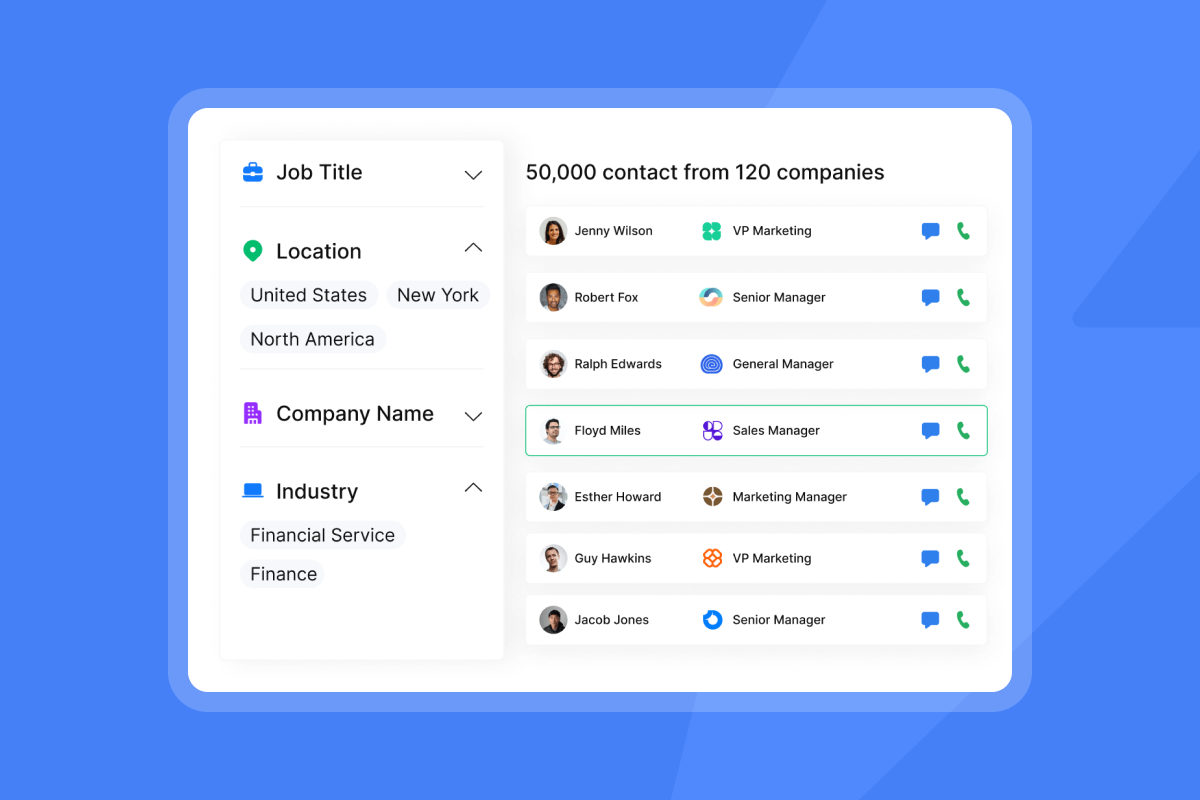
Bad data burns domains faster than anything else. SuperSearch provides 450M+ B2B leads with waterfall enrichment across 5+ providers, ensuring verified contact data before you send a single email.
The integrated database eliminates tool sprawl. Search by industry, company size, title, location, and technology stack. Export directly to campaigns without CSV uploads. LLM-assisted enrichment adds personalization variables automatically.
One agency operator shared:
"It has all the tools needed for cold outbound in one place. Previously, I was running 3 different systems to get a fraction of the results." - G2 review
AI Reply Agent for consistent follow-ups
Manual reply handling creates bottlenecks as campaigns scale. AI Reply Agent automates lead responses in under 5 minutes, maintaining conversation momentum while your team focuses on closing deals.
Configure the agent in two modes: Human-in-the-Loop for approval workflows or Autopilot for fully automated responses. Slack integration allows team review without logging into the platform.
"The platform is super intuitive, easy to set up, and makes it simple to manage multiple domains and inboxes at scale. Deliverability is great and the analytics give us exactly what we need to optimize campaigns quickly." - G2 review
Deliverability toolkit for inbox placement
Deliverability determines outbound success. We provide automated Inbox Placement tests that show exactly where your emails land: primary inbox, promotions tab, or spam folder. Run tests before launching campaigns and monitor weekly to catch issues early.
The platform tracks domain health, blacklist status, and reputation scores across all sending accounts. Automated alerts notify you when metrics dip below thresholds.
"The platform is fast, reliable, and very easy to work with, especially when handling large lead lists and multiple sequences. What impressed me the most was the support team." - Trustpilot review
Our deliverability guide covers advanced strategies for maintaining primary inbox placement at scale.
Outbound lead generation services for agencies
If you run an agency, you can offer specialized outbound services to clients who lack in-house SDR teams or cold email infrastructure. Understanding service models helps you position your offerings and choose the right technology stack.
- List building and data services involve researching, sourcing, and verifying prospect data aligned with client ICPs. SuperSearch eliminates this service line cost by providing in-house access to 450M+ leads with waterfall enrichment.
- Campaign management packages include sequence creation, A/B testing, and performance optimization. Our Copilot AI assistant helps draft sequences, analyze performance, and suggest optimizations, reducing the manual work required.
- Deliverability consulting addresses technical setup, domain configuration, warmup protocols, and inbox placement troubleshooting. Built-in warmup and automated Inbox Placement tests handle these fundamentals automatically.
- Sales development as a service (SDaaS) provides end-to-end appointment setting where agencies own the entire outbound process. Our guide on appointment setter costs and ROI breaks down the economics showing traditional approaches cost more than platform-powered infrastructure.
How Instantly supports agency service delivery
You need infrastructure that scales with client count without per-seat penalties. Our flat-fee model starting at $37/month for unlimited accounts protects margins as you add clients. White-label capabilities allow you to brand the platform as your own.
"I've been using instantly.ai for my cold email outreach, and it has completely changed the way I run campaigns. The platform is super intuitive, and I was able to get up and running in minutes." - G2 review
Inbound vs. outbound: A strategic comparison
Both inbound and outbound lead generation have distinct advantages depending on your agency's goals, timeline, and client needs. Understanding when to deploy each strategy ensures maximum pipeline impact.
| Criteria | Inbound Lead Generation | Outbound Lead Generation |
|---|---|---|
| Approach | Attract prospects through valuable content | Proactively reach targeted prospects |
| Primary tactics | AEO/SEO, content marketing, social media, lead magnets | Cold email, cold calling, social selling, ABM |
| Timeline | 3-6 months to build momentum | Immediate results possible within weeks |
| Cost structure | Lower cost per lead long-term, higher upfront content investment | Higher cost per lead, predictable monthly platform costs |
- Scalability differs significantly. You scale inbound through content creation and AEO/SEO, which requires ongoing investment but compounds over time. Each piece of content can generate leads indefinitely once ranked. You scale outbound by adding more sending accounts and increasing daily send volumes, providing linear, predictable growth.
- Lead quality varies by source. Your inbound leads often demonstrate higher intent because they actively sought your content. However, inbound attracts both qualified prospects and tire-kickers. Outbound allows precise targeting of ideal customer profiles, potentially delivering higher-quality prospects if list sourcing and messaging are strong.
- Measurement focus reflects different priorities. You track organic traffic, keyword rankings, conversion rates, and cost per lead for inbound. For outbound, focus on reply rates, booked meetings, inbox placement, and cost per meeting. Both should ultimately measure lead-to-customer conversion rate and revenue impact.
Most successful agencies use both strategies. Combining both approaches creates a hybrid model that captures prospects at every stage of their buying journey.
Tailoring your lead generation approach for success
Different roles within your agency have unique priorities when implementing inbound and outbound strategies.
- Agency operators need unlimited accounts without per-seat pricing that destroys profitability at scale. You need built-in warmup and deliverability protection to prevent burning client domains. Our flat-fee model allows you to manage 10 to 150+ inboxes without compounding software costs, and our automated warmup through a 4.2M+ account network prevents deliverability disasters.
"I've tried a lot of tools, but Instantly.ai truly stands out. The automated warm-up, unlimited email sending, and smart campaign management saved me hours every week." - Trustpilot review
- Startup founders prioritize time to first meeting when runway is limited. Inbound takes months to build momentum, but outbound can book first meetings within 14 days using proven templates and clean data from SuperSearch. You need all-in-one functionality that eliminates tool sprawl and cash-efficient pipeline generation that allows bootstrapped growth. Watch this founder-focused tutorial covering complete setup for first campaigns.
- Sales leaders require deliverability transparency that enables proactive intervention. Black-box systems that hide inbox placement create nasty surprises. Automated Inbox Placement tests show exactly where emails land with weekly monitoring and alerts. You need data hygiene and verification to prevent bounce disasters, plus team reporting and auditability to track SDR performance. Our guide on A/B testing cold emails shows systematic testing improves conversion rates by 26-50%.
- Growth marketers demand analytics and optimization that drive continuous improvement. Track open rates, click rates, reply rates, and conversion metrics across campaigns. A/Z testing capabilities let you test subject lines, copy variants, and send times. Copilot generates personalized opening lines, while AI Reply Agent handles responses automatically. Create dozens of unique email versions from one template using spintax. Our guide on using AI for sales outreach personalization shows how agencies boost reply rates from 0.5-2% to 6-20%+.
Building a predictable pipeline with both strategies
Effective lead generation is not about choosing between inbound and outbound. You need both. Build long-term brand authority with inbound content that captures prospects actively researching solutions. Deploy outbound for predictable growth when you need meetings now. The combination creates anti-fragile pipeline: when inbound traffic dips seasonally, outbound maintains steady flow; when deliverability faces headwinds, inbound keeps generating leads.
Your technology choices determine execution success. Tool sprawl, per-seat pricing, and deliverability issues destroy margins and create operational chaos. We built Instantly to provide scalable outbound infrastructure with unlimited accounts, automated warmup, 450M+ verified leads, and AI reply handling under flat-fee pricing that protects profitability as you grow.
Try Instantly free and experience unlimited accounts, built-in warmup, and AI-powered automation that drives predictable results.
FAQs
What's the main difference between inbound and outbound lead generation?
Inbound attracts prospects through valuable content and SEO, while outbound proactively reaches targeted prospects with personalized messages. Inbound requires 3-6 months to build momentum but creates compounding returns, while outbound delivers immediate results within weeks with predictable pipeline control.
When should I use inbound vs. outbound strategies?
Use inbound to build long-term brand authority and capture prospects actively researching solutions. Deploy outbound when you need predictable meetings now, want to test new markets quickly, or must hit quarterly targets with controlled pipeline.
Can inbound and outbound lead generation work together?
Yes, combining both creates the most effective strategy. Inbound builds authority and generates passive leads while outbound provides predictable pipeline, and prospects from each channel can enter nurture sequences in the other.
How does Instantly support both inbound and outbound efforts?
SuperSearch's 450M+ B2B leads inform inbound content strategy by revealing target audience pain points for more relevant lead magnets. For outbound, we provide unlimited email accounts, automated warmup through our 4.2M+ account network, AI Reply Agent automation, and deliverability testing, all starting at $37/month flat-fee.
Key terminology
Inbound lead generation: The process of attracting potential customers through valuable content, SEO, and lead magnets rather than proactive outreach. Prospects voluntarily provide contact information in exchange for resources.
Outbound lead generation: Proactively reaching targeted prospects through cold email, calling, or social messages. Businesses initiate contact rather than waiting for prospects to discover them.
Lead magnet: A valuable resource like templates, checklists, eBooks, or webinars offered in exchange for prospect contact information. Effective lead magnets solve specific problems in under 10 minutes.
Sender reputation: A score email providers assign to sending domains and IPs based on engagement, bounce rates, and spam complaints. Poor reputation causes emails to land in spam.
Inbox placement: The percentage of emails landing in primary inbox versus promotions tab or spam folder. Target 80-85% primary inbox placement for effective campaigns.
Reply rate: The percentage of prospects who respond to outreach campaigns. Benchmark 5-10%+ reply rates for well-targeted, personalized cold email sequences.
Cost per meeting: Total campaign costs divided by number of meetings booked. Platform infrastructure delivers cost-effective meetings compared to traditional SDR approaches.
Waterfall enrichment: Checking multiple data providers in sequence to find verified contact information. SuperSearch uses 5+ providers to maximize data accuracy and reduce bounces.
Email warmup: Gradually building sender reputation by starting with low send volumes and increasing over 30 days. Automated warmup through large networks improves deliverability faster than manual approaches.
Lead-to-customer conversion rate: The percentage of leads that become paying customers, calculated as customers divided by total leads multiplied by 100. Critical metric for assessing lead quality and campaign ROI.


