


A strong outbound sales engine is built on clean inputs, not brute-force sending. It turns raw data into revenue through a repeatable loop of prospecting, outreach, and qualification.
By replacing manual grunt work with automated "waterfall" data enrichment and AI-driven personalization, you can scale volume without sacrificing quality, so your sales reps spend their time closing deals, not hunting for emails.
An effective outbound sales engine comes from a clear product-market fit, a well-defined total addressable market, and pristine deliverability. Once you have the fundamentals in place, scaling outbound becomes as easy as adding more leads to your pipelines.
However, you’ll need a system that can support the growth of your outbound sales engine without burning your budget. If you look at modern sales, you’ll need to:
- Buy alternate domains and set up DMARC, DKIM, and SPF manually.
- Pay for warm-up automation per inbox.
- Get a CRM that integrates with your outreach tools.
- Scrape unverified leads from LinkedIn or export lists from a B2B database.
- Pay additional costs for each inbox added to your outreach tool.
Saying this kind of set-up will be expensive to scale is an understatement. Thankfully, you don’t need a fortune to build a scalable outbound sales engine. In this article, we’ll guide you through the tools and strategies you’d need to get your own outbound sales engine up and running.
What is an Outbound Sales Engine: The Parts That Make It Run
No matter how you set up your cadence, the fundamentals of outbound sales are built on how well you can identify who your ideal customer is, how much context you can gather to personalize outreach, and how effective you are at reaching your prospect.
A Deep Understanding of Your Product-Market-Fit
Understanding how to position your value in saturated markets isn’t easy. Traditional sales suggest that you should present your offer or the problem your product or service solves, then find people in need of your specific solution. The problem is that this approach is too broad.
What’s likely to happen is that you’ll get a list filled with leads that match your ICP. However, you then send the same offer to each one. In reality, each lead or company values different things. So, when building an ICP, have segmentation already in mind.
A better approach is to build an ICP like a set of sub-profiles. Start with the shared baseline (industry, size, and use case), then segment by what each group cares about most, what triggered the need, and what could block a purchase.
Scaling Prospecting to Expand Your Total Addressable Market (TAM)
Prospecting is about building a lead pipeline that stays clean as your sending volume grows. At scale, outbound becomes a supply chain: you source leads, enrich them with context, verify emails, segment by intent and value drivers, then feed each segment into the right campaign.
All of that takes hours of a rep's day. With SuperSearch, that’s cut down to minutes. You only pay for verified leads, which can be found using 13 advanced search filters, making it perfect for integrating segmentation during the prospecting process.
Let’s say your product is a HubSpot alternative; instead of hypothesizing if a lead uses it, you can use the Technologies filter to find leads with HubSpot in their stack and angle your value propositions from there.
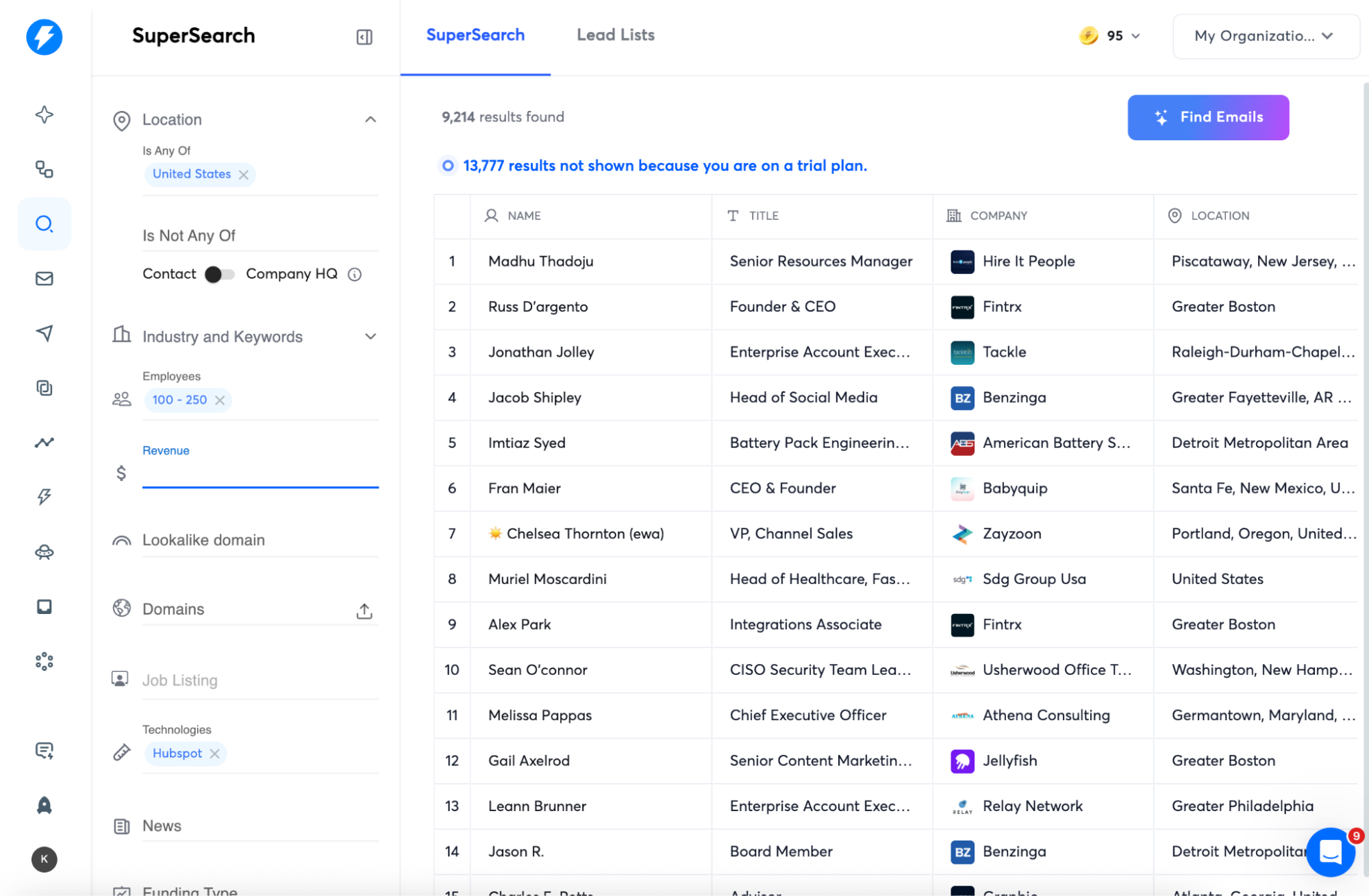
The bigger win is what happens next: your TAM stops being limited by who you can manually uncover. When you can reliably find verified contacts across specific tech stacks, titles, industries, and company sizes, you unlock pockets of the market that used to be invisible.
Engage With Relevancy and Personalization: Aligning Cadence With Value
Once you have a segmented list, the next bottleneck is not “writing better emails.” It’s picking the right reason for each segment to care, and then stacking touches in a way that feels natural. Here’s the trap most teams fall into: they confuse personalization with relevancy.
Personalization involves inserting a first name, a company name, and a compliment in a LinkedIn post. Relevance is showing up with an angle that matches what that specific segment values right now.
Segmentation beats personalization. Not because personalization is “bad,” but because it’s usually slow, inconsistent, and easy to get wrong. Lead segmentation lets you stay specific at scale. Here’s an example sales cadence that you can build on or adjust to fit your needs:
- Day 1 Cold Email: Give (insight, mini-audit, quick win)
- Day 2 Call: Short opener, reference the insight, ask a single question
- Day 5 Follow-up Email: Proof (one result, one sentence why it worked)
- Day 7 LinkedIn: Connect + 1 line summary of the give
- Day 10 Email: Offer (the tangible next step)
- Day 12 Call: Follow up on offer, confirm if timing is wrong, or if there’s a better owner
- Day 14 Breakup Email: Two-option close (“Worth exploring this quarter, or should I circle back later?”)
How to Build a Scalable Outbound Sales Engine
Going from 5,000 monthly sending volume to 50,000 might seem like a big jump. However, with the right strategies, you can even achieve even greater numbers. The secret lies in how you expand your total addressable market, qualify leads in your CRM, and maintain deliverability.
Use Platforms That Enable Scalable Growth
To make money, you have to spend money. But in outbound, how you spend matters. If your stack taxes you every time you grow, your revenue ceiling gets capped by your tooling instead of your offer.
Many platforms scale like a parking meter. Add more inboxes, pay per inbox. Add more reps, pay per seat. Want better reporting or automations? Jump a tier. Need more sending capacity, pay again. Even when campaigns work, margins get squeezed when you want to grow.
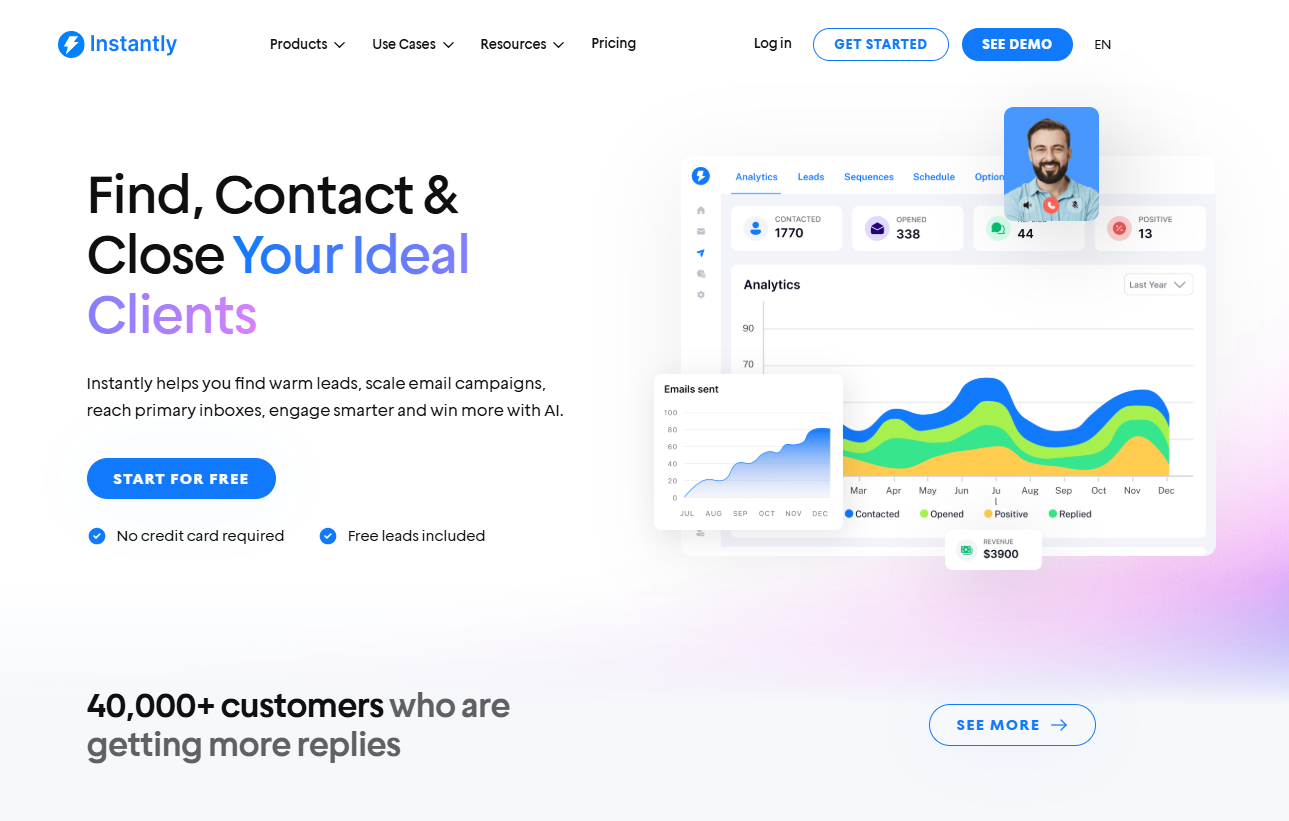
G2 Rating: 4.8/5 ⭐ from 3,952 reviews
Instantly was built to remove those “growth penalties.” You can add unlimited domains, warm up unlimited inboxes, and expand your team without paying extra seats for the CRM. So when you increase volume, you’re scaling conversations and opportunities.
Automate DNS Records, Technical Setups, and Warmup
Email campaign best practices suggest that the most effective way to scale sending volume is by adding more domains and inboxes, not just leads. Every domain is assigned three inboxes, and each inbox can send up to 50 outbound sales emails per day.
So, if you want to scale from 5,000 to 50,000 emails monthly, you’ll need about 16 domains and 48 inboxes. And remember, you have to set up DMARC, DKIM, and SPF settings for each one. If you don’t want to spend hours on this, Instantly has a DFY Email Setup.

Just input your domain, and Instantly will give similar domains you can use for outreach. Instantly handles all the technical setups. You can even purchase pre-warmed accounts, allowing you to use them for any campaigns immediately.
Each domain purchased from Instantly DFY is also added to a premium warmup pool ($500/month or $5,000/year) for free. This premium pool consists of only high-quality, aged Google and Microsoft accounts, with stricter rules in place to maintain quality.
Expand Total Addressable Market: Prospect & Qualify All Channels
With email infrastructure ready for high-volume campaigns, you’ll need leads to fill the demand. The best way to do so is to expand your total addressable market by leveraging all available channels. For example, you can find potential prospects using:
- Website visitor identification tools (find contact info of high-intent window shoppers).
- Sales Navigator triggers, such as recent job position openings or company news.
- B2B databases with millions of potential leads that fit your ICP.
However, regardless of the channel from which you receive leads, you must always qualify leads before adding them to your CRM for outreach. Each business should have its own unique metrics for what makes a qualified lead. So, start by learning how to do lead scoring.
The logic is simple: if a lead passes your qualification or gets a high-enough lead score, it’s time for verification and enrichment. Tools like Clay help you enrich lead data with contact information, revenue, employee count, competitors, and funding announcements.
Verify Emails Before Adding Them to Your CRM
One of the main causes of poor deliverability is a bad lead list. Contact information can become outdated, catch-all emails can slip through the cracks, and prospecting tools can hallucinate emails. To ensure each lead is a person you can reach out to, always verify your lead list.
Instantly solves this by integrating list hygiene directly into the workflow. It labels contacts as Verified, Risky, or Invalid, and automatically skips Risky/Invalid leads in campaigns by default.
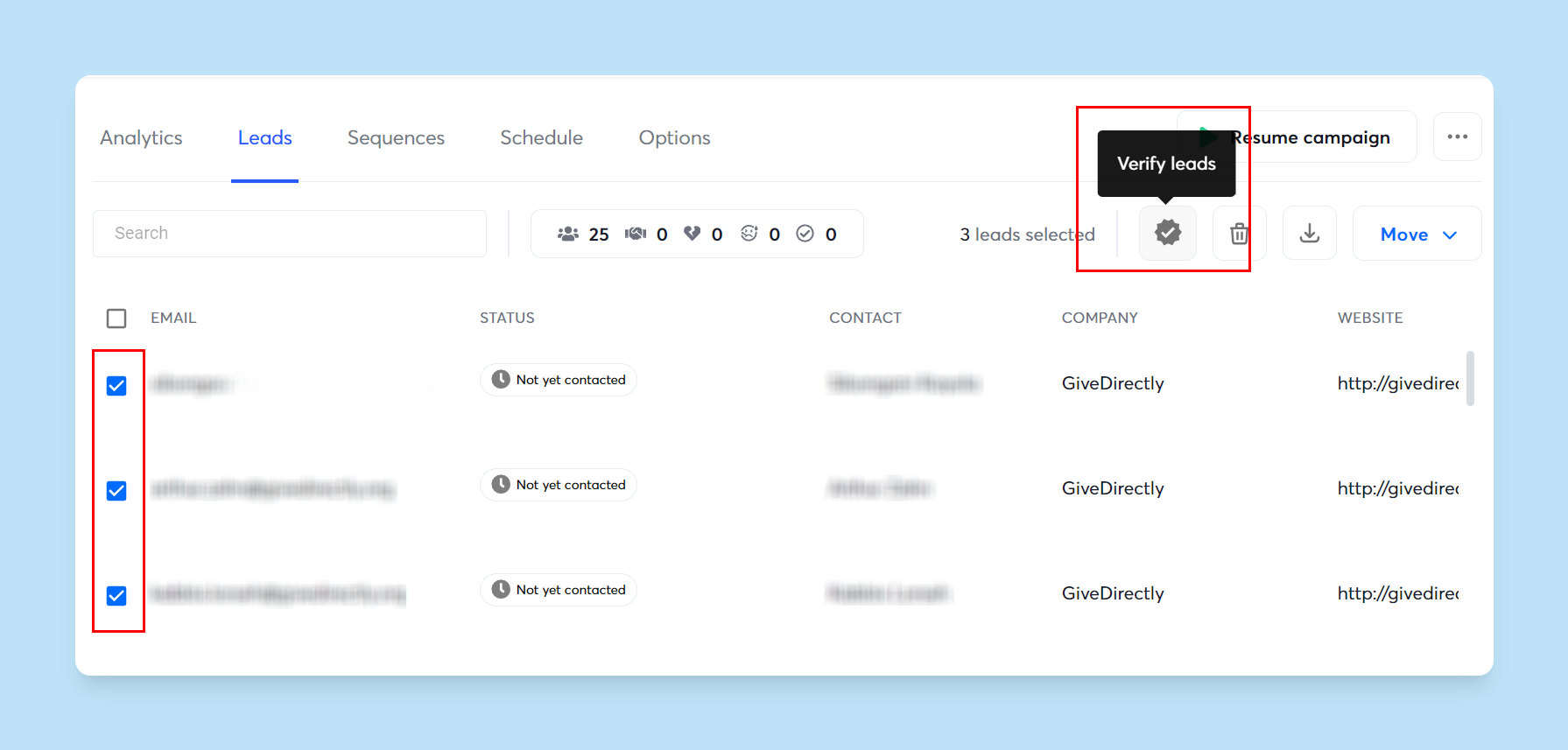
It also includes catch-all verification to recover leads that other tools can’t confidently verify, and SEG detection to flag contacts behind gateways such as Barracuda, Mimecast, and Proofpoint.
Scale Outreach by Automating Personalization and Sequences
Outreach automation enables you to build a repeatable flow that coordinates touches across channels. They adapt based on what leads do, and keep your best segments moving forward without burning out your reps.
The key is control and conditional logic. You want sequences that stay consistent for a segment. Automatically branch when something changes: a reply comes in, a keyword signals intent, a lead goes cold, or it’s time to pull in another channel like calls, SMS, or LinkedIn.
Instantly brings this together in one place, so you can build unlimited email sequences in the Campaign Builder, generate niche-specific sequences with its AI Sequence Generator, and add variation with spintax and proven templates.
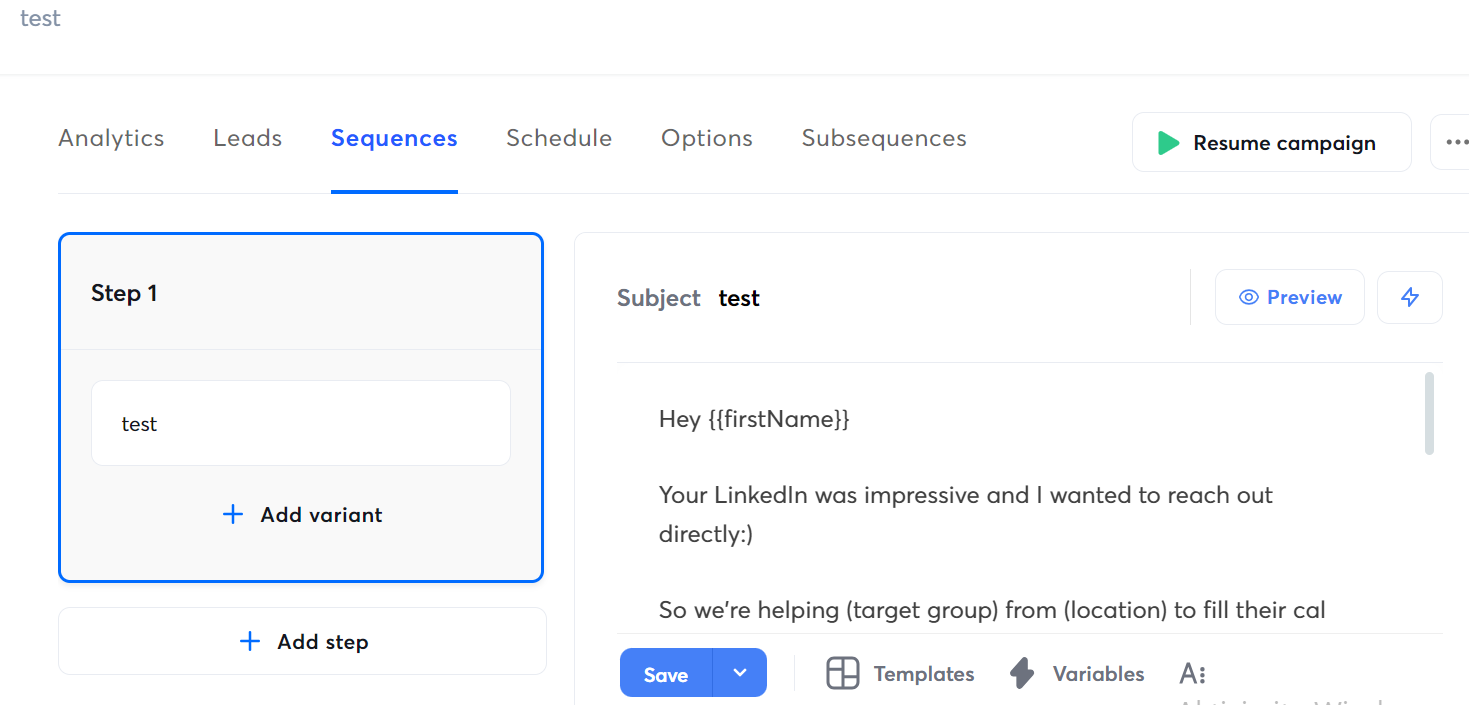
From there, you can automate follow-ups with sequences triggered by lead status or reply keywords, connect external workflows through the Automation Builder (including LinkedIn platforms like Aimfox, HeyReach, and Valley), and even handle responses with AI using the AI Reply Agent and AI Inbox Manager.
Personalization & Messaging Tools
Personalization and messaging tools help you sound relevant without turning outbound into a research-heavy grind. The goal isn’t to cram an email with facts about a LinkedIn post or use an outbound sales template for every lead.
You need to automate personalization that’s relevant and valuable enough to merit a reply. The best tools do two things well: they capture valid inputs (company signals, role context, tech stack, and intent triggers) and they translate those inputs into clean, on-brand messaging that you can reuse across a segment. LLMs do this job nicely. You just need the right integrations.
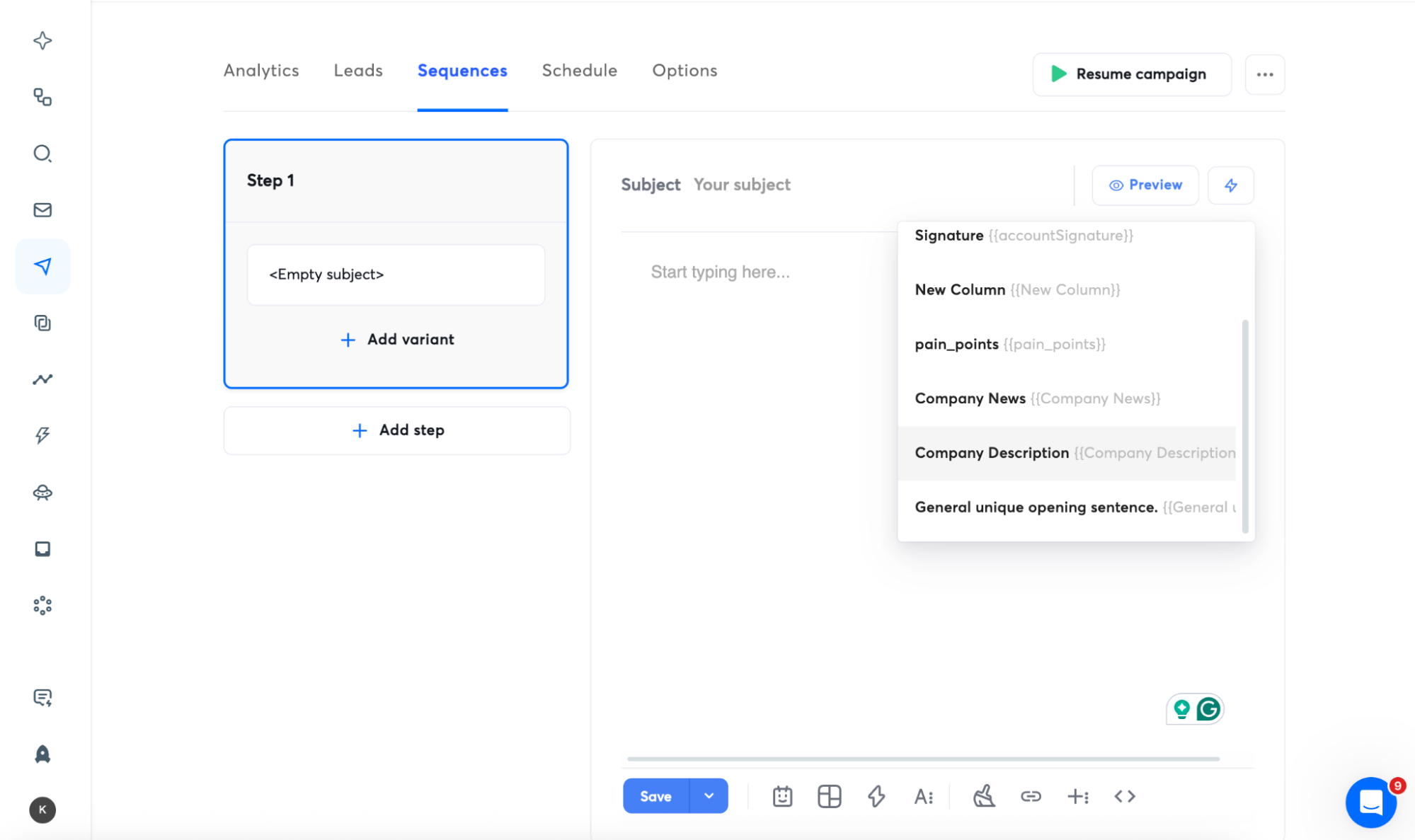
If you want a tool without all the hassle of complex APIs and webhooks, Instantly’s Email Editor makes use of custom variables in your lead lists. You can also use Instantly Credits to use top LLMs like ChatGPT, Perplexity, and Deepseek, depending on your needs.
Inbox Placement, Volume Throttling & Reputation Monitoring
Next, build for rotation. Just like any mechanical engine, your outreach engine can burn out if left running for too long. Use dedicated sending domains and distribute the volume across multiple mailboxes to prevent one inbox from carrying the entire load.
Then think in topology. Your sending setup can be a shared IP or a dedicated IP, depending on your provider and scale; however, the key takeaway is to avoid putting all your eggs in one basket. Create sending pools, keep your best leads on your cleanest infrastructure.
From there, you want three systems working together: Inbox Placement, Volume Throttling, and Reputation Monitoring.
- Inbox Placement
- Automated tests that check if emails land in the inbox, promotions, or spam folders
- Automated recurring tests with alerts when placement drops below your set thresholds
- Monitors your IPs and domains against 94 blacklists
- Analyzes email content for spam triggers
- Volume Throttling
- Campaign slow-ramp system: starts with 2 emails on day 1, then increases by 2 daily until reaching your max limit
- Customizable sending windows and time gaps between emails (default 9 minutes + 5 random minutes)
- Daily limits per account and per campaign to control volume
- Reputation Monitoring
- SISR (Server & IP Sharding and Rotation) with hundreds of rotating proxy IPs
- Continuous monitoring of IP performance: high-reputation IPs stay in rotation while underperformers are removed
- Private IP blocks are automatically assigned for larger volumes
- Proactive blacklist removal and immediate IP replacement when flagged
Key Takeaways
Building a scalable outbound sales engine doesn’t have to be complex. You just need the right tools and strategies to make it work. In most cases, that means having more than five tools in your outbound sales stack.
But if you want to have the fundamentals under one roof, there’s no better outbound sales engine than Instantly. Build a sustainable email infrastructure, find pre-verified leads, enrich data, manage leads, and automate personalization all within the platform. Try it for free today.


