


Updated October 31, 2025
TL;DR: Winning subject lines follow repeatable rules. Use psychological triggers like curiosity, relevance, urgency, and social proof. Keep it clear, brief, and specific. Test variants with disciplined A/B or A/Z methods. Protect inbox placement by avoiding spammy patterns and keeping volume safe. Use AI to ideate, personalize, and analyze at scale, then standardize what works with audit-ready reporting.
What makes a subject line win? The teardown foundation
A subject line that wins is short, clear, and relevant. It promises a concrete benefit or creates a curiosity gap in the first 30 characters.
It does three core jobs:
- Signals relevance in the first 30 characters.
- Promises a clear benefit or gap worth clicking.
- Proves itself in data with higher opens, replies, and meetings.
Benchmarks for open rates vary by dataset and Apple MPP. For a directional anchor, Mailchimp reports many industries hover near 21 percent average opens across its benchmark set, which keeps context by vertical and list quality in the Mailchimp industry benchmarks.
Cold outreach is noisier. Reduce friction with relevance and deliverability discipline, then validate with testing.
The core principles of effective subject lines
Great subject lines are built, not guessed.
Relevance first: Tie to a live problem, trigger, or intent signal.
Concise and front-loaded: Put the most important words first so mobile shows the value. Mailchimp suggests keeping to about 9 words and 60 characters. Most mobile UIs show roughly 30 to 50 characters, so front-load your strongest words.
Clarity beats clever: Plain, specific language outperforms vague cute lines.
Specificity: Numbers, time boxes, and concrete nouns raise perceived value.
Personalization beyond a name: Reference role, company, event, or trigger. Personalized subject lines are about 26 percent more likely to be opened.
Deliverability aware: Avoid all caps, punctuation spam, and bait-and-switch. Keep daily sends per inbox low to protect your sender reputation.
Psychological triggers: why we open emails
To create a great subject line you have to think from the perspective of your ICP. What are their triggers is good starting point. Open behavior maps to a few reliable triggers.
Curiosity gap
Hint at the benefit or insight without giving it away.
Examples:
- "Deal-blocking mistake we keep seeing"
- "Your PPC is fine, this is not"
Why it works: humans seek to close information gaps.
Urgency and scarcity
Set a clear time or quantity limit.
Examples:
- "3 seats left for Thursday"
- "Closes 5 p.m. local"
Use sparingly and truthfully. False urgency erodes trust.
Personalization and relevance
Anchor to their world.
Examples:
- "[Company] Q4 pipeline math"
- "Question on your {{tool}} migration"
Tie to observed signals, not just a first name.
Value proposition
Lead with benefit.
Examples:
- "Cut no-show rates by 27 percent"
- "Reduce SOC 2 prep by 2 weeks"
Back it up in the email.
Social proof and authority
Borrow credibility.
Examples:
- "How 213 SaaS teams fixed SDR no-shows"
- "Featured in Gartner’s 2025 brief"
Be precise and verifiable.
Anatomy of a winning subject line: elements and formulas
Mix and match the elements below.
- Questions: "Worth a 7-minute test, [Name]?"
- Numbers: "3 changes for 18 percent more demos"
- Brackets: "[Study] SDR reply patterns by industry"
- First-person angle: "Can I share a 2-slide teardown?"
- Short commands: "Skip the RFP loop"
- Time cues: "Before Thursday’s review"
- Emojis (sparingly): "Q4 forecast check ✅" Use 0 to 1 in B2B.
Proven formulas
- [Outcome] without [common pain]: "More demos without more emails"
- [Specific number] ways to [verb] [outcome]: "5 ways to cut CAC"
- [Company] + [topic]: "[Acme] + SOC 2 dates"
- "Quick question about [owned initiative]."
- "[Peer proof]: How [peer] did [metric]."
Psychological triggers and their application
There are however a few watch-outs when it to comes using triggers. Leverage your ICP understanding and hone with A/Z testing to get a clear picture of what works and what to avoid.
| Trigger | Best for | Example | Watch out for |
|---|---|---|---|
| Curiosity | Thought leadership, content drops | "Deal enemy #1" | Must pay off in body copy |
| Urgency | Events, deadlines, promos | "Closes 5 p.m. local" | Overuse hurts trust |
| Relevance | Cold B2B outreach | "[Company] SDR ramp plan" | Requires good data |
| Value | Product pitches, follow ups | "Cut tickets by 22 percent" | Needs proof inside |
| Social proof | Competitive categories | "Used by 1,124 ops teams" | Verify claims |
Teardowns in action: winning subject line examples by use case
Each example lists the primary trigger and a quick why.
Cold outreach subject lines
- Curiosity + relevance: "The hidden cause of your no-shows"
Why: Triggers curiosity and ties to an SDR pain. - Value + number: "3 fixes for [Company] trial drop-off"
Why: Specific and personalized to a real metric. - Social proof: "How 27 Series B teams booked faster first meetings"
Why: Peer authority in B2B stage language. - Question + brevity: "Quick question on your Q4 ramp"
Why: Low friction. Signals respect for time.
Newsletter and content promotion
- Curiosity + bracket: “[New data] Reply rate by ask type”
Why: Brackets spotlight the asset and “new data” signals freshness. Curiosity drives opens to see the numbers. - Number + value: “7 subject line myths that cost opens”
Why: List format promises quick scanning. “Myths” hints at fixes. “Cost opens” frames an avoidable loss.
Sales follow up
- Thread-based clarity: “Next step before pricing”
Why: Anchors to the current stage. Reduces cognitive load and nudges momentum without jumping ahead. - Time cue + value: “2 options before Friday board prep”
Why: A concrete deadline adds urgency. Offering options lowers decision friction and feels helpful. - Risk removal: “No deck. 10-minute checklist instead”
Why: Strips effort and time risk. A short checklist promises immediate utility and faster yeses.
Agency client and startup outreach
- Social proof + scarcity: “Open slots for 2 pilots next week”
Why: Scarcity motivates action. “Pilot” lowers commitment. Near-term timing pushes a quick reply. - Value + relevance: “[Investor] intro format that gets replies”
Why: Speaks to a core founder need. Implies proven outcome. Personalizing the investor makes it feel tailored. - Founder-to-founder: “Would this cut your CAC by 18 percent?”
Why: Peer framing builds trust. A specific ROI hook invites a fast answer and sets a measurable bar.
How to run a subject line teardown and test in 7 steps
- Collect 50 to 100 recent subjects with performance and placement status.
- Tag each line by trigger, length, structure, and personalization depth.
- Identify the top 10 percent performers and isolate patterns.
- Draft 10 to 20 new variants across three triggers you can validate.
- Use spintax to create 100 plus micro-variants for safe rotation.
- Run an A/Z test with equal volume and a 24 to 48 hour window.
- Promote winners to the library, retire underperformers, and document learning.
A/B testing and optimization frameworks: the data-driven teardown
Testing turns opinions into systems. Use a tight loop.
Setting up effective A/B tests
- Define one hypothesis: Example: question vs statement.
- Pick the primary metric: For cold email, use replies and meetings per 100 sends.
- Size the test: Aim for 800 to 1,000 recipients per variant for significance when you can. On smaller lists, rotate sequential tests and treat results as directional, as outlined in HubSpot A/B testing guidance.
- Keep constants: Same list quality, sender, and send window.
- Run long enough: Allow 24 to 48 hours to capture lagging opens.
- Decide with significance, not vibes.
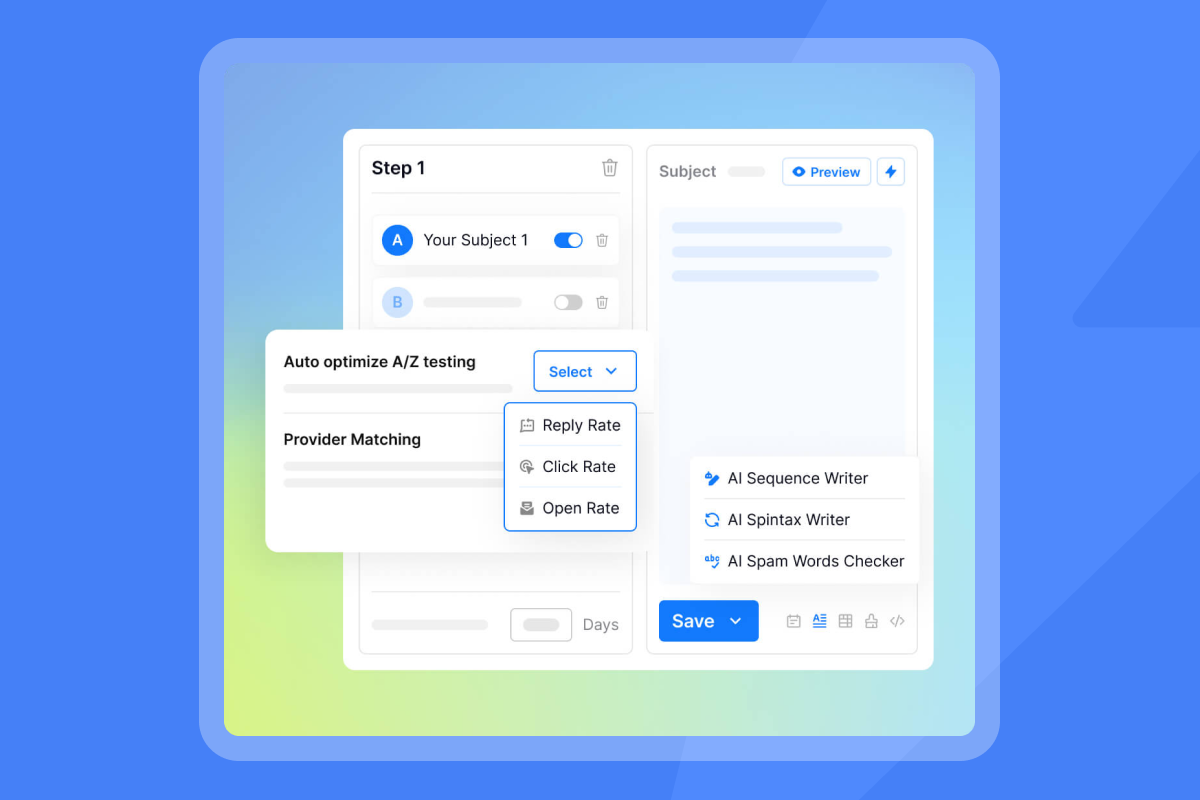
With Instantly, you can compare many subject lines at once using A/Z testing inside one send window, as shown in the Instantly A/Z testing guide.
Interpreting results and iterating
- Ladder changes: Keep winners. Change one element at a time.
- Look beyond opens: Track replies, meetings per 100 sends, and spam complaints.
- Document learning: Keep a living playbook by audience and trigger.
Typical lift
Disciplined testing programs often see single digit to low double digit gains per iteration that compound. Industry case studies report 5 to 20 percent improvements from structured A/B testing, depending on baseline and traffic.
Spintax for scale and deliverability
Spintax creates safe micro-variations of a subject to reduce repetition.
Pattern: {quick|fast|brief} {question|note} for {you|your team}?
Outputs:
- "quick question for you?"
- "fast note for your team?"
Benefits
- Lower copy fingerprinting across mailbox providers.
- Natural language variety at scale.
- Fast exploration with hundreds of safe variants.
Pro tips
- Keep spins equivalent in meaning. Avoid changing the promise.
- Cap sends per inbox. Do not exceed 30 emails per inbox per day for cold.
- Pair with placement checks. Preflight with Inbox Placement before scaling.
Leveraging AI for subject line generation and optimization
AI speeds idea generation, personalization, and analysis.
AI for idea generation
Seed AI with audience, goal, tone, and constraints. Generate 20 to 50 options grouped by trigger. Shortlist and human-edit for clarity. Instantly AI Copilot can generate subject lines, map them to triggers, and set up tests quickly, as shown on the Instantly AI Copilot page.
"Getting set up is very easy, especially with the AI copilot that helps you every step of the way" - Antoine M. on G2
AI for personalization and variant creation
Ask AI to produce variants by segment:
- Role based: CFO vs VP Sales
- Intent based: viewed pricing vs read a case study
- Spintax: expand to hundreds of safe variations
Cost-effectiveness for lean operations
Startups and small teams save hours by automating ideation and test setup. Flat-fee outreach with unlimited accounts contains spend as you scale.
Pros and cons of AI for subject lines
| Pros | Cons |
|---|---|
| Fast variant creation | Can overfit to patterns if unchecked |
| Scalable personalization | Needs deliverability guardrails |
| Pattern discovery in analytics | Human edit still required |
Deliverability and sender reputation: the unseen impact of subject lines
What you write affects where you land.
- Avoid shouty patterns: All caps, multiple punctuation, and heavy sales terms raise risk, as noted in Mailchimp subject line best practices.
- Use honest framing: Misleading subjects trigger spam reports and damage reputation.
- Vary copy: Spintax reduces repetitive footprints.
- Pace volume: Keep cold sends under 30 per inbox per day. Ramp slowly on new domains.
- Verify placement before scale: Run seed tests and fix issues early with Inbox Placement.
- List hygiene: Keep bounces at or below 1 percent and complaint rates at or below 0.3 percent.
Subject line testers score against many heuristics. SubjectLine.com, for example, claims over 800 rule checks across filtering, deliverability, and marketing signals. Use scores as guidance, then validate with placement tests per the SubjectLine.com rules.
For high scale, distributing sends across more inboxes and domains protects domain health. Instantly uses a private deliverability network and large warmup footprint that supports this approach for agencies and teams.
Measuring success: key metrics for subject line performance
Define success by job to be done, not just opens.
Open rate and reply rate
- Opens: Directional due to Apple MPP. Use relatively, not absolutely. As a benchmark point, Mailchimp shows many industries around the 21 percent range in the Mailchimp industry benchmarks.
- Replies: Core signal for cold outreach quality. Raise by aligning the subject and the first two body lines.
Meetings booked and pipeline influenced
- Meetings per 100 emails sent is the most honest sales metric.
- Attribute meetings to subject line cohorts where possible for fair credit.
Auditable reporting for teams
Roll up by variant, rep, segment, and domain:
- Variant to reply rate to meetings to revenue
- Domain health: bounces at or below 1 percent, complaints at or below 0.3 percent
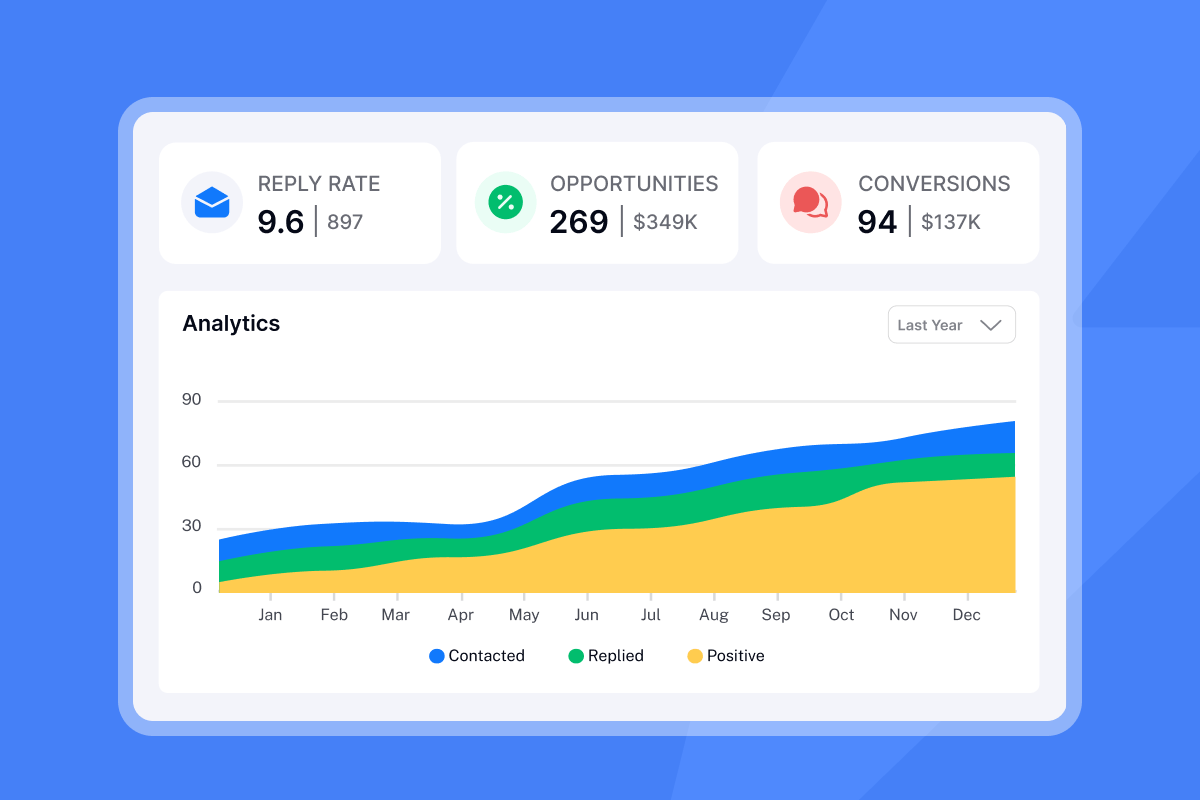
Instantly analytics and Unibox help track reply cohorts and outcomes, and you can schedule recurring checks with Inbox Placement to guard scale.
Scalable subject line strategy across clients
A repeatable process you can run for every account.
- Standardize: A trigger library, length targets, and pre-approved personalization tokens.
- Guardrails: Do not exceed 30 sends per inbox per day. Enforce DNS checks, warmup, and seed tests before launch.
- A/Z rhythm: Two new subject tests per client per month.
- Centralize results: Compare cohorts by industry and TAM.
- Right-size data: Use Instantly SuperSearch to tighten targeting so subject relevance rises before copy changes.
Agency subject line audit checklist
- DNS alignment passes (SPF, DKIM, DMARC)
- Inbox health and warmup completed with a slow ramp
- Seed test results show primary inbox placement
- Volume caps set per inbox at or below 30
- Subject length leads with strongest three words
- Trigger and value clear in the first 30 characters
- No all caps or multiple punctuation
- Personalization tokens verified and safe
- Spintax configured for variation
- A/Z test plan scheduled, logging enabled
For deep warmup patterns and safety practices, review the Instantly warmup guide.
Team checklist, testing, and audit-friendly reporting
Subject line optimization checklists
Winning elements checklist
- Clear benefit or curiosity gap
- Front-loaded value in the first 30 characters
- Specific numbers or nouns
- Light personalization beyond first name
- One question or one promise
- Matches the first two body lines
Deliverability best practices
- No all caps or excessive punctuation
- Avoid spammy phrases and keep language conversational
- Do not exceed 30 sends per inbox per day
- Use spintax for variation
- Verify placement with seed tests
- Maintain list hygiene and low bounces
Performance metrics checklist
- Open rate for directional read
- Reply rate as the primary outreach signal
- Meetings per 100 sends
- Spam complaint rate
- Domain health signals
- Placement pass rate on seed tests
Team-level A/B testing
- Assign two approved variants per step.
- Split automatically across reps to remove bias.
- Weekly review on replies, meetings per 100 sends, complaint rate.
Audit-friendly reporting
- Dashboard model: Variant to reply rate to meetings per 100 sends
- Domain health: bounces at or below 1 percent and complaints at or below 0.3 percent
- Placement checks: logged weekly with remediation notes
ROI: time-to-first-meeting and cash-efficient pipeline
For lean teams, subject lines are a fast lever.
- Faster first meetings. Align the subject, preview text, and one clear ask.
- Cash-efficient testing. Use AI to draft, then A/Z to decide. Flat-fee pricing helps as you scale inboxes without per-seat penalties on Instantly pricing.
- Track the right unit. Meetings per 100 sends tied to CAC math. Safer deliverability plus efficient copy testing improves outbound unit economics.
"My experience with Instantly has honestly been nothing but amazing so far. In just the past 180 days, I’ve been able to book over 100 meetings, close deals worth more than €15,000, and even walk away from my regular 9 to 5 job, all with the help of Instantly." - Dustin Geissinger Gromicho on Trustpilot
Your blueprint for subject line success
Start with relevance and clarity. Pick a trigger. Write short and specific. Use AI to create many safe variants. Test with discipline. Protect placement with low per-inbox volume and seed tests. Standardize winners in a shared library. Track meetings per 100 sends.
Try Instantly free to apply these winning subject line strategies with AI-powered optimization, A/Z testing, and Inbox Placement checks.
FAQ
What is a winning subject line teardown?
A teardown dissects top-performing subject lines to expose triggers, structure, length, and personalization patterns you can reuse.
What are teardowns of winning subject lines examples?
Examples include "Deal enemy #1" for curiosity, "3 fixes before Thursday" for urgency, and "[Company] Q4 ramp math" for relevance.
How long should a subject line be?
Keep it concise and front-loaded. Mailchimp recommends up to 9 words and 60 characters. Put your strongest words first.
How many variants should I test?
Start with 2 to 3. Use A/Z to compare more once you have volume. Change one variable per test.
Do emojis help in B2B?
Use sparingly. One simple emoji can aid scannability. Overuse looks spammy and can affect placement.


