

Updated June 16, 2026
TL;DR:
If you manage a B2B sales team and want to scale outbound outreach with an AI SDR, security and compliance are your primary deliverability assets. Poor compliance triggers spam filters and domain blocks, directly hurting your meetings-booked numbers. This guide outlines how to protect your brand, manage global regulations like GDPR and the EU AI Act, and establish a defensible AI audit trail. The goal is a compliant, auditable outbound system that protects your domain reputation and your cost per meeting. Instantly.ai supports that with a published DPA, deliverability infrastructure, and configurable AI agent review modes.
The biggest threat to your outbound pipeline is not a bad script. It is a compliance breach that blacklists your entire domain network. With the EU AI Act's remaining provisions taking effect on 2 August 2026, sales leaders must move from black-box AI automation to auditable, compliant outreach systems.
This guide outlines the exact security controls, regulatory requirements, and audit standards you must enforce to protect your brand and maintain high inbox placement at scale.
Note: This article is for informational purposes only and does not constitute legal advice. Consult qualified legal counsel for guidance specific to your jurisdiction and business circumstances.
Defending your brand with AI SDR governance
An AI SDR (Sales Development Representative) is a software system that uses AI to perform the early, top-of-funnel stages of the sales process: identifying prospects, engaging leads, and qualifying opportunities before passing them to human sales teams. An AI Audit Trail is a documented record of AI decision-making that typically covers prompt inputs, generated outputs, processing metadata, system state changes, and human approvals or overrides.
The governance problem is real and quantified: 89% of data and analytics leaders with AI in production report experiencing inaccurate or misleading AI outputs. For sales leaders, that number translates directly to off-brand messages reaching prospects, compliance gaps left undetected, and deliverability damage that compounds over time.
The answer is not to avoid AI outreach. It is to build a governance framework that makes every AI decision traceable, auditable, and correctable.
Safeguarding brand identity online
Unmonitored AI outreach creates two distinct brand risks. First, an AI agent can generate factually incorrect or tone-deaf messages that damage relationships with high-value prospects. Second, it can send at a volume or cadence that triggers spam filters, harming your domain reputation across your entire sending network.
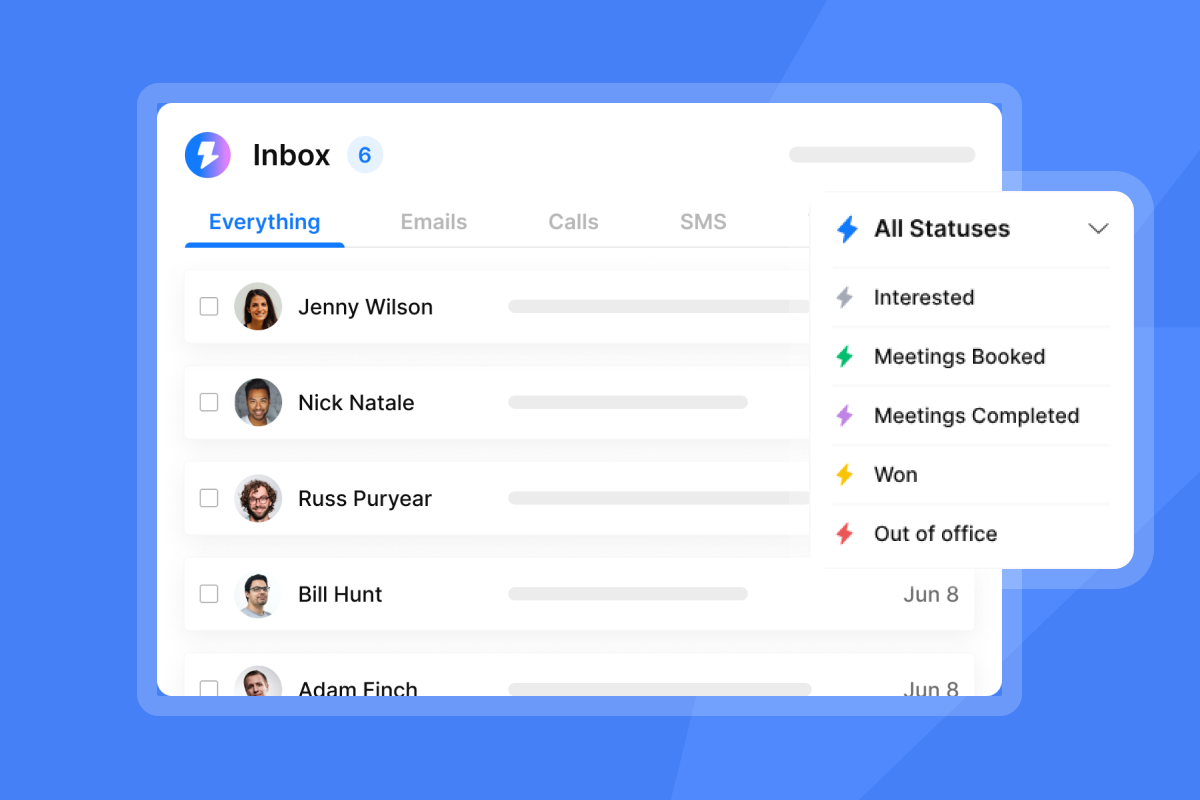
The solution is a human-in-the-loop (HITL) review layer. Instantly's AI Reply Agent offers both HITL and Autopilot modes. Your team can review and approve AI-generated replies before they reach prospects, or switch to Autopilot mode to let the AI Reply Agent send responses automatically. Removing human judgment from AI-generated replies entirely is one of the most common mistakes in AI-assisted outreach. AI lacks the situational awareness to assess whether a message is appropriate, timely, or respectful within a specific buyer context. Building HITL into your process from day one is foundational, not optional.
Mitigating AI SDR data privacy risks
Most AI platforms impose strict restrictions on what data you can upload. Instantly's Data Processing Agreement specifically prohibits uploading Protected Health Information under HIPAA and payment card data, reflecting standard restricted data category practices across enterprise B2B SaaS.
If you upload restricted data in breach of the agreement, most privacy laws still hold your business responsible for how vendors handle that data. Uploading prohibited data categories does not transfer liability to the platform. Before uploading any contact list, run it through your legal team's data classification checklist. The only data that belongs in an AI SDR platform is professional contact information your team has a documented legal basis to process.
Maintaining credibility with AI outreach
Email authentication is where compliance and deliverability intersect most directly. Properly configured SPF, DKIM, and DMARC are prerequisites for inbox placement. Authentication does not guarantee delivery, but missing or misconfigured authentication almost guarantees spam folder placement. Sender reputation scores have a direct impact on inbox placement. Higher scores correlate with stronger primary inbox rates, while lower scores can push a meaningful share of your sends into spam. The average commercial program lands in the inbox 89% of the time.
The adoption gap remains a real problem. According to the DMARC Report's 2026 analysis, only around 9% of domains are meaningfully protected by DMARC enforcement. That means the large majority of senders gain no actual protection because they have not set enforcement to p=quarantine or p=reject.
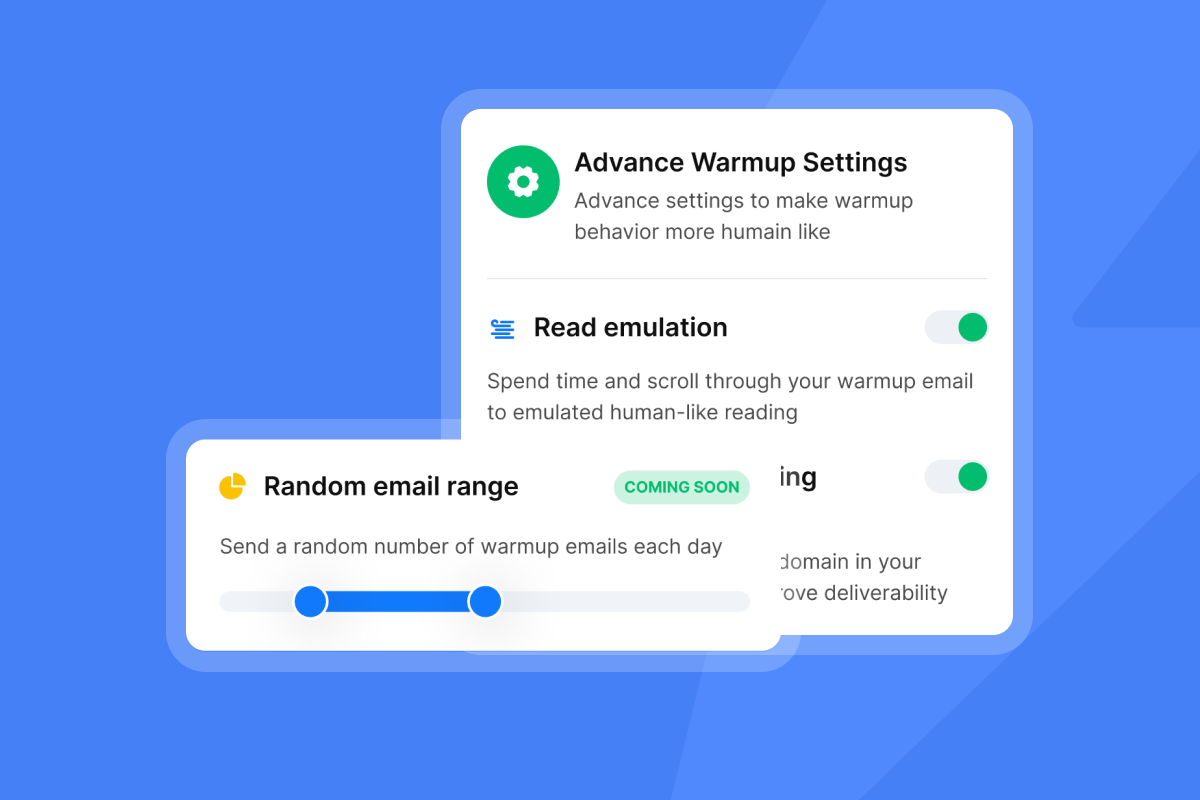
Instantly's warmup infrastructure with 4.2M+ accounts supports reputation building at scale, helping new inboxes earn sender reputation before ramping volume. Instantly's Inbox Placement testing tool lets you run automated placement tests before and during campaigns, so you catch deliverability issues before they compound.
Building compliant AI sales workflows
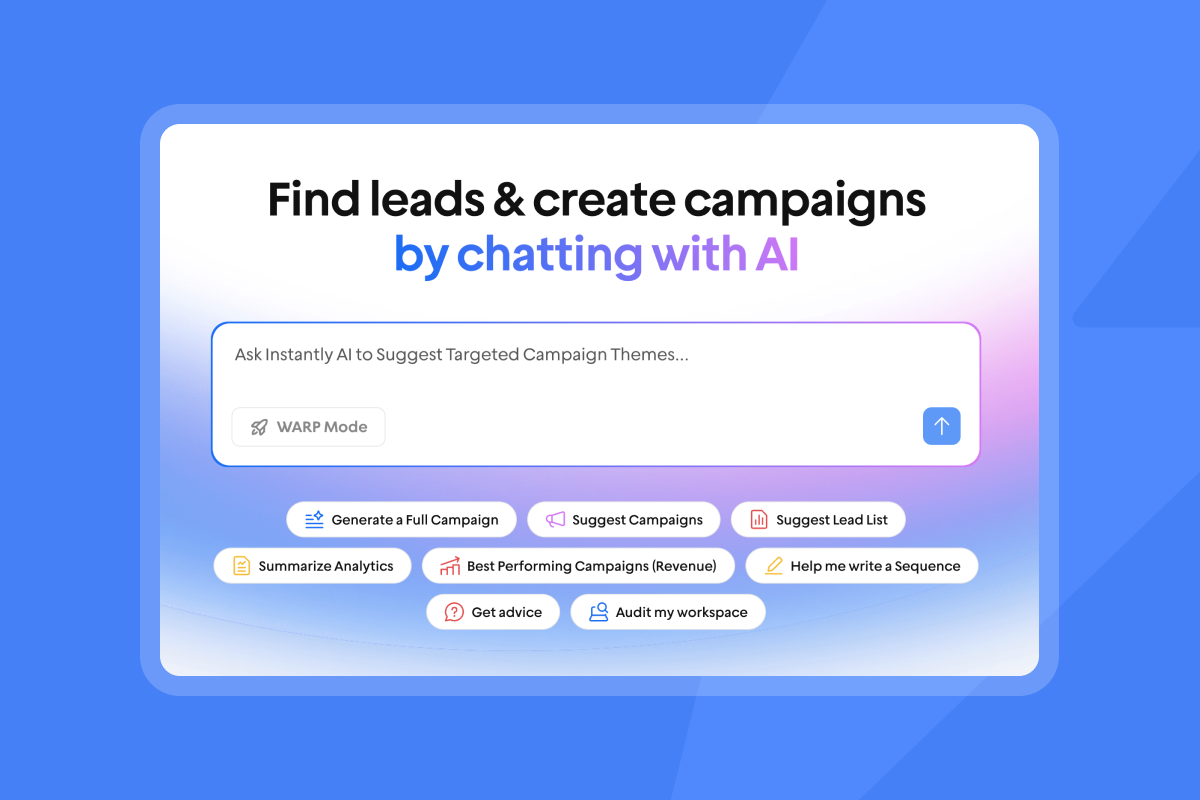
AI-powered lead generation improves how sales teams identify and engage prospects, but effective implementation requires balancing automation with human oversight. The AI Sales Agent can generate qualified leads automatically, while Copilot assists reps with research and personalization tasks. Note that AI agents run on the separate Instantly Credits subscription, starting from $9/month, which is not included in the Outreach plan.
When building AI workflows, consider how AI email assistants fit into your existing process. The right balance depends on your team's capacity, your compliance requirements, and your target audience's expectations. Start with human review for all AI-generated content, then selectively enable automation for low-risk categories once you have established guardrails.
Essential privacy controls for AI sales tools
Before evaluating any AI SDR platform, compare what it offers against enterprise-grade requirements. The table below contrasts minimum viable controls with enterprise-grade standards on the dimensions that matter most for security and compliance reviews.
Control area | Minimum viable | Enterprise-grade |
|---|---|---|
Encryption | TLS in transit and basic encryption at rest | AES-256 at rest and in transit |
Audit logging | Basic activity logs | Full decision records with user attribution |
Human review | Manual override option | Configurable reply approval modes |
Data Processing Agreement | Formal DPA covering Article 28 GDPR requirements | Full DPA with sub-processor list and processing locations |
Global block list | Import-based suppression | Automated opt-out matching on every send |
Role-based access controls | Basic user permissions | Granular permission tiers per function |
What AI SDR platforms actually record
When you evaluate an AI SDR platform, verify that its audit trail captures: prompt inputs and generated outputs for every interaction, the model version used, a precise timestamp, the user identity that triggered the action, any guardrail decisions on whether a message was held or allowed, system errors, and all human approvals or overrides. Platforms that log only infrastructure-level API calls produce records that are technically complete but legally useless during a compliance audit, because they do not document which specific agent accessed regulated data, under what policy, or at what time.
Where your sales data actually resides
Instantly stores all customer data on AWS servers in the United States, with AWS as the primary listed sub-processor. If your legal team requires EU data residency for GDPR compliance, discuss this requirement directly with Instantly's legal team during procurement, as the current architecture uses US-based hosting.
Protecting data in AI partnerships
When you connect an AI SDR platform to your CRM, enrichment tools, and email infrastructure, you create a data processing chain. Protect each link with AES-256 encryption in transit and at rest, data anonymization for test environments, multi-factor authentication across all integrations, and role-based access controls that limit data export permissions and campaign configuration access to appropriate permission tiers.
Instantly's sub-processor transparency page documents processing partners and the update notification process. Review this list during procurement to confirm every sub-processor meets your organization's security standards.
Global data privacy regulations for AI outreach
Three regulatory frameworks directly affect B2B AI outreach in 2025 and 2026: GDPR, CCPA, and the EU AI Act. Each carries distinct obligations and penalties.
EU AI Act financial risk: Non-compliance with prohibited AI practices under the EU AI Act can result in fines of up to EUR 35 million or 7% of global annual turnover, whichever is higher. High-risk AI system requirement breaches carry penalties of up to EUR 15 million or 3% of global annual turnover.
The Act entered into force on 1 August 2024, with prohibited AI practices applying from 2 February 2025 and most remaining provisions taking effect on 2 August 2026. If your AI SDR output is used by EU deployers or customers, your system must be auditable, transparent, and human-supervised before that deadline.
Key GDPR obligations for outbound sales
Legal disclaimer: The following is general information, not legal advice. Consult a qualified data protection professional for guidance on your specific use case.
The lawful basis for most B2B cold outreach under GDPR is Legitimate Interest (Article 6(1)(f)), not Consent. The distinction matters practically because these two bases carry different operational requirements.
Legitimate Interest vs. consent in B2B AI outreach:
- Legitimate Interest: You can contact business prospects without prior consent if you pass a three-part test covering purpose, necessity, and balancing. Your message must be relevant to their professional role, you must be transparent about data sourcing, and you must include a clear opt-out. Document a Legitimate Interest Assessment (LIA) for each campaign type.
- Consent: Required for B2C email, SMS marketing, and recurring commercial newsletters in most EU jurisdictions. The UK ICO confirms that in B2B contexts, Legitimate Interest is often more appropriate than explicit consent, as business contacts reasonably expect professional outreach.
GDPR compliance checklist for B2B AI outreach:
- Document your Legitimate Interest Assessment for each outbound campaign type.
- Verify that contact data sources are GDPR-compliant, such as LinkedIn, company websites, and verified B2B databases.
- Include your company name, physical address, and a one-click unsubscribe link in every email.
- Honor direct marketing opt-out requests immediately under GDPR. The right to object to direct marketing is absolute, meaning you must stop processing as soon as the objection is received. Under CCPA, process opt-out of sale or sharing requests within 15 business days of receipt. Sync confirmed opt-outs to your global block list as soon as they are processed.
- Maintain a record of processing activities under GDPR Article 30, covering the personal data being processed and how it is handled.
- Establish a Subject Access Request (SAR) response process with a one calendar month response window.
- Review sub-processor agreements to confirm GDPR compliance.
- Conduct a Data Protection Impact Assessment if your AI processing is likely to result in high risk to individuals.
Managing CCPA opt-out requests
California residents have the right to opt out of the sale or sharing of their personal data under CCPA. Maintain a suppression list of California contacts who have exercised this right and configure your platform to honor those flags automatically. You must process opt-out requests within 15 business days of receipt. Instantly's global block list can serve as the operational suppression layer, provided you sync CCPA opt-outs into it on receipt.
Managing prospect data access requests and erasure
When a prospect submits a SAR, you must respond within one calendar month of receipt. This requires querying every system that processed their data: your outreach platform, CRM, enrichment tools, and AI agents. Map your data flows before you receive your first SAR, not after.
Erasure requests under GDPR Article 17 apply across your entire processing chain. When evaluating AI SDR platforms, consider how prospect data is stored and whether deletion can be cleanly and verifiably executed across all system components.
Consent tracking and opt-out management
Consent and opt-out tracking are not just legal requirements. They are deliverability controls. Every contact who remains on your list after opting out represents a future spam complaint. Gmail targets a complaint rate below 0.1% and treats rates above 0.3% as the threshold for enforcement action. Clean suppression practices protect both your legal standing and your sender reputation simultaneously.
Managing unsubscribe compliance and CRM sync
Instantly's global blocklist automatically prevents opted-out contacts from receiving future outreach, even if they appear on a newly imported list.
Opt-out data becomes a compliance liability the moment it sits unsynced between your outreach tool and your CRM. Use Instantly's native HubSpot integration or Salesforce connection via OutboundSync to push unsubscribe events to your CRM in real time. Every field update must carry a timestamp and a source attribution so your data team can audit the suppression chain.
Maintaining audit logs for consent
An audit log for consent management must show, for each contact: the date the record entered your system, the data source, the legal basis, the date of any opt-out request, the system that processed it, and confirmation of deletion or suppression. Below is a simplified template for justifying AI decisions to regulators.
Sample AI Compliance Audit Entry:
Contact ID: [anonymized]
Date added: 2025-05-15
Data source: SuperSearch (Instantly)
Legal basis: Legitimate Interest (LIA ref: LIA-2025-05-SaaS)
AI processing: Sequence personalization via Copilot (v3.1)
Opt-out received: 2025-06-01 (via reply)
Suppression applied: 2025-06-01 14:23 UTC (global block list)
CRM sync confirmed: 2025-06-01 14:24 UTC
Reviewed by: [rep name/ID]
Instantly's status page provides component-level uptime transparency, which supports system-state documentation in your audit records.
How to monitor AI SDR outreach performance
Monitoring is not separate from security. It is how you catch compliance drift before it becomes a regulatory event. Performance monitoring that does not feed into your compliance records is incomplete. Every metric you track, opens, replies, bounces, meetings set, should have a corresponding audit record tied to a specific campaign, rep, and processing date.
Mandatory data points for AI security
A defensible audit trail must include four categories of records:
- Decision records: Every prompt sent to the AI and every output generated, with timestamps and model version.
- Processing metadata: Guardrails applied, any messages held for human review, and the outcome of that review.
- System state: Model version, active campaign parameters, and configuration changes during the audit period.
- Change history: A log of every setting modification, including who made it, when, and what the previous value was.
Granular user permission settings and sequence tracking
Role-based access controls prevent unauthorized changes that create compliance gaps. Look for an AI SDR platform that supports distinct permission tiers: read-only access for auditors and legal reviewers, rep-level access for creating and managing campaigns, and admin-level access with controls over global settings and data exports. Restricting both integration configuration and global block list modification to admin-level users reduces the risk of unauthorized or accidental changes to your data processing chain and suppression list.
As a best practice, compare meetings booked in your outreach platform against calendar invites and CRM stage movements at a cadence that works for your team's reporting cycle. If the numbers diverge materially, investigate the attribution logic. Instantly's Unibox centralizes reply management so every response feeds into a single reporting layer, reducing attribution drift across disconnected inboxes.
Scaling data quality with enrichment
Clean, accurate contact data is the foundation of compliant outreach. Lead enrichment fills data gaps and validates professional contact information before it enters your campaigns. SuperSearch pulls from 450M+ B2B leads to reduce the data quality risk that drives bounce rates and spam complaints.
"I enjoy the built-in AI enrichment feature, which is amazing for lead enrichment. The unibox is really clean and organizes my replies all in one place in such a user-friendly manner." - Harvey S. on G2
Industry standards for AI SDR risk management
Three frameworks dominate vendor security evaluation for AI SDR procurement: SOC 2 Type II, ISO/IEC 27001, and GDPR/EU AI Act compliance documentation. Understanding what each framework tests helps you ask the right questions during procurement, regardless of which vendor you are evaluating.
Assessing AI SDR SOC 2 and ISO 27001 compliance
SOC 2 Type II is an attestation report issued by an independent auditor covering a 3 to 12 month period. When reviewing a vendor's report, check the audit period length, the scope of controls tested, and whether AI processing was specifically included in the system description. Note that some third-party security aggregators display generic SOC 2 or ISO badges that are not verified proof of certification. Always request current audit reports directly from the vendor under NDA rather than relying on badge displays. Instantly does not publicly claim SOC 2 or ISO 27001 certification. Instantly's public compliance documentation covers its DPA, sub-processor list, and data category restrictions. Enterprise buyers who require independent audit assurance should request available documentation directly from Instantly's legal team under NDA.
ISO/IEC 27001 is a globally recognized certification of an Information Security Management System, valid for three years with annual surveillance audits. When a vendor claims ISO 27001 certification, it is worth requesting the certificate, certification body name, and scope statement to confirm the certification covers the systems that will handle your data.
GDPR data transfers and defending against platform exploits
If you process EU personal data stored on US-based servers, Standard Contractual Clauses are the primary legal mechanism for lawful cross-border transfer. Review the vendor's DPA to confirm which transfer mechanism they use and that it covers all listed sub-processors. The EU AI Act applies to any AI system whose output reaches EU users, so geographic scope cannot be used to avoid compliance.
Prompt injection is an attack vector specific to AI systems, where a malicious input tricks the AI agent into executing unintended commands or leaking data. When evaluating vendor security, ask about safeguards including input validation, output review mechanisms, and content filtering rules.
Vetting AI SDR tools for enterprise risk
Compliance is not a cost center. It is the system that protects your cost per meeting. IBM's 2025 Cost of a Data Breach Report, conducted with the Ponemon Institute across 600 organizations in 16 countries, found the average global cost of a data breach is $4.4 million, with US-based breaches averaging $10.22 million. For most organizations, the economics favor structured security controls over breach remediation costs.
How to validate AI SDR security posture
Use this checklist during vendor procurement:
- Request the vendor's current DPA and confirm it covers AI processing activities.
- Verify the sub-processor list and confirm each processor meets your security standards.
- Confirm the data residency region and whether EU residency options are available.
- Request evidence of encryption standards covering data at rest and in transit.
- Confirm MFA is enforced for all admin accounts.
- Verify the vendor's breach notification timeline and process.
Defining breach protocols and evaluating subprocessors
Your internal breach protocol must define three things: the internal notification chain, the vendor escalation path, and the regulatory notification obligation. GDPR Article 33 requires notification to the competent supervisory authority within 72 hours of becoming aware of a personal data breach. Document these protocols before you run your first campaign.
A vendor's sub-processor list is the data supply chain behind your outreach platform. Instantly's sub-processor documentation lists AWS (USA) as the primary infrastructure provider. When reviewing this list, confirm that data protection obligations are imposed on sub-processors through contract or other legal mechanism, that you receive notification of sub-processor changes before they take effect, and that you have a contractual right to object to new sub-processors.
Assessing vendor risk and data controls
Your legal team needs a structured compliance pack to complete vendor approval efficiently. Without one, procurement stalls while legal chases down scattered documentation. A well-prepared compliance pack shortens the review cycle, reduces back-and-forth with the vendor, and gives your team a repeatable procurement process you can run for every AI tool you add to your stack.
Preparing compliance packs and handling enterprise DPA requirements
A complete compliance pack includes:
- Signed Data Processing Agreement covering AI and automation processing activities
- Sub-processor list, with processing locations confirmed where available
- Privacy policy covering AI and automation capabilities
- Available security documentation, such as encryption standards, access control policies, and incident response procedures, confirmed during contract review
- Documented Legitimate Interest Assessment prepared by your legal team for each outbound campaign type
Audit log retention matters for long-term compliance. Retention periods vary by framework and jurisdiction. As a general guide, PCI DSS typically requires 12 months total with 3 months immediately accessible, HIPAA requires 6 years, SOX requires 7 years, and NIS 2 requires 18 months for security logs. Consult qualified legal counsel to confirm the exact retention obligations that apply to your organization. Instantly's standard log retention and any custom enterprise retention periods should be confirmed during contract review before processing any prospect data.
Instantly's DPA covers processing terms, sub-processor listings, and data category restrictions. For enterprise buyers, confirm the current sub-processor roster directly with Instantly's legal team and raise any additional security documentation requirements during contract review.
Compliance is not a barrier to AI outreach. It is the system that protects your domain reputation, your brand credibility, and your cost per meeting. Building security and audit controls into your AI SDR process from day one gives your team a defensible, scalable outbound process that you can sustain and report on with confidence.
Try Instantly free for 14 days, no credit card required, and build your compliant, high-deliverability outbound system with unlimited accounts, built-in warmup, and a deliverability network of 4.2M+ accounts.
FAQs
What are the maximum financial penalties under the EU AI Act?
Non-compliance with prohibited AI practices under the EU AI Act can result in penalties of up to EUR 35 million or 7% of global annual turnover, whichever is higher, with most remaining provisions taking effect on 2 August 2026.
How long does Instantly retain audit logs?
Instantly's log retention period is not publicly documented. Confirm the standard retention period, and whether extended retention is available to meet your compliance obligations, directly with Instantly's legal team during contract review before processing any prospect data.
Where is Instantly customer data stored?
All customer data processed by Instantly is stored on AWS servers in the United States. EU data residency requirements should be discussed directly with Instantly's legal team during procurement.
What is the difference between Legitimate Interest and Consent for B2B email outreach?
Legitimate Interest (GDPR Article 6(1)(f)) allows B2B outreach without prior consent when your message is relevant to the prospect's professional role, you are transparent about data sourcing, and you include a clear opt-out. Consent is the correct legal basis for B2C email and recurring commercial newsletters, but for most B2B cold outreach, a documented Legitimate Interest Assessment is the appropriate and more practical legal foundation.
Key terms glossary
AI SDR: An artificial intelligence system that automates lead sourcing, personalization, and outbound email execution for the top-of-funnel stages of the sales process.
AI Audit Trail: A comprehensive record of AI decision-making that typically includes prompt inputs, generated outputs, processing metadata, system state changes, and human approvals or overrides.
Legitimate Interest: A lawful basis for data processing under GDPR Article 6(1)(f) that allows B2B outreach without prior consent if the processing passes the three-part Purpose, Necessity, and Balancing test.
Unibox: Instantly's centralized reply management system that consolidates all incoming replies across every connected inbox and enables human-in-the-loop review of AI-generated drafts before they are sent.
Subject Access Request (SAR): A formal request from a data subject under GDPR Article 15 asking what personal data an organization holds about them, which must be responded to within one calendar month of receipt.
Standard Contractual Clauses (SCCs): Legal mechanisms issued by the European Commission that govern lawful transfers of personal data from the EU to countries without an adequacy decision, including the United States.
Read next
- How to Master SPF, DKIM, and DMARC for Cold Email Deliverability: a step-by-step guide to configuring email authentication so your sends land in the primary inbox instead of spam.
- Email warmup: how to build sender reputation before scaling outreach: how to ramp new inboxes safely, protect your domain health, and avoid deliverability damage as you scale send volume.
- GDPR Email Marketing: How to Scale While Staying Compliant: what B2B sales teams need to know about lawful basis, opt-out obligations, and data sourcing to run GDPR-compliant outbound campaigns.


